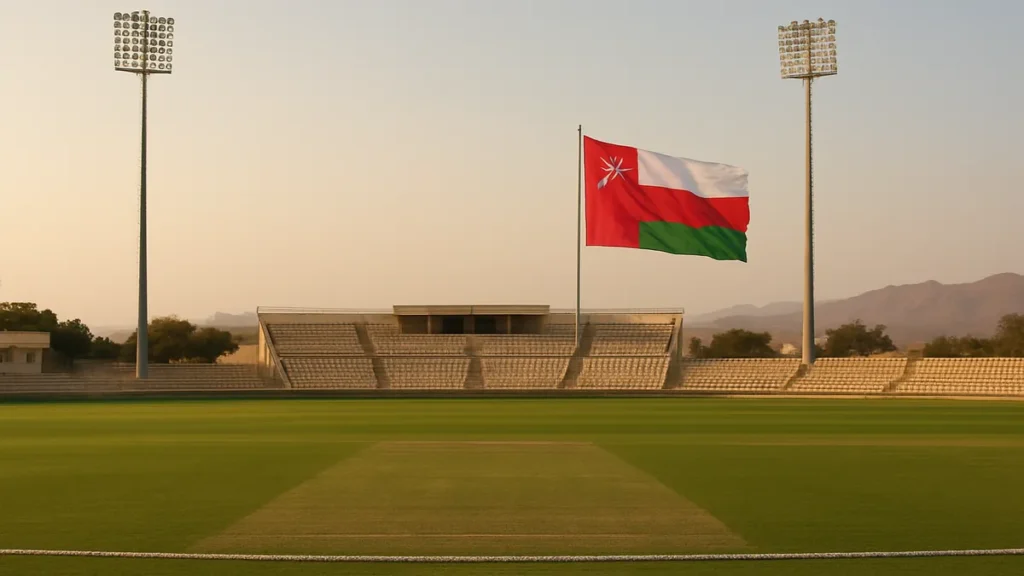
India beat Pakistan by one wicket in a tense Under-19 Asia Cup final in Oman, but the win was overshadowed by aggressive behaviour from the Indian players after the match. The game was decided on the last ball at the Oman Academy Cricket Ground in Al Amerat, on the outskirts of the capital, Muscat.
The final, played on Saturday, swung back and forth between the two South Asian rivals. Pakistan’s total of 337-9 in their 50 overs set a target of 338, which India appeared to be struggling to reach when they slipped to 252-8 in the 42nd over.
Late rescue stuns Pakistan in last-ball finish
India’s chase was saved by a ninth-wicket partnership of 57 runs between Manal Chauhan and Mohit Ulva. Chauhan scored 47 from 32 balls in the lower middle order, while Ulva finished unbeaten on 49 from 26 deliveries.
Also read: Pakistan beat Bangladesh to reach U19 Asia Cup final
Ulva hit the boundary that completed the win when India needed three runs from the final ball. The victory gave India a record-extending ninth Under-19 Asia Cup title and their first since 2021.
Ulva described the innings as a personal turnaround. “This tournament had not gone well for me, but I had belief that I would be able to deliver today,” he said after the match. He added that he had needed Chauhan’s support and that the number 10 had been lucky for him, as all his runs had come from there.
Pakistan had earlier won the toss and chosen to bat. Opener Usman Khan led their innings with 107 off 111 balls, while Abdul Qadir made 80 and captain Farhan Yousaf scored 63.
Indian players’ celebrations draw condemnation
The winners’ celebrations soon turned hostile, according to reports, with players appearing to target their Pakistani counterparts through aggressive gestures. Former cricketers and Indian fans on social media later criticised the conduct.
One Indian player was seen shouting and gesturing angrily into the face of Pakistan wicketkeeper Hamza Zahoor, who did not react. Other members of the team were seen kicking their legs in the direction of the Pakistan dressing room, while the Indian team management tried to restrain them.
India were praised for the fighting spirit that carried them through the match but faced criticism for unsportsmanlike conduct. Former Pakistan captain Mohammad Yousuf used a post on X to stress the responsibility players carry when they take the field.
“You are not just representing your country. In fact, you are representing your upbringing, the values and the ethics your parents taught you as a child,” he wrote. He urged players to stay respectful and composed in both victory and defeat.
Former Indian cricketers and heads of state praised the win but did not condemn the behaviour. Several Indian cricket fans, however, distanced themselves from what they called the “uncalled-for” demeanour of the team.
One Indian supporter wrote on X that rivalry was no excuse for such behaviour, calling it “uncouth, crass and downright disgusting.” Another said the conduct reflected a culture of leadership that the country had come to accept, adding that it was “a cricket match, not a war.”
Handshake snub continues a pattern in Pakistan-India cricket
Both sides skipped the customary post-match handshake, a gesture that has become a recurring feature of Pakistan-India matches since political tensions spilled onto the pitch over the past year.
Last year, then-Indian captain Suryakumar Yadav and his players refused to shake hands with Pakistani players during an Asia Cup clash in September. They also declined to accept the trophy from Asian Cricket Council (ACC) President Mohsin Naqvi, who is also Pakistan’s interior minister.
The teams avoided handshakes at the ICC Women’s World Cup 2025 in Sri Lanka and repeated the practice at the ICC Women’s T20 World Cup in England this year. It was also seen at their group-stage match in the Women’s Asia Cup. In September, the India women’s team refused to accept the trophy from Naqvi after winning the Asia Cup final in Dubai, United Arab Emirates.
Aaryavir Sehwag and Lakshya Raichandani set the platform
India’s reply was built on a strong start from captain Lakshya Raichandani, who scored 80 off 101 balls. Fellow opener Aaryavir Sehwag, son of former India great Virender Sehwag, made 58 from 61 deliveries with nine fours and was named player of the tournament.
Sehwag finished as the tournament’s leading run-scorer with 361 runs in five innings. India’s lineup also included wicketkeeper Anvay Dravid, son of former India captain and coach Rahul Dravid, who scored 19 runs.