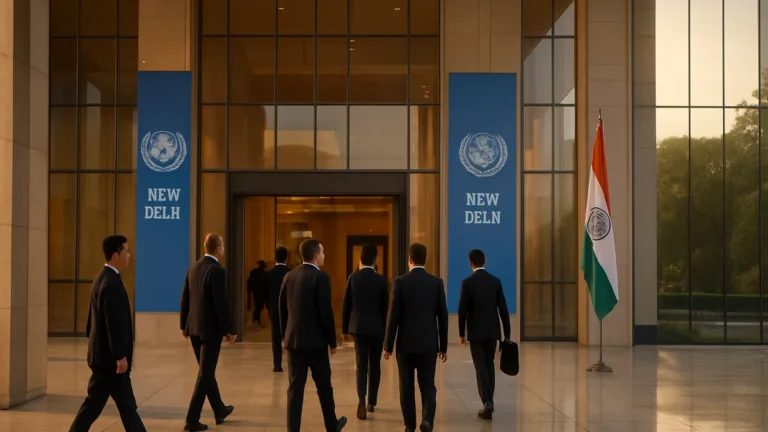
Pakistan’s climate change minister, Musadik Malik, arrived in New Delhi on Friday. He is the first Pakistani federal minister to visit India since the two neighbours fought a four-day war in May 2025.
Malik is taking part in the first Shanghai Cooperation Organisation (SCO) Civilisational Dialogue Forum, a three-day gathering that Indian Prime Minister Narendra Modi is scheduled to open on Friday evening. Malik is expected to address the forum on Saturday. No bilateral meeting between the two sides has been announced.
Official statements on the trip and the invitation
Pakistan’s Foreign Office said on Thursday that Malik’s participation reflected the country’s role as an active SCO member state. It said the attendance was meant to promote dialogue, cooperation and understanding in line with the “Shanghai Spirit”.
Also read: Musadik Malik to represent Pakistan at SCO forum in New Delhi · Musadik Malik arrives in New Delhi for SCO civilisational forum
Indian media, citing diplomatic sources, reported that India’s invitation was actually addressed to Pakistan’s minister for national heritage and culture, Aurangzeb Khan Khichi. Neither government has confirmed that account. Pakistan’s Foreign Office said on November 6 that it had received an invitation and would decide after consultations, and it has not explained why Malik was chosen.
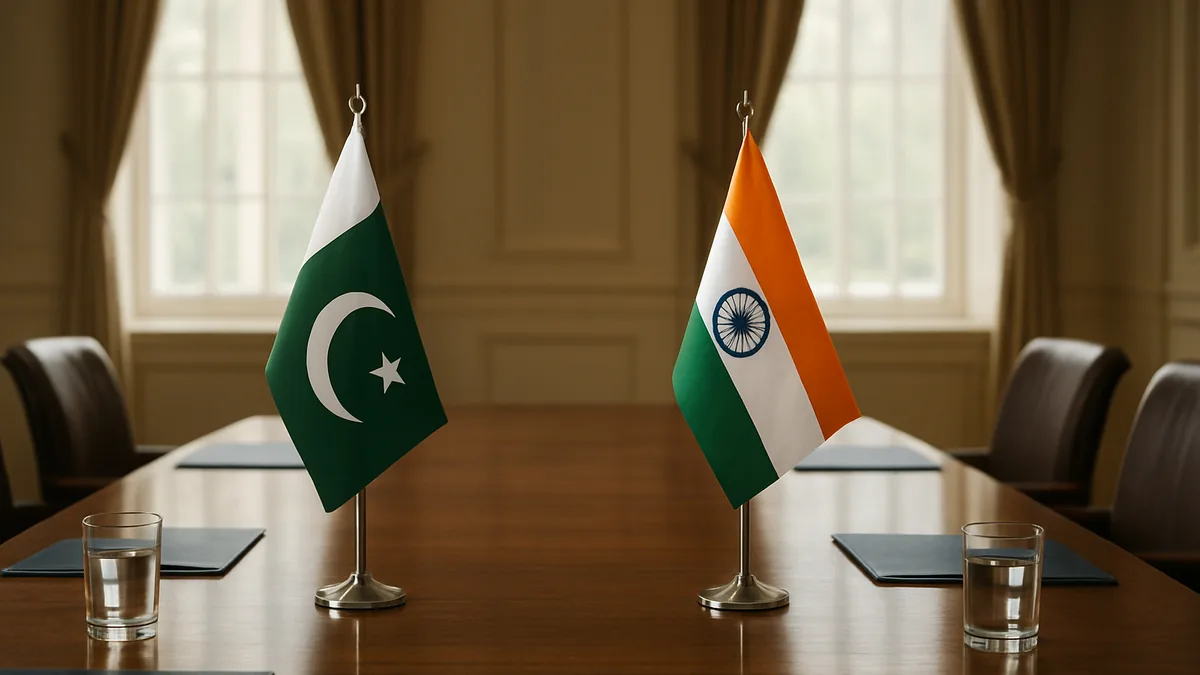
Both governments have presented the exchange as routine business within the SCO. The trip is the first of its kind since then-Foreign Minister Bilawal Bhutto-Zardari travelled to Goa in May 2023, a visit that ended in public sparring. Pakistan is due to host the bloc’s leaders next August, and that timing has led observers to ask whether contact limited to a multilateral forum could lead to wider engagement, including a possible trip to Islamabad by Modi.
Analysts split over what the visit signals
Jauhar Saleem, president of the Islamabad-based Institute of Regional Studies and a former foreign secretary, said the choice of representative belonged to Pakistan. He said there was no fixed rule on who represents a country at such forums, and that the invited state may name whoever it sees as most suitable. He also said that civilisation “is about how societies relate to their land, their rivers, and one another”.
Khurram Dastgir Khan, a former federal minister for foreign affairs and defence and a senior leader of the governing Pakistan Muslim League-Nawaz, described the decision as deliberate. In his view, sending a minister of Islamabad’s own choosing let Pakistan take part in the SCO without appearing to accept India’s framing. He also said the move signalled Pakistan wanted to be seen as a constructive host for the 2027 summit, which could open the door slightly to Modi’s attendance.
Sharat Sabharwal, India’s high commissioner to Pakistan from 2009 to 2013, said India was simply meeting its obligations as the organiser. “This is a meeting in the SCO framework, where India, as the organiser, has to invite all member countries,” he said, adding that there was no reason to read deeper meaning into the visit at this stage.
Irfan Nooruddin, a professor at Georgetown University’s School of Foreign Service, said New Delhi could present the initiative as evidence of its leading role in the region. Rezaul Hasan Laskar, foreign affairs editor at The Hindustan Times, said there was little appetite at home for more. He said the government described the engagement as multilateral and said there would be no bilateral talks until terrorism was addressed.
Ties remain frozen beyond the SCO calendar
Indian foreign ministry spokesperson Randhir Jaiswal said at an October 28 briefing that India had invited “all SCO members” in line with established practice. Asked whether New Delhi was reviewing its Pakistan policy, he said: “Post the Pahalgam attack, we have a Pakistan policy. That Pakistan policy remains in place; there has been no change.”
Beyond the SCO, almost every bilateral channel remains closed. India has held the 1960 Indus Waters Treaty “in abeyance” since the Pahalgam attack, which India blames on Pakistan and Islamabad denies. On August 31, a court of arbitration in The Hague ruled that India could not suspend the treaty unilaterally, a ruling New Delhi rejected. In September, Indian and Pakistani naval vessels collided in the Arabian Sea, and India summoned Pakistan’s chargé d’affaires in protest. Neither country has had a high commissioner in the other’s capital since 2019.
Contact has continued at lower levels. Laskar pointed to several Track 1.5 and Track 2 engagements held since a few months after the May conflict, which involved semi-official and unofficial meetings with only partial government participation. The SCO itself has also been one of the few forums bringing the two countries together since they joined in 2017.
Salman Bashir, a former Pakistani high commissioner to India, was blunt about the limits of such contact. “SCO is an opportunity to maintain a semblance of civility. Don’t think that it is a pathway to normalcy,” he said. Dastgir argued that forum meetings could still create room for talks, saying sidelines encounters “need no announcement and no concession”. Nooruddin did not rule out a Modi visit to Islamabad, but said he would not bet on it, given how much could change before August.