Pakistan Peoples Party chairman Bilawal Bhutto-Zardari has called for a “political reset” to tackle the country’s problems. On Tuesday he asked the government and the opposition to put their disagreements aside and work together on public concerns, especially financial hardship.
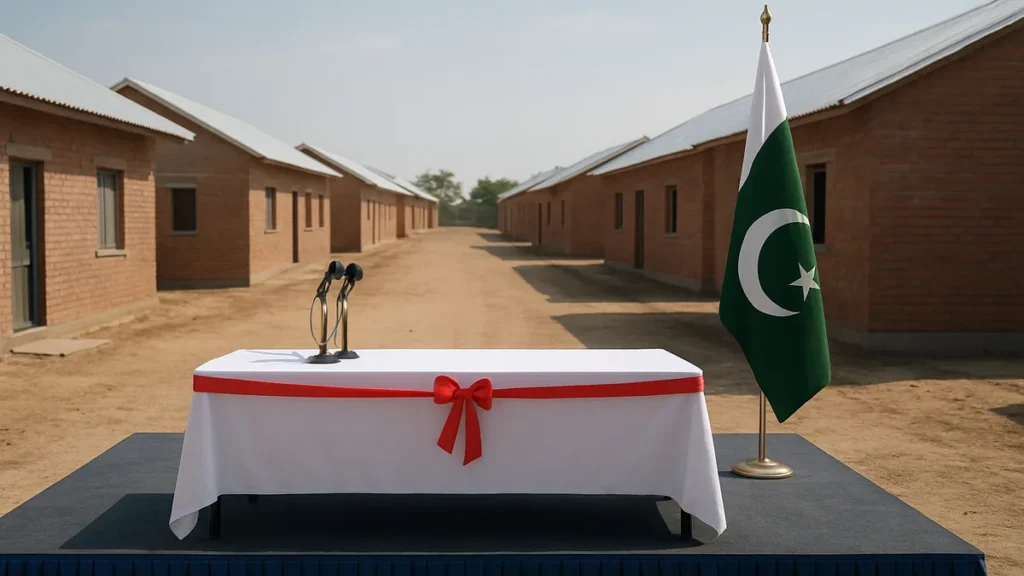
Speaking at a ceremony in Karachi, Bilawal marked the completion of one million houses for flood-affected families in Sindh. He said the country needed political cooperation rather than more confrontation. He added that Prime Minister Shehbaz Sharif should first rebuild trust with his coalition partners before reaching out to opposition parties.
Emergency rule and governor’s rule in Khyber Pakhtunkhwa
Bilawal’s remarks come as relations between the federal government and opposition parties have grown tense. The main point of friction is the imposition of emergency measures and governor’s rule in Khyber Pakhtunkhwa. President Asif Ali Zardari approved both on October 11, under Articles 232 and 234 of the Constitution, after the federal cabinet recommended them.
Also read: Bilawal urges govt to drop confrontation amid economic hardship
The federal government pointed to a worsening security situation and what it described as the provincial administration’s alleged failure to deal effectively with terrorism. A joint sitting of Parliament endorsed the measures on October 15, with 214 lawmakers in favour and 56 against. Opposition leaders criticised the decision and questioned whether it had a sound constitutional basis.
The ruling party in the province, Pakistan Tehreek-e-Insaf (PTI), challenged the move in the Peshawar High Court, seeking the restoration of the elected provincial government. Earlier this month, Bilawal suggested a possible way out of the deadlock. He said he would ask the federal government to withdraw governor’s rule if Islamabad and PTI reached an agreement on counterterrorism.
He also urged the government to stop confronting the party founded by Imran Khan, as well as Jamiat Ulema-e-Islam-Fazl (JUI-F) chief Maulana Fazlur Rehman. In his view, political differences should not stand in the way of cooperation on security and economic challenges.
Sindh’s flood housing programme and its funding
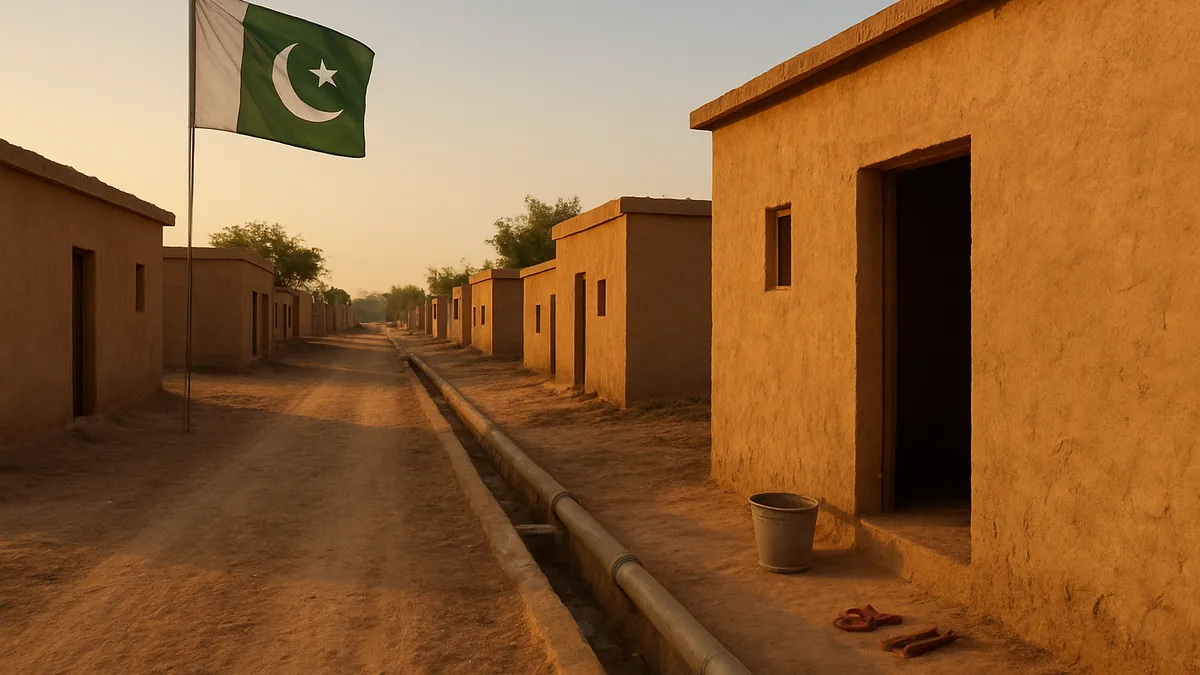
Turning to the housing initiative, Bilawal said the Sindh government had completed one million homes for families affected by the 2022 floods. It plans to build two million more. Figures reported at the time put the number of people affected by the 2022 monsoon floods at around 33 million, with more than 1,700 killed. The disaster damaged or destroyed millions of homes, and Sindh suffered the largest share of the destruction.
The provincial government later launched the Sindh People’s Housing for Flood Affectees (SPHF) programme to rebuild homes. The World Bank approved $500 million in financing for the initiative in December 2022. Bilawal called it the world’s largest housing initiative and the biggest land transfer programme in Pakistan’s history. He said it gave vulnerable families homes as well as ownership rights to the land beneath them.
According to Bilawal, the project has surpassed a record previously held by Nepal’s government for home construction. He also said it generated around one million employment opportunities. He stressed that women were made owners of the houses and land, which he said gave them greater financial security and independence.
Bilawal rejected allegations of corruption linked to the scheme. He said the houses had been built despite criticism from political opponents. He thanked Prime Minister Shehbaz for backing the project, while criticising the previous federal government for not providing financial help to Sindh when the floods hit.
Sindh Chief Minister Murad Ali Shah said the programme has a target of 2.1 million climate-resilient homes across 23 districts. He said the provincial government had also contributed $179 million from its own resources, alongside the World Bank’s $500 million. Murad said every completed house had gone through digital monitoring and verification. He added that the programme had enabled millions of rural women to become homeowners for the first time.
Murad said work was also underway on clean water, sanitation and drainage, and that an investment of $1 billion was planned to provide essential services to 4,800 villages. Affected families were made responsible for building their own homes rather than relying on contractors, he said. He credited the people of Sindh as the real contributors to the initiative.