


Pakistan Tehreek-e-Insaf (PTI) Secretary-General Salman Akram Raja stated on Monday that negotiations between the government and opposition collapsed due to two critical issues: access to imprisoned PTI founder Imran Khan—including meetings with his legal team, family, party associates, and doctors—and disagreements over the approach to counterterrorism operations in Khyber Pakhtunkhwa (KP).
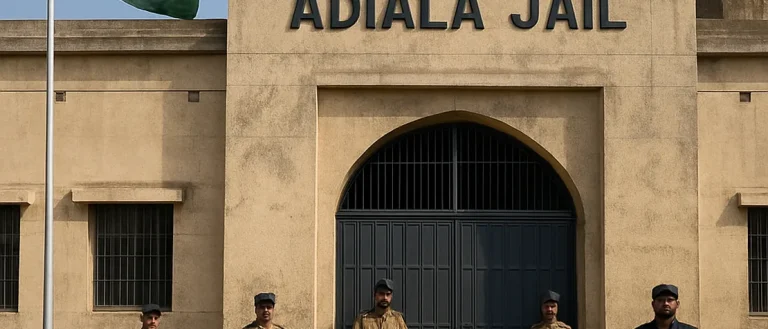
Speaking at a press briefing in Islamabad alongside PTI leader Babar Awan and other party figures, Raja emphasized that the PTI had insisted from the outset that no agreement could be concluded without consulting Imran Khan and considering the party’s stance. The party also demanded that Imran’s lawyers, family members, and trusted political allies be granted access to him, arguing that such contact was vital both for his legal defense and the nation’s political stability.
“These points were clearly presented, and it was made evident that the negotiation process could not succeed until these key concerns were resolved,” Raja noted.
The talks, held in the National Assembly speaker’s chamber, ended in deadlock after two rounds, with both sides unable to reconcile differences over counterterrorism strategies in KP and access to Imran Khan. These discussions were intended to prevent PTI’s planned long march on Islamabad.
Raja highlighted that Imran Khan and his wife, Bushra Bibi, are facing over 300 legal cases, making access to their lawyers essential. He explained that lawyers require direct communication with their clients to receive instructions and provide proper representation in court. “A lawyer presents in court what the client instructs,” Raja said, underscoring the necessity of allowing Imran’s legal team to meet him.
He added that Imran’s family has the primary right to visit him, alongside lawyers handling his cases. However, the issue extends beyond legal consultations. Imran Khan remains the leader of the country’s largest political party, and for the sake of political stability, senior party members and trusted confidants—some of whom have been associated with him for over three decades—must have access to him.
The PTI has therefore demanded meetings between Imran and his family, lawyers, and political colleagues, presenting these demands to the government’s negotiating team. Additionally, the opposition requested access to Imran’s personal doctors, emphasizing that this was a medical necessity rather than a political demand. “If the founder of PTI is denied access to his personal physicians, then continuing talks is pointless,” Raja declared.
The party sought to include provisions regarding Imran’s meetings and medical care in the proposed agreement, but the government rejected the opposition’s terms.
Raja explained that while the PTI entered negotiations in good faith and with an open mind, viewing the initial rounds as the start of a process rather than expecting all issues to be resolved immediately, the talks eventually broke down. Although progress was made on several topics, two main issues remained unresolved: access to Imran Khan and the counterterrorism strategy in KP.
He revealed that the PTI delegation decided around 2:40 a.m. that further discussion was unproductive, citing these unresolved matters as the cause. “If agreement can still be reached on these two issues, we are willing to resume talks for Pakistan’s stability,” Raja said.
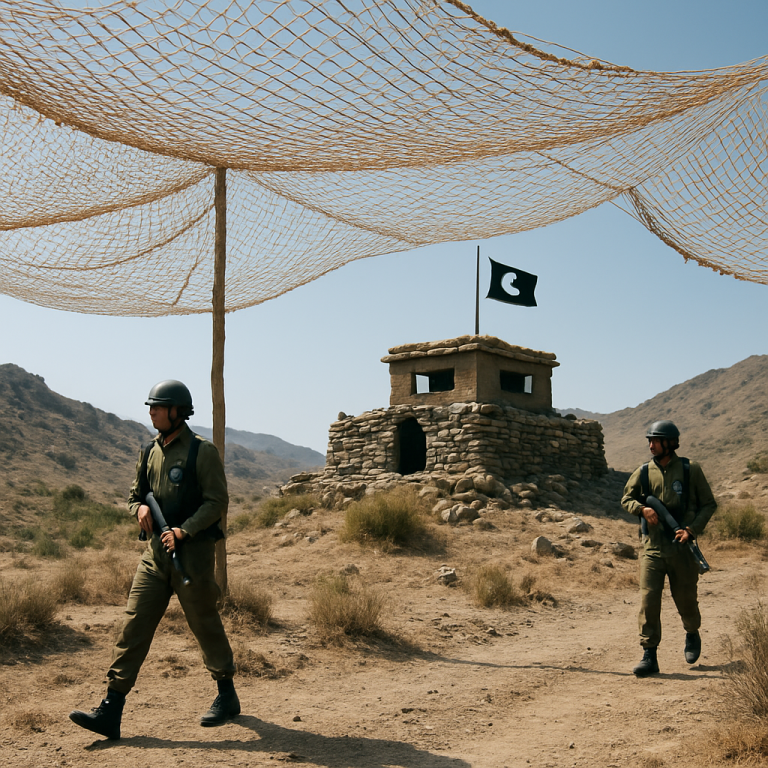
Regarding the counterterrorism dispute, Raja stated that the negotiations included extensive discussions on militancy in KP and how it should be addressed. The PTI made clear that any future counterterrorism strategy in the province cannot be imposed unilaterally. Instead, it should be jointly developed by the federal and KP governments, with input from political parties represented in the KP Assembly and tribal elders.
He referred to a peace jirga held at the KP Assembly, which included representatives from major political parties such as the Pakistan Muslim League-Nawaz (PML-N), Pakistan People’s Party (PPP), and Awami National Party (ANP), alongside tribal elders. Raja urged the federal government to heed the jirga participants, who understand the province’s realities and can advise on effective strategies.
“It is not feasible for Islamabad to determine KP’s counterterrorism approach while remaining detached from the people and political forces directly affected by militancy,” Raja argued. He insisted that the KP Assembly, political parties, and tribal elders must all be involved in shaping the future strategy, which should be based on consensus and consultation.
The PTI has previously stated that the main contention was the federal government’s insistence that the KP government endorse or assume ownership of counterterrorism operations initiated by the Centre and its agencies. The PTI maintains that such actions should be mutually agreed upon by both federal and provincial governments and supported by political parties within the provincial assembly.
Raja’s explanation aligns with the PTI’s earlier public statements regarding the talks’ failure. The PTI-Tehreek Tahafuz-i-Aain-i-Pakistan (TTAP) negotiating team emphasized that counterterrorism measures in KP must be based on an agreement between the federal and provincial authorities, formulated in consultation with the political parties represented in the KP Assembly.
The PTI clarified that its objection is not to counterterrorism efforts themselves but to the unilateral manner in which they are planned and executed. Raja noted that the government sought PTI’s support for ongoing operations in KP, but the PTI insisted that its own position on restoring peace and security in the province be incorporated.
Raja also referenced a proposal discussed during the talks involving emergency measures to be implemented within 72 hours in KP and adjacent tribal districts. The government reportedly sought PTI backing for these swift actions, but the party maintained that such decisions cannot be made without consulting the provincial government and other political stakeholders.
Reports suggested that the government and opposition had come close to agreeing on a draft deal, but disagreements over counterterrorism provisions ultimately prevented finalization. The government, however, has offered a different perspective on the breakdown of talks.




Leave an opinion