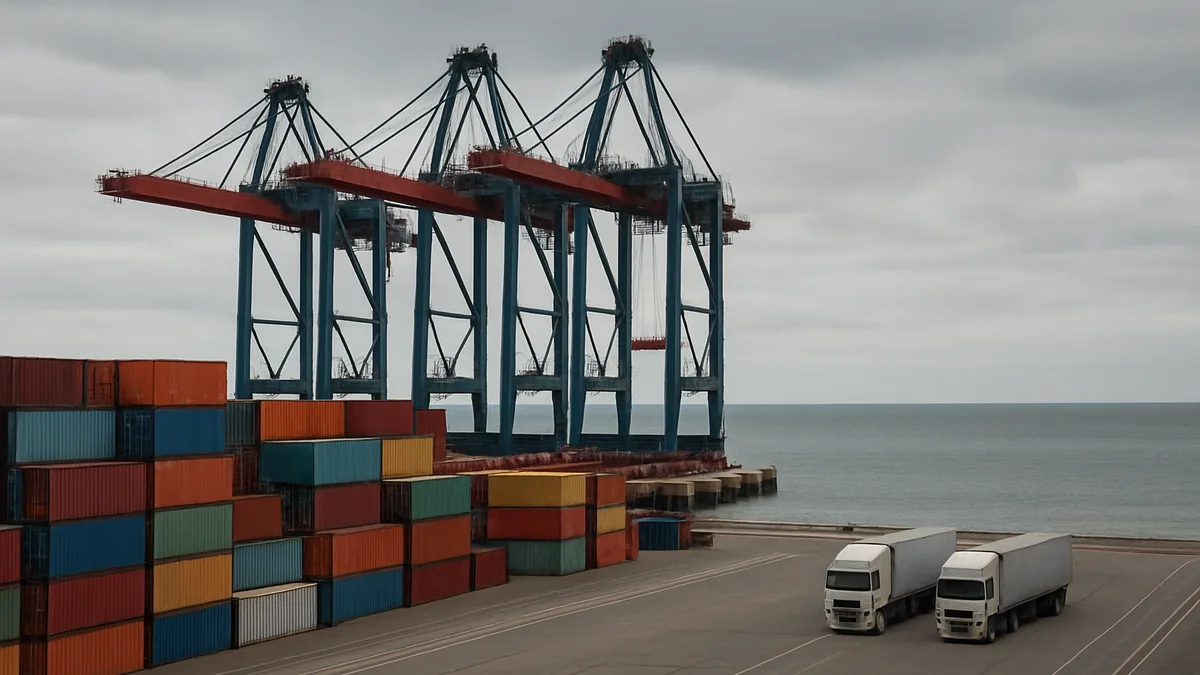
Iran’s economy is expected to contract further as the United States continues its blockade of the country’s ports, a squeeze that is hurting tens of millions of Iranians. Experts say it is too early to tell whether Washington’s economic embargo will achieve its aims of collapsing the Iranian government or forcing it to meet US demands.
Washington believes its naval blockade, disruption to overland trade and sanctions, which form part of its maximum pressure campaign, are working. The US has also brought a third aircraft carrier into the region to support a possible military escalation, a move that appears designed to push Tehran into conceding more ground.
Sanctions and blockade test Iran’s economic resilience
The pressure follows a deadlock in the US-Israel war on Iran, which began with strikes that killed Supreme Leader Ayatollah Ali Khamenei on February 28. Washington has since demanded that Tehran reopen the Strait of Hormuz and curb its nuclear programme.
Iranian authorities insist they can withstand the economic pressure and have put forward their own demands. This week, strikes on US interests in the region, including radar systems in Bahrain, were seen as a defiant response to the military and economic pressure. Signs are nonetheless emerging that the economy and ordinary Iranians are struggling under current conditions.
Rising money supply and inflation forecasts
Tehran-based economist Peyman Molavi said inflation could rise considerably over the coming months if current conditions persist. He said the effects would spread to parallel markets, including foreign currencies, gold, the stock market and housing.
“But it will unfortunately have the largest impact on the commodities market, from energy to agricultural products, metals, and industrial products,” he said.
Iran’s governments have for decades plugged budget deficits by printing money, leaving the country with a growing money supply that feeds chronic inflation. The shortage of foreign currency caused by disrupted oil exports under the US military blockade has made the situation worse.
Molavi estimated that the year-on-year growth of the money supply could rise to between 55 and 60 percent by the end of the Persian year in late March, up from nearly 51 percent now. Combined with negative economic growth, he said annual inflation could reach about 85 percent and point-to-point inflation could hit 100 percent.
Official figures show prices and output under strain
According to the Statistical Centre of Iran, the 12-month average annual inflation rate stood at 76.8 percent for the seventh Iranian month of Mehr, which ended on October 22. Point-to-point inflation, which compares that month with the same month a year earlier, was 88.7 percent.
Essential goods have already been seeing triple-digit inflation for months. The centre said food, beverages and tobacco rose 113.4 percent year on year in October.
Iran’s official figures indicated that gross domestic product shrank 10.1 percent year on year between March 21 and June 20, the first quarter of the Persian calendar year. Economy Minister Ali Madanizadeh said on Sunday that officials believed Washington was trying to reach its goals through shifting threats.
“American officials believe they can achieve their goals through threats and raise something new each time; from the possibility of collapse to military threats and intensified economic pressure,” Madanizadeh said.
Madanizadeh insisted that all overland routes to and from Iran remain open, apart from one with Iraq that was closed for security reasons, despite US efforts to isolate the country from its neighbours.
Shoppers and traders describe losing purchasing power
Personal accounts of falling purchasing power are increasingly circulating on Iranian social media. Many people in the country of about 90 million say their money is buying far less than it did a year ago.
“Everywhere you look, you could have bought the same commodity with one-fifth of the money last year,” one user wrote on X. “That’s no joke, millions of people have been crushed in between.”
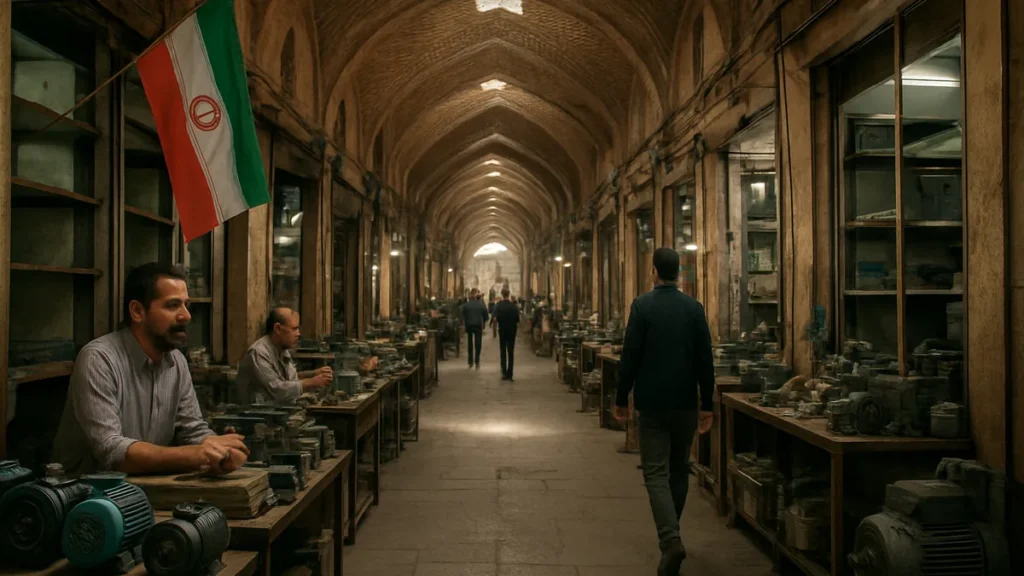
Saleh, a 37-year-old shopkeeper at Tehran’s Grand Bazaar who sells electric motors for small industrial units, said domestic and Chinese-made goods can still be found readily. However, supply and demand have fallen since US sanctions began to bite. He asked not to be identified by his full name for security reasons.
“The reason is that commodities are expensive, and there’s been a stagnation in the market and also uncertainty over what will happen next,” he said. He added that businesses with an established client base were proving more resilient.
“I don’t see the market being near collapse, but there’s less business,” Saleh said, describing how sales had dropped even as higher prices preserved some profit.
Bessent’s claims and the Soviet comparison
Hemmati, the Iranian central bank governor, responded to US Treasury Secretary Scott Bessent, who has led Washington’s sanctions regime against Tehran. Hemmati said the bank had secured $30bn in foreign currencies to weather pressure in the months ahead, with priority given to buying essential goods for citizens.
Bessent has claimed the economic embargo will shrink the Iranian economy by 25 percent by the end of March 2027. He has also described the situation as “one of the fastest collapses in history” and the sanctions campaign as “the greatest economic isolation in the history of the world against a single country”.
Bessent also compared Iran with the period before the collapse of the Soviet Union in 1991, saying the country’s economy had shrunk 22 percent over three years before the union fell. Molavi said the comparison may not translate into immediate collapse for Iran, because the two countries have fundamentally different economic models.
Molavi noted that Iran’s nominal GDP has fallen from $645bn in 2012 to about $300bn now, and could decline further if sanctions continue. “With the current [level] of underinvestment, halted oil sales, disrupted exports and the sense of suspension in the economy, our economic growth will become even more negative,” he said.