



Pakistan is expected to require an additional 62,660 to 70,720 megawatts of power generation capacity by 2035 to support anticipated economic growth ranging from 3.5% to 6.4%, as outlined in the updated Indicative Generation Capacity Expansion Plan (IGCEP) 2025–35. This decade-long strategy, formulated by the Independent System and Market Operator in collaboration with the National Electric Power Regulatory Authority (Nepra) and other stakeholders, maps out the expansion of generation and transmission infrastructure across the country, including the K-Electric network.
The capacity needs are based on three demand scenarios linked to GDP growth rates of 3.52% (low), 4.95% (medium), and 6.37% (high), estimating additions of 62,657MW, 66,459MW, and 70,720MW respectively. These projections account for rising electricity demand driven by economic recovery and industrial development. However, this outlook contrasts with a recent decline in power consumption.
Notably, the system’s load factor has dropped from 70-73% to approximately 58-60%, indicating significant underutilization of current capacity. Distribution companies have reported reduced grid consumption due to economic challenges and the rapid adoption of rooftop solar and net metering. Despite this, planners view the decline as temporary, expecting demand to stabilize over time. Demand-side management initiatives are planned to enhance system efficiency and increase the load factor back to around 70% by 2035.
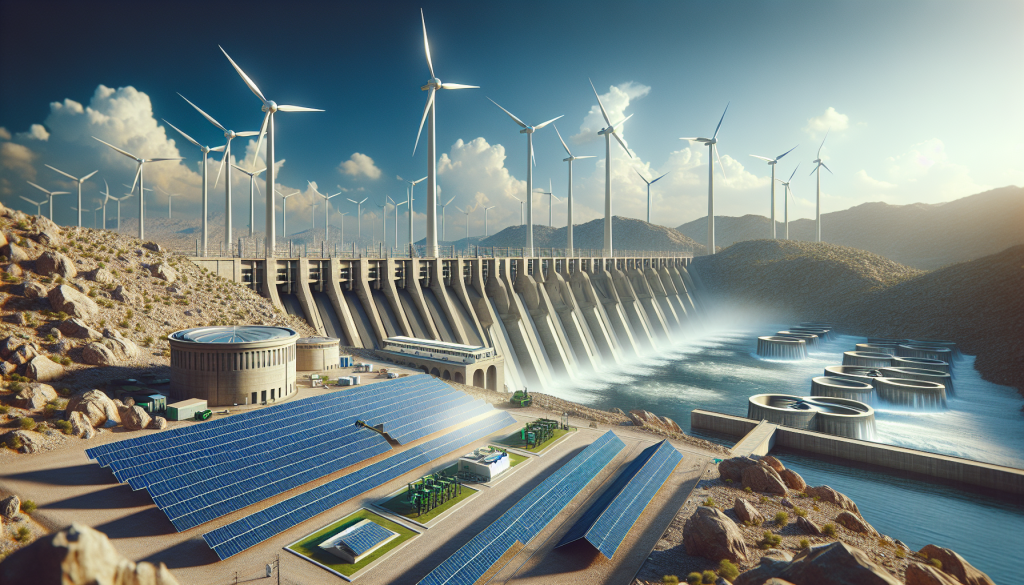
In a significant development, the IGCEP highlights a strategic shift towards domestic and renewable energy sources. By 2035, hydropower is projected to constitute 34% of installed capacity, while variable renewables such as solar and wind will represent 27%. Conversely, dependence on imported fuels is set to decrease, with furnace oil completely phased out and imported coal and RLNG contributing just 7% and 13% respectively.
The plan envisions substantial capacity additions across various technologies, including 21,400MW of hydropower, up to 13,200MW of solar, and as much as 11,500MW of wind power, depending on the growth scenario. It also includes 8,224MW of RLNG, 4,730MW of nuclear power, and smaller increments from local coal, gas, and bagasse-based plants.
Meanwhile, the financial requirements remain considerable. Investments in generation capacity are projected between $46 billion and $54 billion, alongside an additional $4.6 billion to $6 billion needed for transmission expansion as part of the Transmission System Expansion Plan. The updated framework introduces flexibility by incorporating least-cost violation concepts to accommodate strategic projects, including major hydropower and solar developments, while recognizing the increasing role of distributed generation.
Net metering is anticipated to contribute 8,120MW to the system by 2035. Furthermore, electricity supply from the national grid to K-Electric is expected to rise to 3,456MW, up from the current contracted capacity of 2,050MW, reflecting evolving integration needs.
The plan aims to secure reliable base-load capacity through hydropower, nuclear, and gas-fired plants to manage the intermittency of renewables. However, analysts caution that the plan’s success hinges on actual demand growth. With shifting consumption patterns and rapid expansion of decentralized solar generation, there are concerns that overly optimistic demand forecasts could result in excess capacity and increased costs for consumers if the anticipated growth does not materialize.

Leave an opinion