



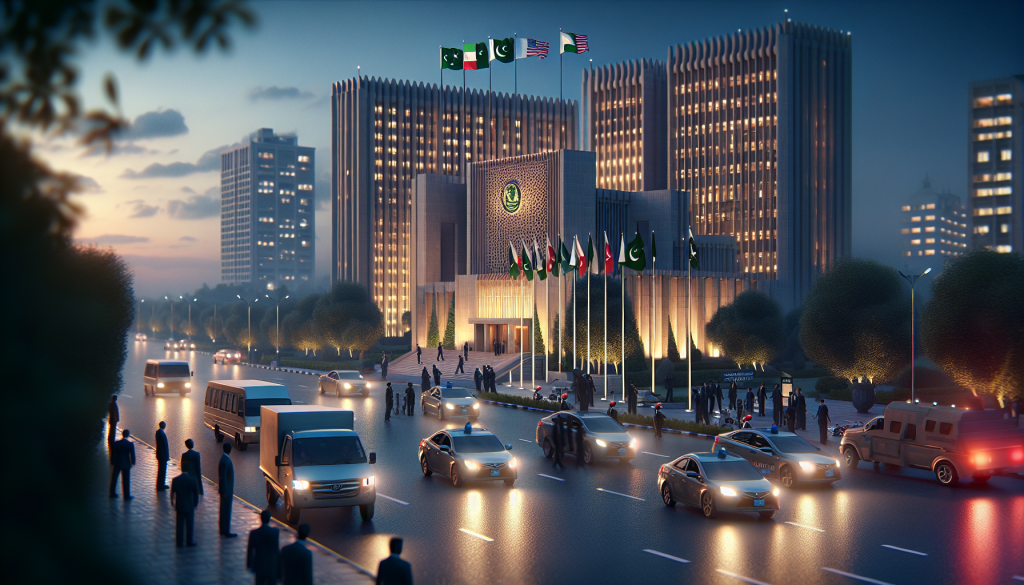
Iran’s Foreign Minister Abbas Araghchi is scheduled to arrive in Islamabad late Friday night, accompanied by a small delegation, as diplomatic efforts intensify to facilitate potential engagement talks between the United States and Iran.
Pakistan’s mediation team is set to conduct crucial discussions aimed at enabling a second round of peace negotiations between Washington and Tehran in the Pakistani capital. While no official confirmation has been made by any party, ongoing contacts may pave the way for another round of talks in Islamabad.
Meanwhile, a US logistics and security team is already stationed in Islamabad in preparation for the anticipated discussions. However, the timing and agenda of these proposed meetings remain undisclosed by officials from Washington, Tehran, or Islamabad.
Prior to his arrival, Abbas Araghchi held separate phone conversations with Pakistan’s Deputy Prime Minister and Foreign Minister Ishaq Dar, as well as Chief of Defence Staff Field Marshal Asim Munir. These talks reportedly focused on recent regional developments, the current ceasefire status, and Pakistan’s efforts to facilitate the upcoming US-Iran negotiations.
Previous rounds of talks between Iran and the US, also held in Islamabad, concluded without agreement despite Pakistan’s mediation attempts. In a significant development, US President Donald Trump recently stated he felt no urgency to resolve the conflict, emphasizing on social media that “the clock is ticking” for Iran, not the US.
Trump further warned that US forces would destroy any vessels laying mines in the strategic Strait of Hormuz, escalating pressure on Iran to reopen this vital shipping route, which the US has sought to control through a naval blockade.
Iranian officials and analysts have rejected US claims, with analyst Hassan Ahmadian describing the US actions not as an economic blockade but as a pretext to reposition forces for a potential new phase of conflict. Iran’s leadership has also dismissed assertions of internal divisions, with President Masoud Pezeshkian, Parliament Speaker Mohammad Bagher Ghalibaf, and Judiciary Chief Gholamhossein Mohseni Ejei issuing unified statements emphasizing national cohesion.
Supreme Leader Ayatollah Seyyed Mojtaba Khamenei highlighted that this unity has “fractured the enemy” and cautioned against psychological warfare aimed at undermining public morale.
In recent weeks, Pakistan has increasingly positioned itself as a potential mediator between the two sides, as regional tensions remain high and diplomatic channels continue to operate through indirect engagement. Further updates are expected as the situation develops.

Leave an opinion