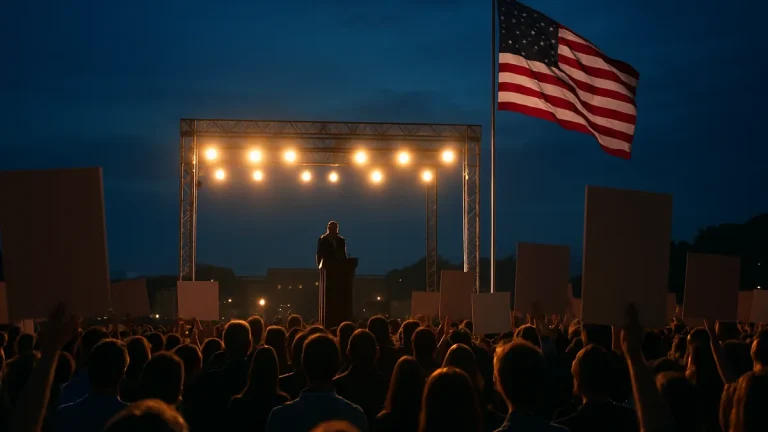

In a significant political upheaval, Hungary’s long-standing Prime Minister Viktor Orban was voted out after 16 years in office. The preliminary results from Sunday’s general election revealed a decisive victory for the centre-right Tisza party, led by Peter Magyar, which secured a commanding majority in the 199-seat parliament.
Orban, 62, who has been a dominant figure in Hungarian politics since 2010 and a proponent of what he termed an “illiberal democracy,” conceded defeat, describing the outcome as “painful but clear.” His administration had faced mounting criticism both domestically and internationally over concerns related to democratic erosion, economic stagnation, and close ties with Moscow.
Addressing enthusiastic supporters in Budapest, Magyar, 45, declared victory and emphasized that Hungary had “reclaimed its future,” breaking away from the political system established under Orban’s leadership.
Near-final tallies indicate that the Tisza party is projected to win approximately 138 seats, granting it a two-thirds majority. This supermajority would enable Magyar’s government to amend the constitution and reverse many reforms implemented during Orban’s tenure. Magyar framed the election as a pivotal choice between deeper integration with Europe and continuing Orban’s confrontational approach toward the European Union.
Political analysts suggest this outcome could usher in anti-corruption measures, institutional reforms, and a realignment of Hungary’s foreign policy.
The election results are expected to have significant repercussions beyond Hungary’s borders. European leaders, including Ursula von der Leyen, welcomed the development, expressing optimism that Hungary would adopt a more cooperative stance within the EU. This leadership change could also lead to the release of billions in EU funds previously withheld due to rule-of-law concerns.
Meanwhile, Ukrainian President Volodymyr Zelenskiy congratulated Magyar and indicated a willingness to enhance cooperation, particularly on regional security and support for Ukraine. Orban had been one of Russian President Vladimir Putin’s closest allies in the EU, frequently opposing sanctions and obstructing key financial aid packages for Ukraine.
The election outcome also reverberated in the United States, where Orban had enjoyed backing from former President Donald Trump and conservative factions. Democratic leaders such as Chuck Schumer and Hakeem Jeffries praised Orban’s defeat as a repudiation of authoritarian governance. Conversely, some Trump supporters expressed disappointment, with tech entrepreneur Elon Musk voicing criticism on social media, highlighting divisions within US political circles over the result.
Neighboring countries responded swiftly. Slovak Prime Minister Robert Fico congratulated Magyar and expressed readiness for enhanced cooperation, while acknowledging Orban’s long-standing partnership. Polish Prime Minister Donald Tusk described the election as proof that Europe is not inevitably moving toward authoritarianism, calling it a positive sign for democratic forces in the region.
Despite the clear mandate, experts caution that Hungary’s new leadership faces significant challenges, including managing economic pressures, restoring relations within the EU, and addressing sensitive issues such as migration and energy dependence. Nonetheless, the high voter turnout on Sunday reflects strong public engagement and a widespread desire for change after more than a decade and a half under Orban’s rule.
This transition marks one of the most consequential political shifts in Central Europe in recent years, with implications likely to influence the region’s trajectory for the foreseeable future.