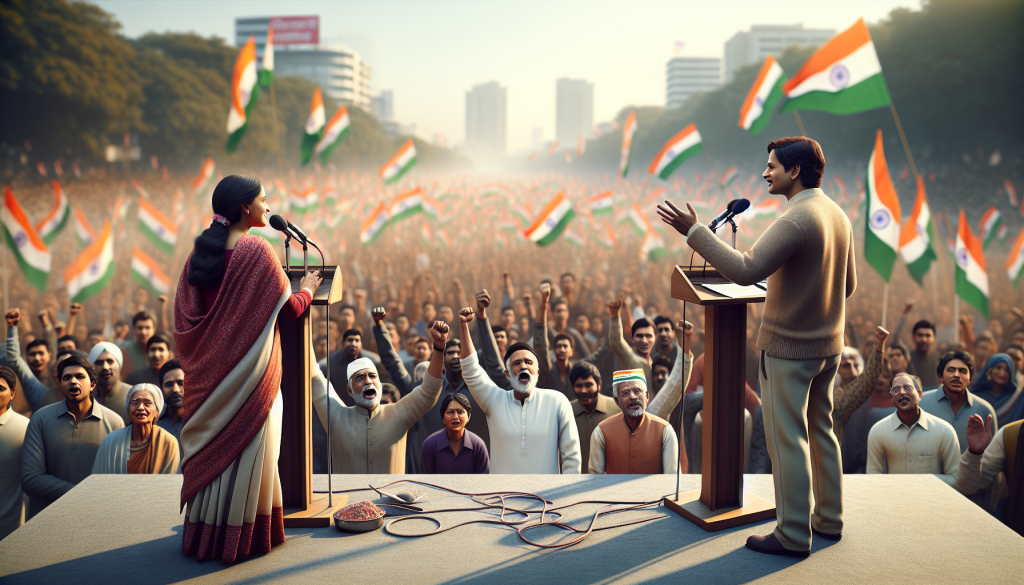
In a significant development in Indian politics, opposition leaders Rahul Gandhi and Mamata Banerjee have publicly accused the Bharatiya Janata Party (BJP) of rigging the recent state elections. Both leaders have expressed serious concerns about the fairness and transparency of the electoral process, suggesting that the ruling party may have engaged in manipulative tactics to secure victory. These allegations come amid heightened political tensions and scrutiny over election conduct in several Indian states.
Rahul Gandhi, a prominent figure in the Indian National Congress, and Mamata Banerjee, the Chief Minister of West Bengal and leader of the All India Trinamool Congress, have long been vocal critics of the BJP’s governance style. Their accusations highlight ongoing disputes over democratic norms and the integrity of electoral institutions in India. The BJP, which has been the dominant political force nationally, faces increasing opposition challenges in various regions, making these claims particularly impactful.
Meanwhile, the controversy surrounding the elections could have broader implications for India’s political landscape, potentially influencing voter trust and future electoral reforms. The allegations underscore the deepening polarization within Indian politics and the challenges faced by opposition parties in contesting power against the BJP. As the situation develops, it remains to be seen how these accusations will affect public perception and the legitimacy of the electoral process in the country.