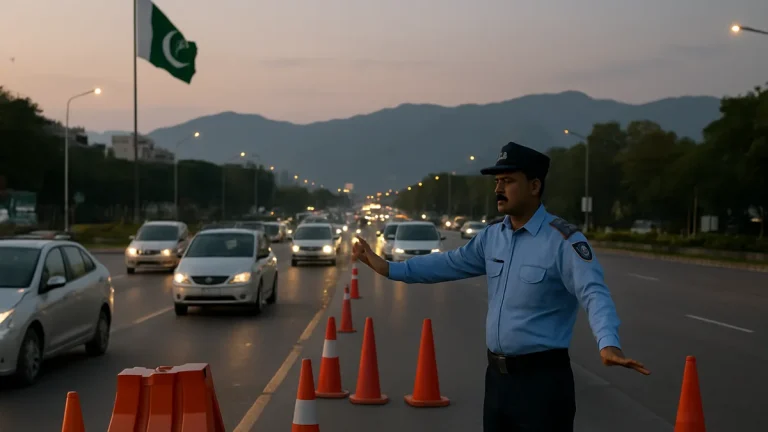
The Punjab government has taken a significant step to maintain public order by imposing Section 144 across the entire province. This directive, issued by the Punjab Home Department, prohibits all forms of public gatherings, rallies, and demonstrations for a period of seven days. The move comes as a precautionary response to intelligence warnings about potential terrorist threats targeting sensitive events and locations.
The official notification highlights concerns that public assemblies, especially those involving religious scholars, could become vulnerable to attacks by extremist elements. Authorities fear that such incidents might escalate sectarian tensions or provoke unrest, which could destabilize the region’s fragile peace. To mitigate these risks, the government has decided to restrict any congregation in public spaces without prior authorization from the relevant authorities.
In addition to banning public gatherings, the order explicitly forbids the display or carrying of weapons throughout Punjab during this period. This measure aims to prevent any violent outbreaks or misuse of arms that could exacerbate the security situation. Law enforcement agencies have been instructed to enforce these restrictions strictly, with police officers empowered to take immediate action against violators under the provisions of Section 144.
Meanwhile, on a broader scale, the federal government of Pakistan has introduced a nationwide ban on the operation of drones, encompassing all recreational and commercial unmanned aerial vehicles. This directive is rooted in growing concerns over the potential misuse of drones for espionage, smuggling, or terrorist activities. The ban requires all provincial administrations to ensure rigorous enforcement, although exemptions have been made for law enforcement and intelligence agencies who may continue to use such technology for official purposes.
Following the federal government’s lead, the Sindh Home Department has also declared a 60-day prohibition on drones, UAVs, and quadcopters within the province. This ban is effective immediately and applies to all civilian users, while security agencies retain their operational privileges. Officials have emphasized that this temporary restriction is designed to bolster provincial security and prevent any unauthorized aerial surveillance or attacks that could threaten public safety.
These coordinated efforts by both provincial and federal authorities underscore the heightened security environment in Pakistan. By restricting public gatherings and controlling the use of aerial devices, the government aims to preempt any attempts to disrupt peace or exploit technological tools for harmful purposes. Citizens are urged to comply with these regulations to help maintain law and order during this sensitive period.