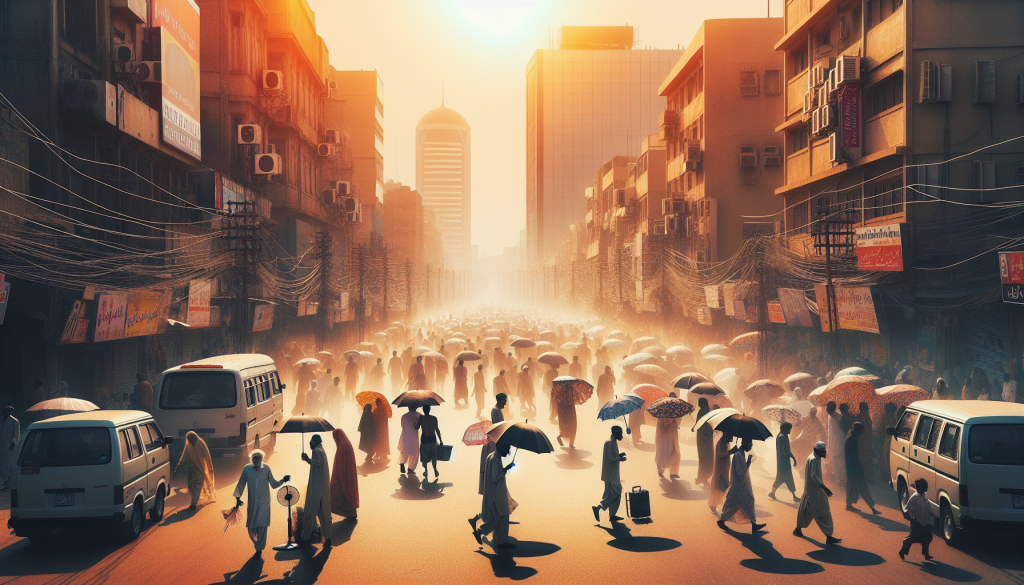
Karachi is currently experiencing an intense heatwave, with the perceived temperature soaring to 46°C. This extreme heat is significantly higher than the average for this time of year, causing discomfort and health risks for residents. The combination of high humidity and soaring temperatures is exacerbating the heat’s impact, making outdoor activities challenging. Authorities have urged people to take precautions to avoid heat-related illnesses.
Heatwaves of this magnitude can strain public health systems, especially in densely populated urban centers like Karachi. Vulnerable groups, including the elderly, children, and those with pre-existing health conditions, are at greater risk during such extreme weather events. Meanwhile, the city’s infrastructure, including electricity and water supply, faces increased demand as people seek relief from the heat. The situation highlights the growing challenges posed by climate change in South Asia’s major cities.
In a significant development, meteorologists warn that such heatwaves may become more frequent and severe in the future, urging long-term strategies for urban planning and public health preparedness. The current heatwave underscores the urgent need for effective heat mitigation measures, such as increased green spaces and improved cooling facilities. Public awareness campaigns are also critical to educate citizens on staying safe during extreme temperatures. Karachi’s experience serves as a stark reminder of the broader environmental and social impacts of rising global temperatures.