When a renowned menswear expert pauses to examine an image, the focus transcends mere branding or cost. It centers on a rare quality known among enthusiasts as the “ghost in the cloth”—the moment when tailoring evolves from simple clothing into architectural form.
Recently, Derek Guy highlighted an image featuring Shehbaz Sharif of Pakistan alongside Akinwumi Adesina from Nigeria and Japan’s Naruhito, noting how men from non-Western countries often wear exquisite Western-style tailoring on the global stage. While he commented on Adesina’s suit, Sharif’s attire remained an intriguing enigma, inviting deeper analysis.
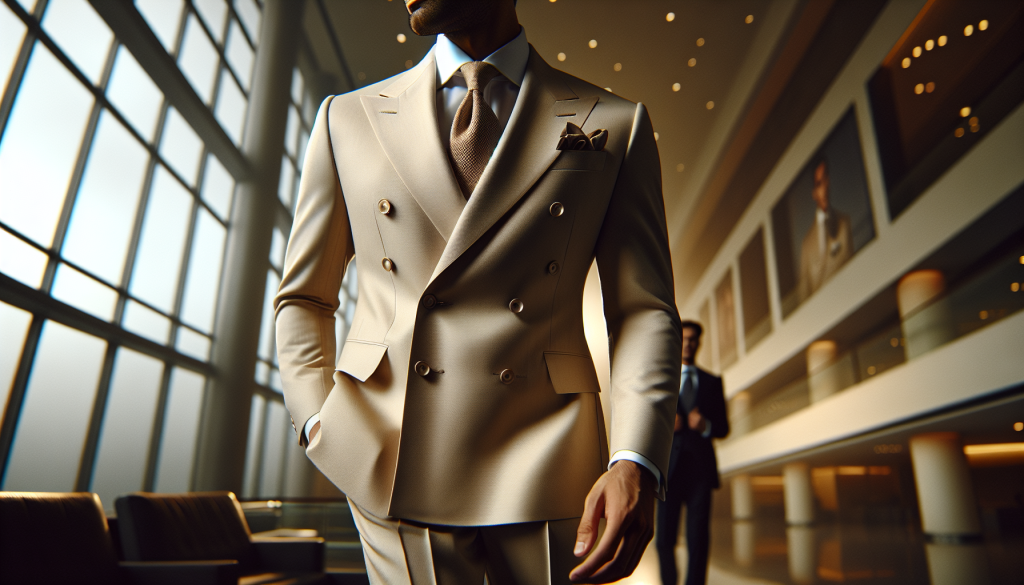
The suit’s cream color plays a pivotal role in its impact. Light shades are unforgiving, revealing every structural detail and imperfection. Yet, Sharif’s suit shows none. The fabric, likely a high-twist wool-mohair blend, possesses a substantial weight that allows it to drape elegantly without folding or creasing, maintaining its form even mid-movement. This material choice reflects light softly, resembling polished stone rather than absorbing it.
More than aesthetics, the cream hue conveys a nuanced message: authority without aggression and formality without coldness. It serves as a visual expression of diplomacy, akin to a firm, steady handshake rendered in fabric.
The jacket is a double-breasted design in a classic 6-on-2 button configuration, embodying tailoring’s golden ratio. It balances structure and elegance with a full, shaped chest and a gently tapered waist, creating a natural V silhouette. Notably, there is no tension at the fastening point, indicating precise tailoring. The jacket acts less like clothing and more like a calibrated shell, retaining its shape during movement.
Sharif’s peak lapels are subtly dramatic—wide but not overwhelming, with a slight curve known as a “belly” that directs the viewer’s gaze upward toward the face. Their proportions harmonize with the tie width, collar spread, and shoulder line, creating a symmetry that feels instinctive rather than deliberate.
The shoulders strike a balance between padding and softness, suggesting quiet strength without rigidity. The sleeves exhibit a faint roping at the head, framing the upper body delicately. Their clean hang and absence of twisting reveal a bespoke sleeve pitch tailored specifically to Sharif’s posture, a detail unattainable in off-the-rack garments. The trousers complement this philosophy with a clean line and a single break, avoiding excess fabric pooling and maintaining an uninterrupted vertical silhouette.
Every element of the outfit exemplifies restrained luxury. The tie is modest, the shirt cool-toned to contrast with the suit’s warmth, and even the lapel and flag pins serve as subtle identity markers rather than distractions. Hidden hand-finished buttonholes, painstakingly stitched, complete the garment quietly, embodying luxury without ostentation.
Movement is the ultimate test for any suit. Sharif’s jacket neither bunches nor distorts, and the trousers hold their shape seamlessly. The suit moves harmoniously with him, not against him, confirming it was crafted specifically for his body and stride.
In sum, this is not mere fashion, which is transient, but architectural tailoring. The viral acclaim among global elites underscores a vanishing standard of excellence. In an age dominated by fast fashion and ill-fitting off-the-rack suits, Shehbaz Sharif’s ensemble stands as a testament to precision and respect. It communicates discipline, attention to detail, and control before a word is spoken, commanding any room it enters.