



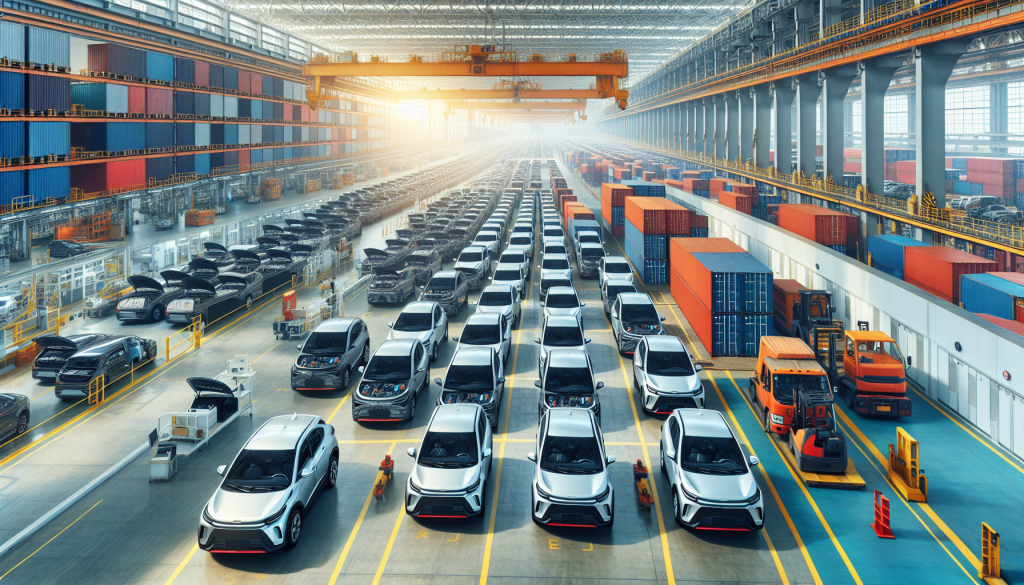
China’s car exports, a vital growth driver for the nation’s fiercely competitive automotive industry, accelerated significantly in March despite shipment interruptions caused by the ongoing Middle East crisis, a key overseas market for Chinese vehicles. Exports rose 73.7% year-on-year to almost 700,000 units last month, outpacing the 54.1% growth recorded in January and February, data released by the China Passenger Car Association.
In a notable development, Cui Dongshu, the association’s secretary-general, remarked that car exports have entered a phase of exceptionally rapid expansion, surpassing initial expectations. Meanwhile, domestic vehicle sales continued to decline, dropping 15.2% compared to the previous year to 1.67 million units in March. This marked the sixth consecutive month of falling sales, influenced by rising fuel prices that dampened demand for traditional combustion engine vehicles. Electric vehicle (EV) sales also struggled amid reduced government incentives and a sluggish economic recovery.
Sales of combustion engine cars fell 15.7%, a sharper decline than the 13.4% decrease seen in the first two months of the year. Although the Chinese government has capped domestic fuel price increases to mitigate the impact of soaring oil prices linked to the Middle East conflict, dealers continue to face pressure from excess inventory. An index tracking unsold vehicles rose last month as consumer interest in new EVs waned due to the removal of purchase tax exemptions and other incentives.
In the fiercely competitive domestic market, sales of EVs and plug-in hybrid electric vehicles (PHEVs) dropped 14.4% year-on-year. EV manufacturer BYD experienced its seventh consecutive monthly sales decline in March, despite ongoing strong growth in overseas markets such as Europe, where rising fuel costs have boosted EV demand. BYD executives expressed optimism about surpassing 1.5 million vehicle sales abroad this year, highlighting the company’s expanding international footprint.

Leave an opinion