



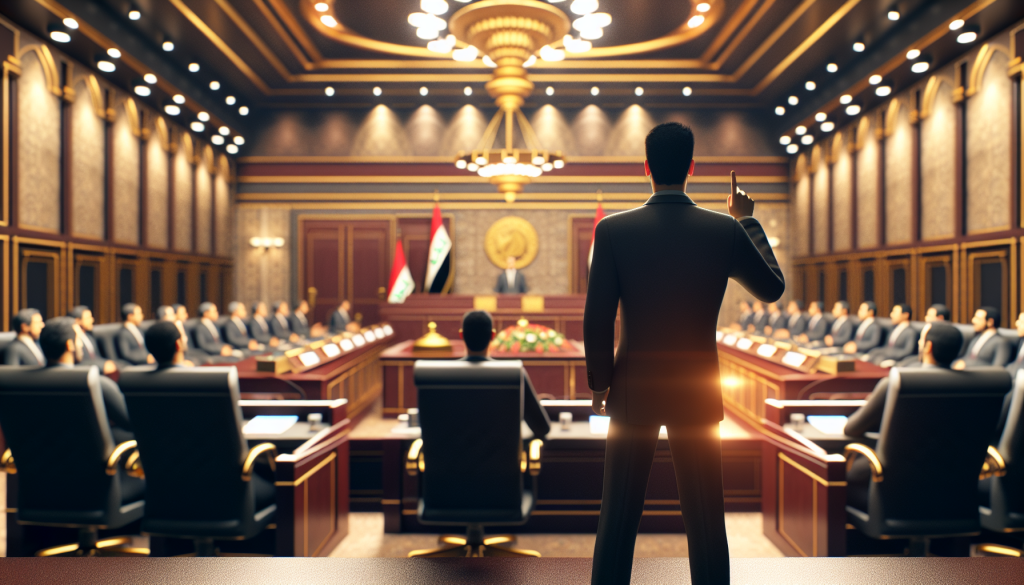
Iraq’s parliament has elected Nizar Amedi, a Kurdish politician, as the country’s new president, securing 227 votes in the process. This election marks the conclusion of a prolonged political stalemate that lasted for five months, during which the country struggled to form a unified government. Amedi’s victory is significant as it reflects a consensus among diverse political factions in Iraq, highlighting the importance of Kurdish representation in the nation’s leadership. His election is expected to pave the way for smoother governance and political stability in Iraq.
In a notable development, Nizar Amedi pledged to prioritize national interests under the slogan ‘Iraq First,’ signaling his commitment to fostering unity and addressing the country’s pressing challenges. Iraq has faced numerous difficulties, including sectarian tensions, economic hardships, and security concerns, which have been exacerbated by political deadlock. The president’s role, while largely ceremonial, is crucial in facilitating dialogue among Iraq’s fragmented political groups and supporting the formation of a functional government. Amedi’s leadership is anticipated to contribute positively to Iraq’s fragile political landscape.
The end of this five-month impasse is expected to have a broader impact on Iraq’s domestic and regional affairs. Political stability is essential for advancing economic reforms, improving security, and attracting foreign investment, all of which are vital for Iraq’s recovery and development. Moreover, the election of a Kurdish president underscores the ongoing efforts to balance ethnic and sectarian representation in Iraq’s power-sharing system. As Iraq moves forward, the international community will be watching closely to see how this new leadership navigates the complex challenges facing the country.

Leave an opinion