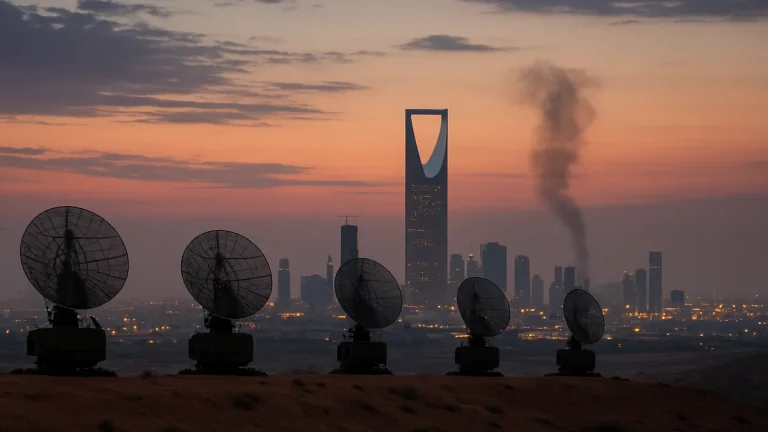
Tensions in the Middle East escalated sharply as Iranian air defence systems engaged targets over Tehran after the United States confirmed precision airstrikes on strategic locations along Iran’s coast. The night sky above the Iranian capital was lit up by anti-aircraft fire and interceptor missiles in the early hours of Friday.
Although Iranian officials have not disclosed details about the aerial threat, this activity coincides with a marked increase in hostilities in the Persian Gulf. A senior US official confirmed that the strikes targeted military installations on Qeshm Island, which hosts key Islamic Revolutionary Guard Corps (IRGC) naval bases, as well as the port city of Bandar Abbas.
Meanwhile, Washington emphasized a defensive posture despite the escalation. A National Security Council spokesperson at the White House described the operations as “proportionate and defensive,” aimed at weakening Iran’s capacity to disrupt international shipping in the Strait of Hormuz. The official stressed that the United States is not seeking a broader conflict nor restarting the war, characterizing the strikes as targeted actions to protect US personnel and maintain freedom of navigation.
This approach echoes the “Love Tap” strategy previously referenced by the Trump administration, indicating that these strikes are intended as tactical warnings rather than the start of a prolonged campaign. However, the deployment of significant force against mainland targets poses a risky challenge to the fragile ceasefire established just last month.
In a significant development, Tehran responded swiftly and harshly. State media condemned the strikes as a “cowardly act of aggression” and a blatant violation of international law. An IRGC commander declared that the “fingers of the resistance remain on the trigger,” with reports indicating Iranian naval vessels are moving into offensive positions in the southern region.
Regional analysts caution that the line between a “defensive strike” and an outright declaration of war is becoming increasingly blurred. With global oil markets already reacting to the closure of the Strait of Hormuz, the international community is anxiously awaiting the scheduled Islamabad peace talks this weekend, uncertain whether they will proceed or if the region will be drawn back into full-scale conflict.