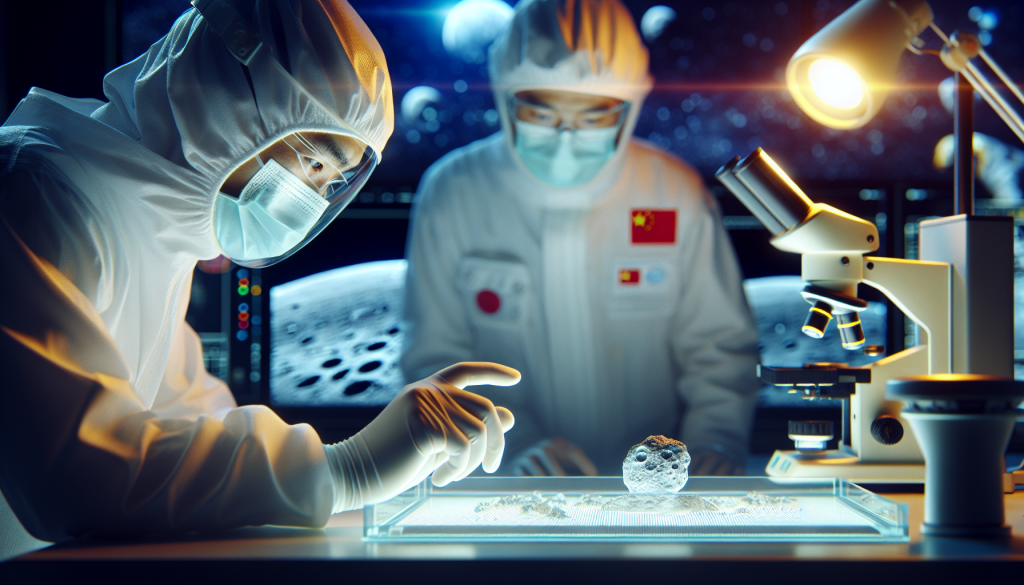
In a significant development for lunar science, Chinese researchers have identified a new transparent mineral extracted from a 44-gram rock brought back from the Moon. This discovery adds to the growing body of knowledge about the Moon’s geological composition, providing fresh insights into its mineral diversity. The sample, collected during recent lunar missions, offers a rare glimpse into the Moon’s formation and the processes that shaped its surface.
The identification of this novel mineral is notable because transparent minerals are uncommon in lunar samples, which are typically dominated by opaque materials. This finding could help scientists better understand the Moon’s volcanic history and the conditions under which its minerals formed. Moreover, it may influence future lunar exploration strategies, including the selection of sites for sample collection and in-situ analysis.
Meanwhile, the discovery underscores China’s expanding role in space exploration and lunar research. As the country continues to conduct robotic missions and plans for crewed lunar landings, such scientific breakthroughs enhance its contributions to global space science. This new mineral could also have implications for comparative planetology, offering clues about the geological evolution of other celestial bodies.