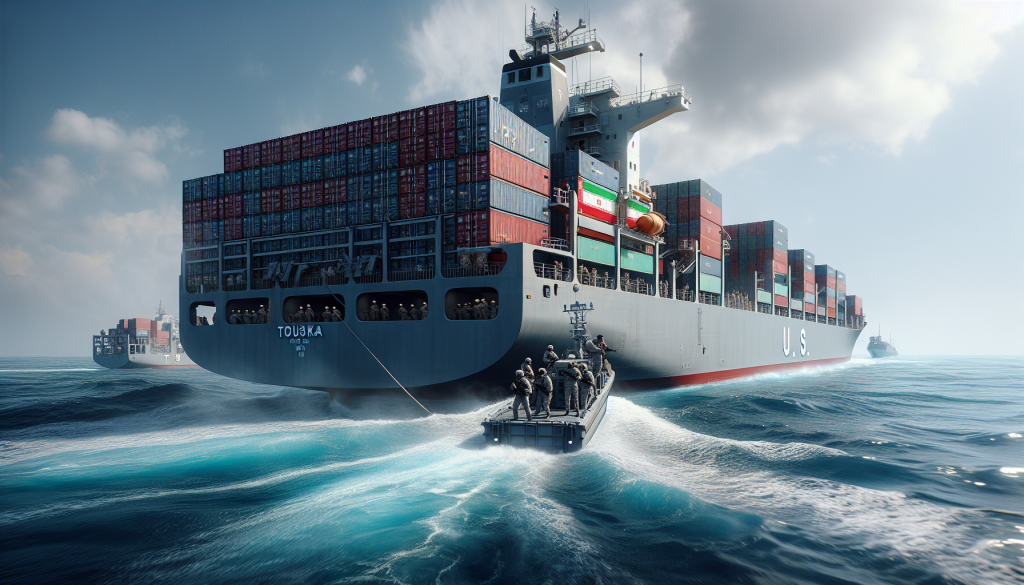
A US naval operation led to the seizure of the Iranian-flagged container ship Touska in the Gulf of Oman, driven by suspicions that the vessel was transporting dual-use materials. These are items that can serve both civilian and military purposes, maritime security sources.
The ship, associated with the sanctioned Islamic Republic of Iran Shipping Lines (IRISL), was intercepted close to Iran’s Chabahar coast after repeatedly ignoring warnings issued by US officials. The United States Central Command described the boarding as the culmination of a prolonged standoff and noted it was conducted under expanded enforcement measures aimed at restricting shipments to Iran.
Initial evaluations of the cargo suggest it included materials commonly monitored by Washington due to their potential applications in weapons development. Although the exact contents remain undisclosed, such cargo typically involves metals, piping, and electronic components.
Prior to the interception, the Touska had journeyed from China, making stops at several ports including Taicang and Gaolan, before loading additional containers near Malaysia’s Port Klang. The vessel was fully loaded when it entered the Gulf of Oman.
US authorities have long accused IRISL of facilitating procurement related to Iran’s missile program, which is a primary reason the shipping line remains under sanctions. This recent seizure is part of a broader US strategy to enforce a maritime blockade targeting shipments considered prohibited or sensitive.
In a significant development, Iran strongly condemned the seizure, labeling it unlawful and demanding the immediate release of the ship and its crew. The Iranian foreign ministry warned that such actions risk escalating tensions further. State media, citing military officials, described the event as an act of “armed piracy.”
Meanwhile, China expressed concern over the incident, calling on all parties to honor existing agreements and avoid steps that could increase regional tensions. Notably, former US President Donald Trump defended the operation, citing the vessel’s alleged history of sanctions violations and emphasizing that US forces were conducting inspections of its cargo.