

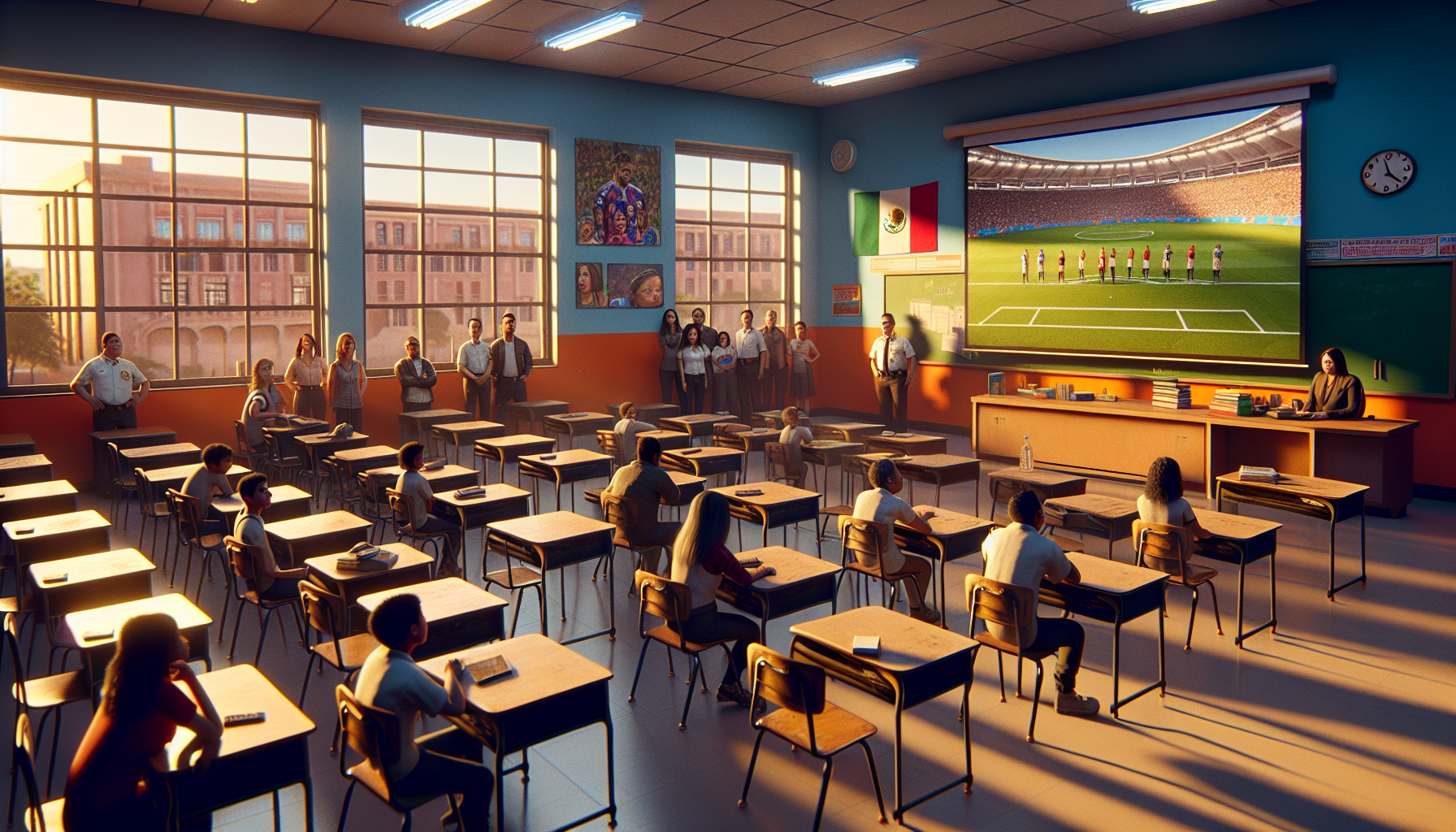
The Mexican federal government has proposed concluding the academic year on June 5, nearly a month earlier than usual, to make room for the upcoming World Cup football tournament. This decision has ignited widespread discontent among parents who argue that the shortened school calendar could negatively impact their children’s education. Many families are concerned about the loss of valuable instructional time and the disruption to students’ learning routines.
In a significant development, the government’s move reflects the immense cultural importance of football in Mexico, where the World Cup is a major national event that captures the public’s attention. However, critics emphasize that prioritizing sports over education sets a troubling precedent, especially as the academic year is crucial for student development and preparation for future studies. The debate highlights the challenge of balancing national enthusiasm for sports with educational commitments.
Meanwhile, education experts warn that reducing the school year could have long-term consequences on academic performance and widen educational disparities. Parents and advocacy groups are calling for alternative solutions that allow students to enjoy the World Cup without compromising their schooling. The controversy underscores the tension between cultural celebrations and the imperative to maintain consistent educational standards in Mexico.
