

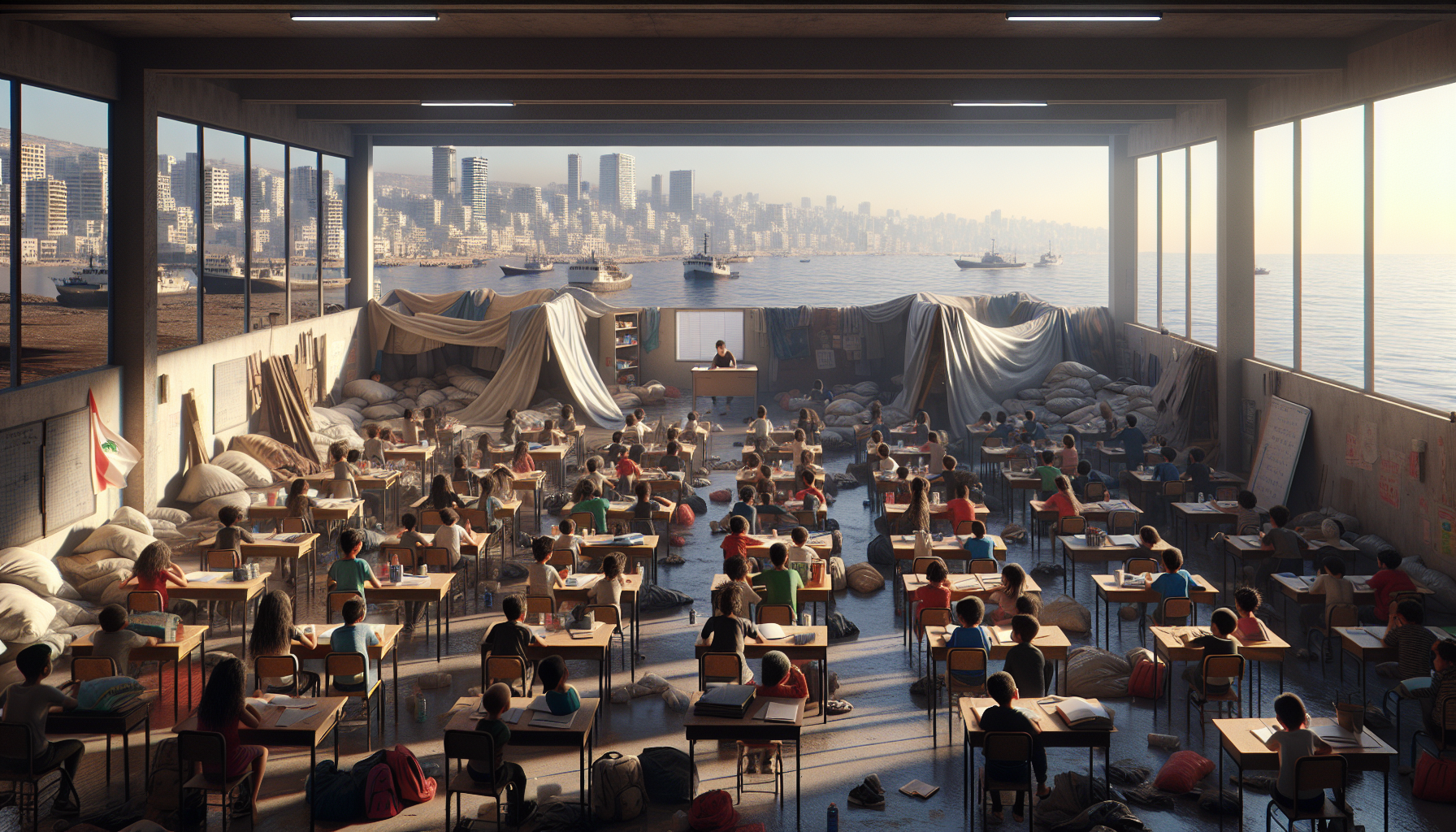
In the coastal city of Sidon, a school has become a refuge for families displaced from southern Lebanon. Despite the upheaval caused by displacement, educational activities have not ceased, allowing children to maintain their studies in a challenging environment. This adaptation highlights the resilience of communities facing ongoing instability in the region. Schools serving as shelters reflect the broader humanitarian crisis affecting Lebanon, where many have been uprooted due to conflict and economic hardship.
Lebanon has experienced significant displacement in recent years, driven by political turmoil, economic collapse, and regional conflicts. The use of educational institutions as temporary housing underscores the scarcity of safe accommodations for displaced populations. Meanwhile, efforts to keep classrooms active demonstrate a commitment to preserving normalcy and hope for younger generations. Education in such contexts is crucial for psychological stability and future opportunities for displaced children.
Notably, the continuation of schooling amid displacement also draws attention to the challenges faced by Lebanon’s education system, which is strained by the influx of displaced families. International and local organizations often step in to support these makeshift learning environments. The situation in Sidon exemplifies the broader regional struggle to provide basic services under duress, emphasizing the importance of sustained humanitarian aid and policy interventions to protect vulnerable populations and ensure access to education during crises.
