

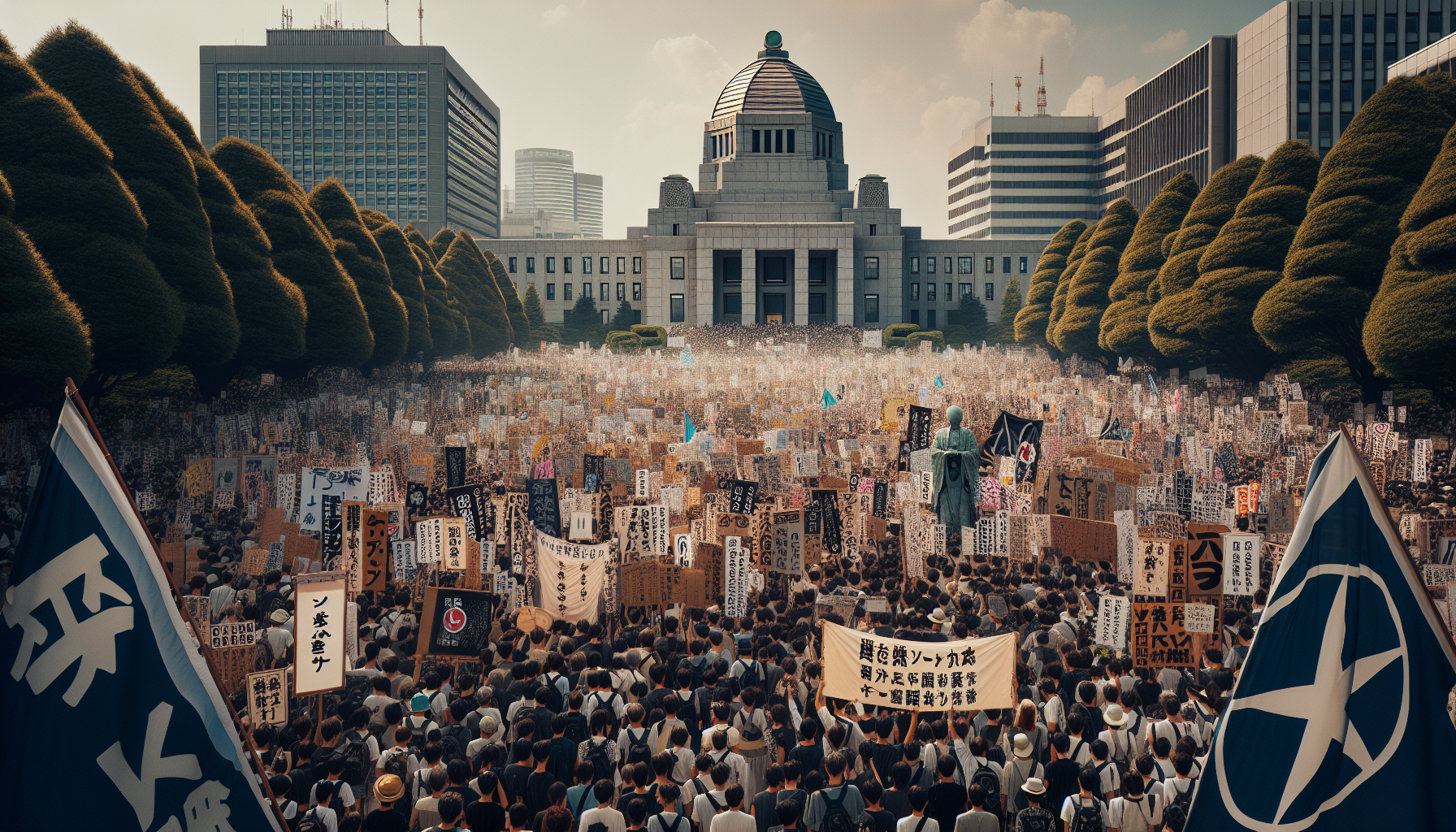
Japan is currently experiencing its most significant anti-war protests in decades, reflecting widespread public concern over proposed amendments to the country’s pacifist constitution. These demonstrations underscore a deep societal divide regarding the government’s efforts to strengthen national defense capabilities. The protests have drawn tens of thousands of participants, signaling strong resistance among citizens who fear that altering the constitution could lead to increased militarization.
Prime Minister Fumio Kishida has been actively promoting constitutional revisions aimed at expanding Japan’s Self-Defense Forces amid growing regional security challenges. This move marks a notable shift from Japan’s post-World War II pacifist stance, which has been enshrined in Article 9 of its constitution, renouncing war as a sovereign right. The government’s push comes in response to escalating tensions in East Asia, particularly concerns over North Korea’s missile tests and China’s military activities.
In a significant development, the protests not only highlight public apprehension but also pose political challenges for the ruling coalition. The debate over constitutional revision is expected to dominate Japan’s political landscape in the coming months, influencing both domestic policy and international relations. Meanwhile, the outcome of this constitutional discourse could reshape Japan’s defense posture and its role on the global stage for years to come.
