

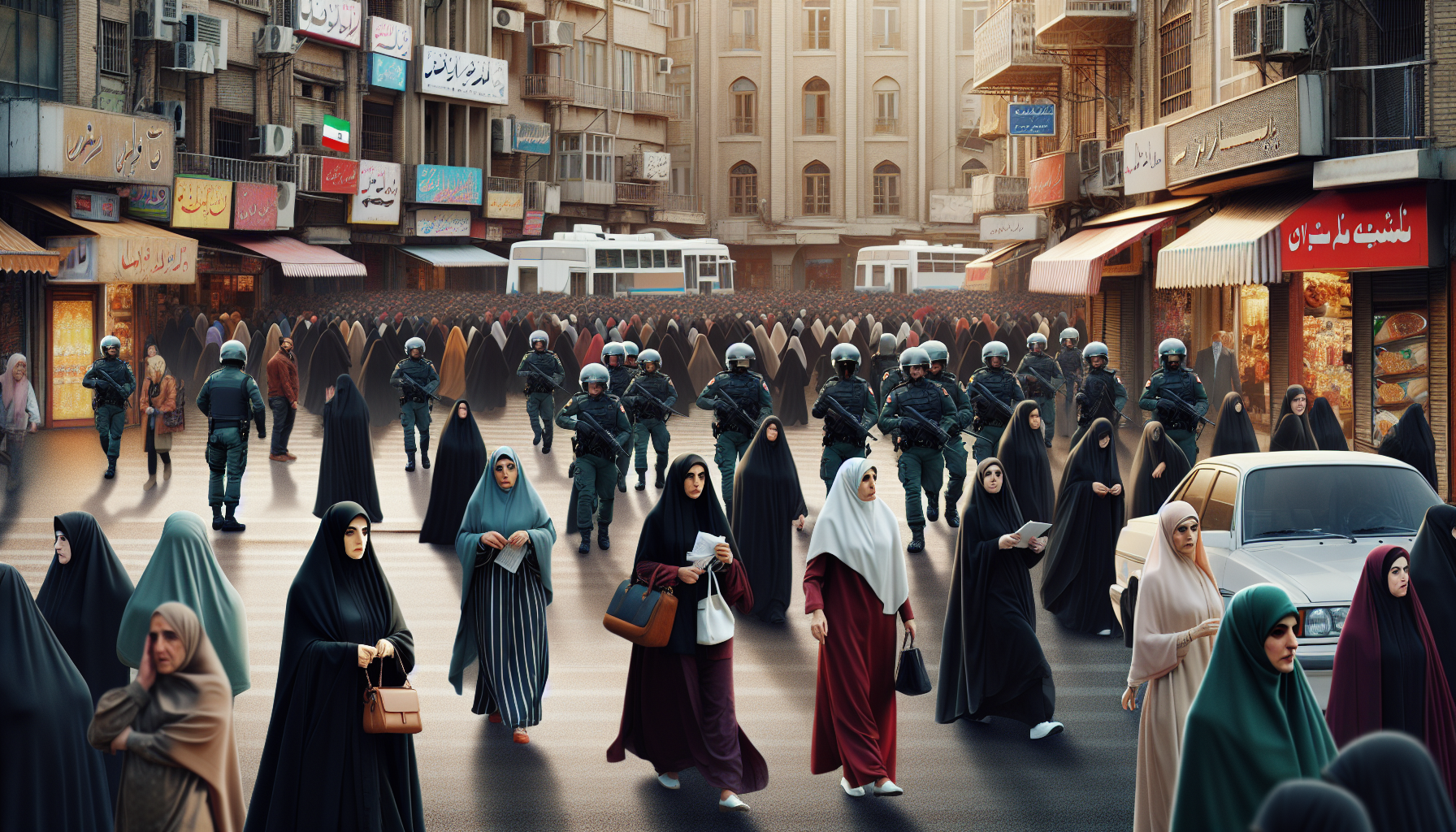
In a significant development, a number of women in Iran have started to publicly remove their hijabs, challenging the country’s mandatory dress code. This act of defiance comes amid ongoing protests and calls for greater personal freedoms, highlighting the tension between societal norms and individual rights. Despite these visible acts of resistance, the Iranian government continues to enforce strict regulations requiring women to wear the hijab in public spaces. Authorities have maintained a firm stance, with penalties for non-compliance still actively imposed.
The hijab has been compulsory in Iran since the 1979 Islamic Revolution, symbolizing the state’s broader control over women’s appearance and behavior. Over the decades, this policy has sparked both domestic and international criticism, with many viewing it as a violation of women’s rights. The recent instances of women removing their hijabs publicly represent a growing movement against these restrictions, reflecting wider dissatisfaction with the government’s policies. Meanwhile, security forces have responded with arrests and crackdowns, underscoring the ongoing struggle between reform advocates and conservative elements.
These developments carry significant implications for Iran’s social and political landscape. The persistence of hijab laws despite public opposition illustrates the challenges faced by reformers seeking to expand personal freedoms in a tightly controlled society. International observers continue to monitor the situation closely, recognizing that changes in Iran’s dress code policies could signal broader shifts in the country’s approach to human rights. For now, the tension between individual expression and state-imposed restrictions remains a defining feature of Iranian society.
