

Emergency medical demands in Iran are surging rapidly, with trauma kits and other critical supplies at risk of depletion if the conflict continues, stated the head of the International Federation of Red Cross and Red Crescent Societies (IFRC) delegation in Iran on Thursday. Since the U.S.-Israeli airstrikes on Iran began on February 28, over 1,900 people have lost their lives and more than 21,000 have been injured, the IFRC, the sole humanitarian organization operating nationwide. Other estimates suggest even higher casualties.
Maria Martinez revealed that three IFRC workers have died while on duty, including one who was killed during an airstrike on March 31 that struck a medical clinic in Zanjan province. She refrained from assigning blame for these deaths.
Martinez expressed deep concern about the rapidly escalating humanitarian needs and the organization’s capacity to deliver adequate support amid the worsening situation. Meanwhile, hopes for a quick resolution diminished after U.S. President Donald Trump pledged to intensify strikes. Washington maintains that its operations in Iran are precise, while Israel’s military asserts it takes precautions to minimize civilian harm during its campaigns.
Currently, emergency stockpiles remain sufficient, but Martinez warned that continued conflict would exacerbate shortages, especially as supply costs rise and funding remains insufficient. “Needs are increasing exponentially, and resources are finite,” she emphasized. She also noted that fear of bombings is deterring people from seeking medical assistance, describing the streets as deserted and highlighting the palpable anxiety and uncertainty in the population.
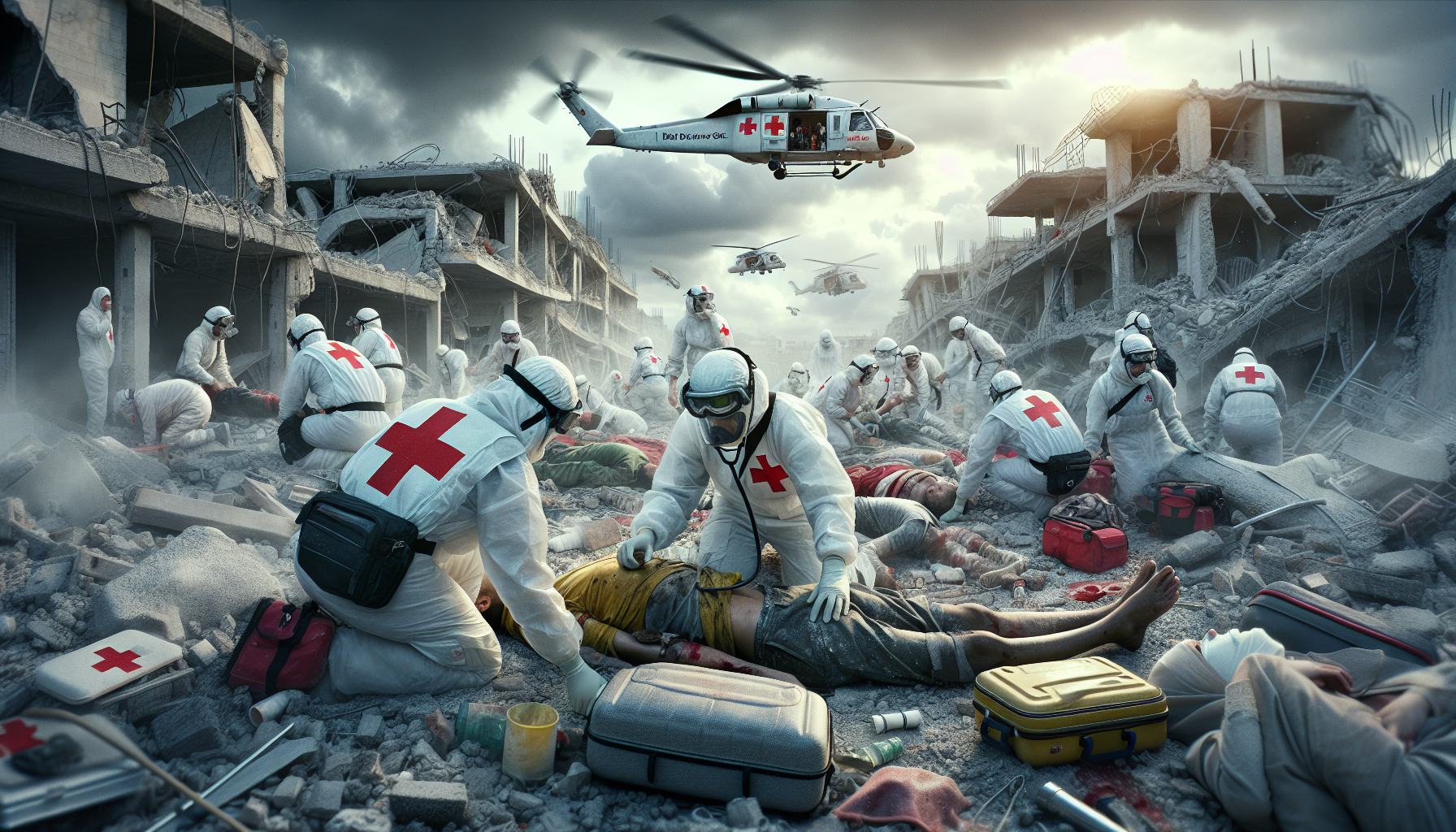
The IFRC operates with 100,000 responders across Iran’s 31 provinces, equipped with helicopters and rescue dogs, providing first aid to airstrike victims and support to displaced individuals. One rescue worker, while clearing rubble, tragically discovered that his own family members were among the deceased. Staff often take shifts sleeping at IFRC offices to remain ready for emergencies, as frequent alarms force evacuations multiple times daily.
Operational challenges are compounded by power and internet outages, forcing staff to transcribe documents manually. The agency has faced difficulties importing essential supplies from its Dubai warehouse for weeks due to logistical obstacles worsened by Iran’s closure of the Strait of Hormuz in retaliation for the U.S.-Israeli strikes. To address this, the IFRC plans to transport supplies overland from Turkey starting April 7, though this process will take several weeks, IFRC supply chain director Cecile Terraz.
In a significant development, Martinez indicated that the IFRC may need to increase its emergency appeal beyond the current 40 million Swiss Francs ($50.05 million), as only 6% of the funds have been secured so far. She stressed that expanding international support is crucial to protect civilians and sustain the ongoing emergency response efforts.
