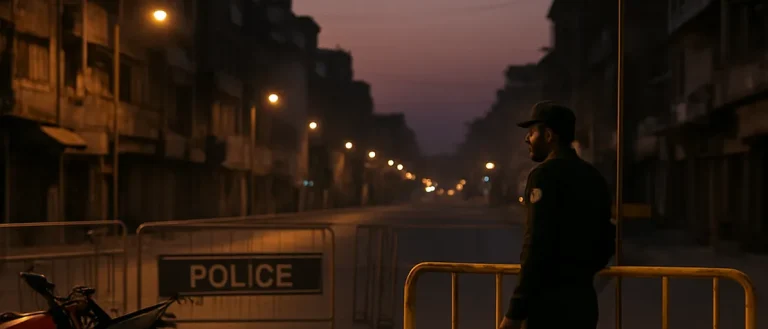


Security forces eliminated at least five terrorists supported by India and injured several others during an intelligence-driven operation in Panjgur district, Balochistan, as part of Operation Radd-ul-Fitna 3. The militants, traveling on motorcycles, were intercepted while preparing to carry out an attack in the Kali Suran area.
Forces employed advanced weaponry to neutralize the threat. A substantial cache of sophisticated arms and ammunition was recovered, along with three vehicles, two motorcycles, an improvised explosive device (IED), and a flag belonging to a banned organization. The group was reportedly involved in a range of criminal activities including targeted killings, kidnappings, armed robberies, and plotting suicide attacks.
In a significant development earlier on August 18, security personnel had killed over nine terrorists during separate intelligence-based operations across Ziarat, Harnai, and Surab districts, also under Operation Radd-ul-Fitna 3.
Since the Afghan Taliban assumed power in 2021, Pakistan has experienced a notable rise in terrorist incidents, particularly in the provinces of Khyber Pakhtunkhwa (KP) and Balochistan. A report by the Centre for Research and Security Studies (CRSS) highlighted that these two provinces remained the primary centers of violence during the second quarter of 2026, with KP identified as the most severely affected region.
The report revealed that KP and Balochistan together accounted for nearly 96% of all fatalities related to violence nationwide during this period. KP alone recorded over 61% of these deaths (475), while Balochistan accounted for 34% (265). Additionally, KP experienced the highest number of violent incidents, totaling 151 cases or 57% of the country’s total, followed by Balochistan with 94 incidents, representing 35%. This data underscores the concentration of militant activities within these two provinces.