



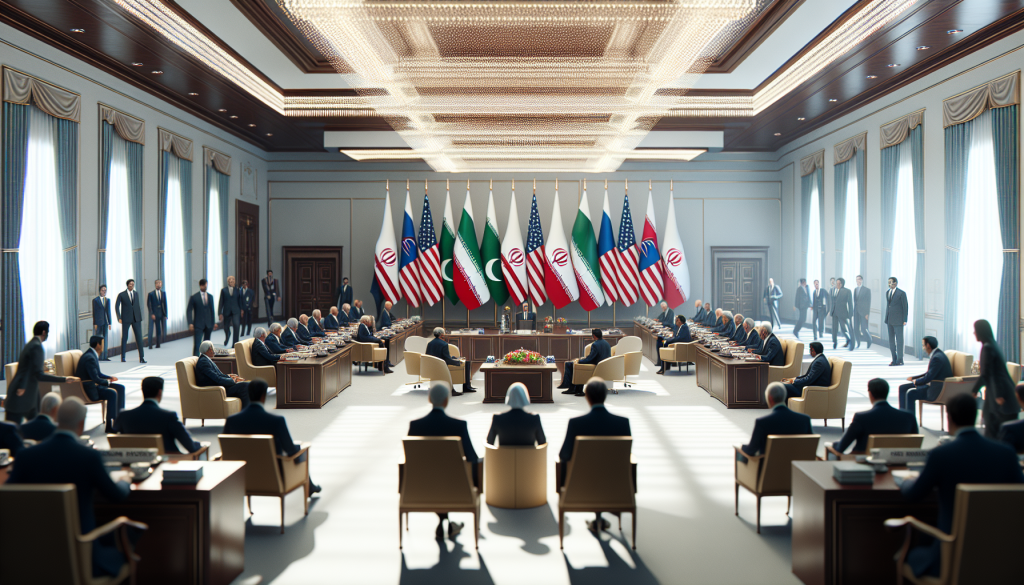
In a significant diplomatic development, delegations from the United States and Iran are scheduled to travel to Pakistan today to participate in the second round of peace negotiations in Islamabad. The Iranian delegation, led by Foreign Minister Abbas Araghchi, is expected to arrive in the capital by tonight.
Notably, Iranian state media confirmed that Araghchi’s visit to Pakistan is part of a broader three-nation tour, which also includes stops in Muscat and Moscow. The trip aims to conduct bilateral consultations and address recent regional developments, particularly the ongoing conflict involving the United States and Israel against Iran, as highlighted by the Iranian news agency IRNA.
Meanwhile, a US logistics and security team has already been stationed in Islamabad to support the upcoming talks. This progress follows crucial mediation efforts by Pakistan’s diplomatic team, which played a pivotal role in facilitating the renewed dialogue.
In a related development, Deputy Prime Minister and Foreign Minister Ishaq Dar emphasized the importance of sustained dialogue between Washington and Tehran to resolve their disputes and promote regional peace and stability. During a phone conversation with Araghchi, they discussed the current ceasefire between the US and Iran and exchanged views on Islamabad’s ongoing diplomatic initiatives to support US-Iran engagement. Araghchi praised Pakistan’s consistent and constructive role in facilitating these peace efforts.
The second round of talks had been uncertain after both parties failed to agree on measures concerning the Strait of Hormuz. The strait was blocked by Tehran following US and Israeli attacks on Iran on February 28. In retaliation, Iran launched strikes against Israeli and US bases across the Middle East.
Prime Minister Shehbaz Sharif successfully mediated a two-week ceasefire starting April 8 and hosted the first round of talks in Islamabad on April 11. However, these initial discussions ended without a permanent resolution to the conflict. Subsequently, US President Donald Trump announced a naval blockade of Iranian ports. Iran briefly reopened the Strait of Hormuz on April 17, citing a ceasefire agreement between Lebanon and Israel, but closed it again the next day in response to the US blockade, which Tehran regards as an act of war.
Despite ongoing hostilities, Pakistan maintained diplomatic efforts to bring both sides back to negotiations and extend the ceasefire. Just hours before the ceasefire was set to expire on April 22, President Trump extended the truce, acting on Pakistan’s request to delay attacks until Iran submitted a unified proposal and discussions could continue. Trump announced this extension via a post on Truth Social, underscoring Islamabad’s critical role in fostering dialogue between the two nations.

Leave an opinion