



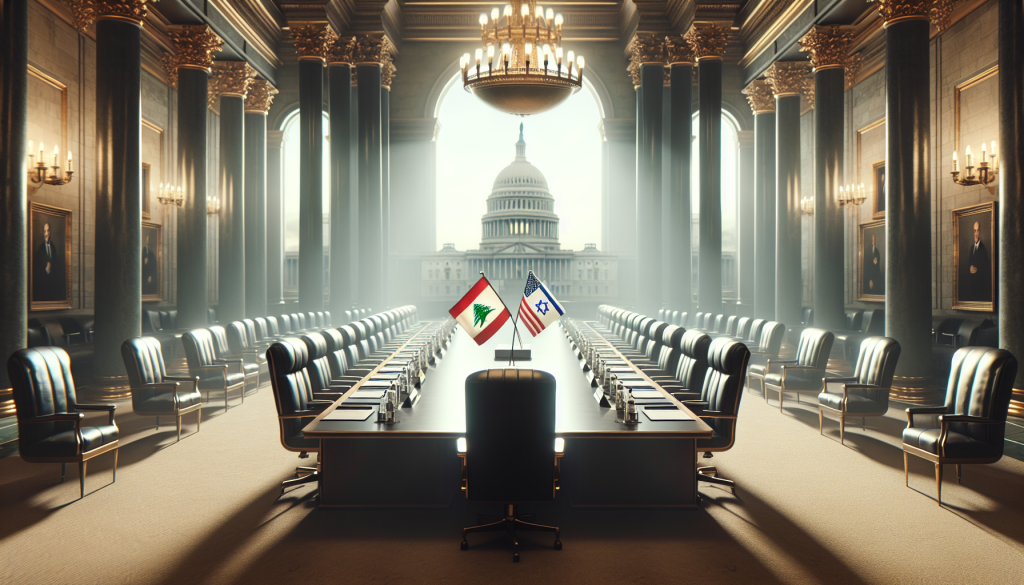
US President Donald Trump has announced that leaders of Lebanon and Israel are poised to communicate for the first time in decades. This announcement comes amid escalating tensions in the Middle East following the widening of the Iran war, which extended into Lebanon after Hezbollah, supported by Iran, launched attacks that prompted an Israeli military response.
Pakistan’s Foreign Office spokesperson, Tahir Andrabi, highlighted the importance of stability in Lebanon for the broader diplomatic efforts aimed at resolving the Iran conflict. Andrabi emphasized that peace in Lebanon is a critical component of the ongoing negotiations between Washington and Tehran, a process in which Islamabad is playing a facilitative role.
In a post on Truth Social, Trump described his efforts as creating “breathing room” between Israel and Lebanon, stating that the leaders of both countries would engage in discussions imminently. He noted, “It has been a long time since the two leaders have spoken… It will happen tomorrow.” Israeli Prime Minister Benjamin Netanyahu is expected to hold talks with Lebanese President Joseph Aoun, marking a rare interaction between the two nations, which have technically been in a state of war since 1948.
However, a senior Lebanese official denied knowledge of any scheduled call. President Aoun, after meeting UK Middle East Minister Hamish Falconer, indicated that a ceasefire would serve as a “natural entry point” for direct negotiations with Israel, though he did not confirm any talks with Netanyahu.
Meanwhile, hostilities persist in southern Lebanon, particularly around the Hezbollah stronghold of Bint Jbeil, as Israeli forces continue their offensive. Lebanese officials believe Israel aims to secure territorial gains on the battlefield prior to any diplomatic progress. Israeli strikes have destroyed critical infrastructure, including the last bridge over the Litani River, effectively severing access to parts of southern Lebanon.
Hezbollah reported launching new rocket attacks on Israel, triggering sirens in northern Israeli communities, though no casualties were immediately reported. Lebanese authorities report over 2,100 fatalities and more than 1.2 million displaced persons since the conflict escalated, while Israel states Hezbollah attacks have resulted in the deaths of two civilians and 13 soldiers.
Israel has declared that the area south of the Litani River will be off-limits to Hezbollah fighters, reflecting its objective to maintain control over portions of southern Lebanon. Despite ongoing military actions, diplomatic efforts continue in parallel. Earlier this month, a two-week ceasefire in the Iran war was brokered with Pakistan’s mediation, although Israel maintains that its operations against Hezbollah are not covered by this truce.
US officials have expressed optimism for a broader agreement, welcoming an end to hostilities in Lebanon as part of a comprehensive peace deal. This week, rare meetings took place between Israeli and Lebanese ambassadors in Washington, drawing criticism from Hezbollah, which warned that such engagement could exacerbate internal divisions within Lebanon.
Iran insists that Lebanon must be included in any resolution to the regional conflict, while the United States advocates keeping the separate diplomatic tracks distinct. In a significant development, these dialogues signal a potential shift towards easing decades of hostility between Lebanon and Israel amid the complex web of Middle Eastern conflicts.

Leave an opinion