



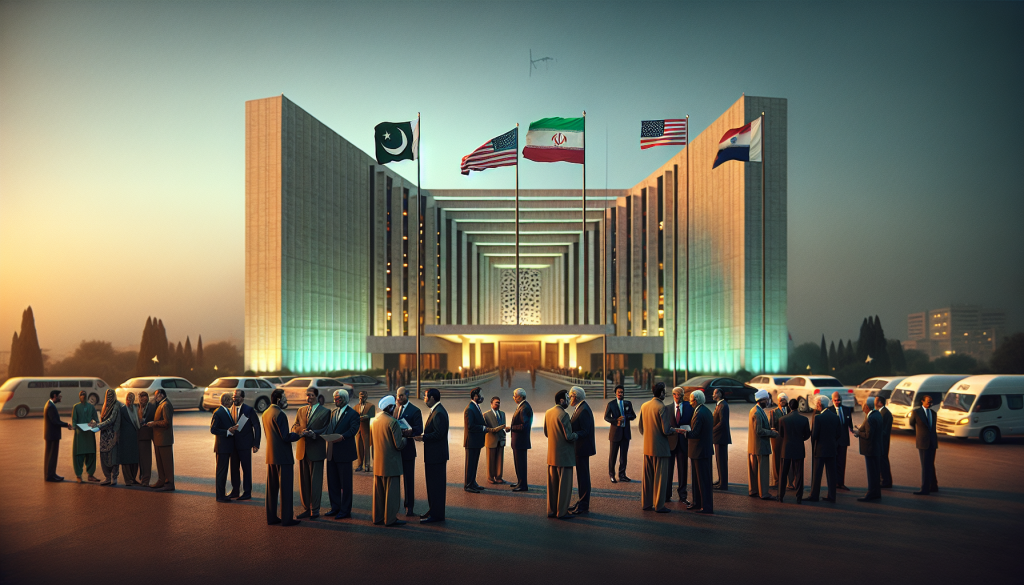
Pakistan on Thursday cautioned the media against speculating about the timing of the second round of negotiations between the United States and Iran, stating that no official schedule has yet been announced for the upcoming talks. During a weekly briefing, Foreign Office spokesperson Tahir Hussain Andarabi emphasized the importance of maintaining trust and confidentiality in diplomatic matters, explaining that disclosing such information prematurely would breach that trust.
He underscored that the key point was the willingness of both sides to continue engaging in dialogue. Details regarding the composition of delegations and participation were described as secondary and internal to the parties involved. His comments followed reports suggesting that the US and Iranian negotiating teams might return to Islamabad later this week, just days after their initial high-level talks ended without a conclusive agreement.
Notably, on April 14, US President Donald Trump indicated that talks between Washington and Tehran could resume within two days, mentioning a greater inclination to hold discussions in Pakistan. The previous meeting, held three days after a ceasefire announcement, marked the first direct encounter between American and Iranian officials in over a decade, and the most senior engagement since Iran’s 1979 Islamic Revolution.
The last round of talks was led by US Vice President JD Vance and Iranian Parliamentary Speaker Mohammad Baqer Qalibaf, focusing on critical issues such as the Strait of Hormuz—a vital global energy transit route Iran has effectively blocked but the US intends to reopen—alongside Iran’s nuclear program and international sanctions. The trilateral Islamabad talks spanned nearly 21 hours beginning on April 11, reflecting the complexity and high stakes involved.
Despite extensive discussions, no formal agreement was reached during the first round. Nevertheless, officials in Islamabad viewed the meeting as a significant step in establishing direct communication channels between Washington and Tehran. Separately, a proposal has been shared with both sides to resume talks, with Islamabad continuing to coordinate on timing, potentially over the upcoming weekend.
These developments align with Prime Minister Shehbaz Sharif’s earlier statements, acknowledging that while the initial US-Iran talks in Islamabad were inconclusive, Pakistan remains committed to bridging differences through active diplomatic engagement. Pakistan’s initiative to bring Iran and the United States together for these high-level discussions aimed at ending weeks of conflict has received international commendation.
At the briefing, FO spokesperson Andarabi described the negotiations as “serious and constructive,” characterizing the outcome as neither a breakthrough nor a breakdown. He highlighted the extraordinary commitment demonstrated by both parties through over 21 hours of continuous talks, with the overall negotiation process exceeding 24 hours. Nuclear issues remained central to the discussions, underscoring their complexity.
He praised the seriousness, resolve, and positive attitude of the participants, noting the presence of leadership from both countries alongside mediating officials throughout the talks. Labeling the round as “historic in significance,” he called for recognition of the roles played by the leadership of all three involved countries.
Andarabi affirmed Pakistan’s ongoing role as mediator and facilitator, maintaining open communication channels between Tehran and Washington. He emphasized that all diplomatic efforts, including the Islamabad talks, are part of a continuous process that includes high-level engagements in Tehran and visits by delegations. Pakistan has also engaged in telephone diplomacy with global leaders ahead of the talks and plans to continue such international outreach.
Reiterating Pakistan’s stance in favor of peace, stability, and prosperity, the spokesperson noted Islamabad’s efforts to keep allies and friendly nations informed while welcoming support from global powers, including Russia. Highlighting Pakistan’s broader diplomatic activities, he mentioned the country’s active participation in the Shanghai Cooperation Organisation’s Regional Anti-Terrorist Structure (SCO-RATS) and its hosting of senior officials from Saudi Arabia, Turkey, and Egypt in Islamabad.
Additionally, he confirmed that Chief of Army Staff Field Marshal Asim Munir was in Iran as part of ongoing diplomatic engagements. The spokesperson strongly condemned Israeli attacks in Lebanon, calling for an immediate cessation of hostilities. He stated that the Lebanon ceasefire is part of the negotiations and is being considered within the wider regional peace process.
Signs of de-escalation on the Israel-Lebanon front over recent days were described as encouraging, with hopes that reduced tensions would foster a conducive environment for dialogue. He emphasized that peace in Lebanon and an end to armed conflict are essential, as lowered hostilities could support progress in negotiations.
The broader regional conflict began with US-Israeli strikes on Iran on February 28. Hezbollah subsequently fired in support of Tehran on March 2, triggering an Israeli offensive that has resulted in over 2,000 deaths and displaced 1.2 million people, Lebanese authorities. Iran insists that Israel’s campaign against Hezbollah in Lebanon must be included in any agreement to end the wider Middle East war, a position Washington has rejected, stating there is no connection between the two negotiations.

Leave an opinion