

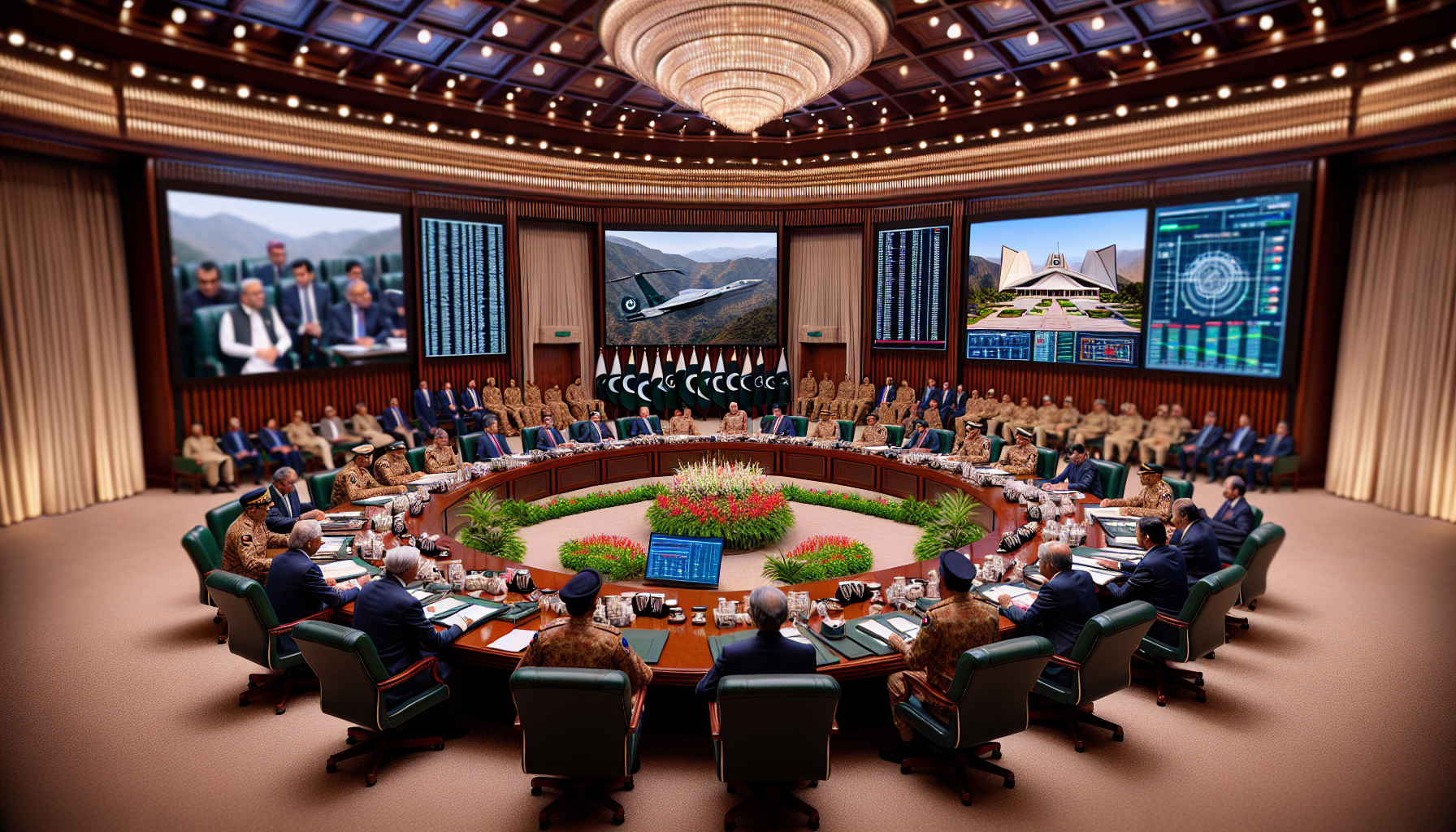
Pakistan’s senior civil and military leadership has agreed on a unified policy approach, emphasizing consensus and institutional coordination to safeguard the country’s security, economy, and food supplies amid the ongoing regional turmoil sparked by the US-Israel conflict with Iran.
This consensus emerged during a high-level consultative meeting held on Thursday at Aiwan-e-Sadr, chaired by President Asif Ali Zardari. The gathering reviewed the evolving economic and energy landscape, particularly in light of constrained oil supplies and escalating petroleum prices, alongside regional security developments.
Prime Minister Shehbaz Sharif and Chief of Defence Forces and Chief of Army Staff, Field Marshal Syed Asim Munir, were present at the meeting. Other attendees included Deputy Prime Minister Senator Ishaq Dar, Pakistan Peoples Party Chairman and former foreign minister Bilawal Bhutto Zardari, federal ministers Mohsin Naqvi, Muhammad Aurangzeb, Ali Pervaiz Malik, Ahad Khan Cheema, and the finance secretary.
The meeting focused on the impact of global oil and gas supply fluctuations and price volatility on Pakistan’s economy, with particular attention to managing inflationary pressures and ensuring energy security. Finance and petroleum ministers provided updates on efforts to stabilize petroleum prices, mitigate the ripple effects of rising fuel costs on other economic sectors, and implement austerity measures aimed at fiscal discipline to ease expenditure burdens.
Discussions also covered the broader regional situation, assessing its implications for Pakistan’s security, economic prospects, and food security. The leadership stressed the necessity of a coordinated national response, highlighting that policy decisions must prioritize stability while protecting public interests.
Maintaining national consensus and enhancing institutional coordination were underscored as critical in addressing emerging regional challenges. It was agreed that economic management, energy planning, food security, and security considerations must be closely integrated to effectively navigate the complex situation.
Additionally, the meeting called for increased public awareness to reduce fuel consumption, promote public transportation usage, and encourage carpooling systems. The possibility of a prolonged conflict in Iran spilling over into Pakistan remains a significant strategic concern for Islamabad.
Economically, Pakistan is already experiencing pressures from fuel supply disruptions linked to the Iran war, which began following US-Israel actions on February 28. Meanwhile, Pakistan has intensified its diplomatic efforts to prevent further escalation, positioning itself as a crucial intermediary between Washington and Tehran.
