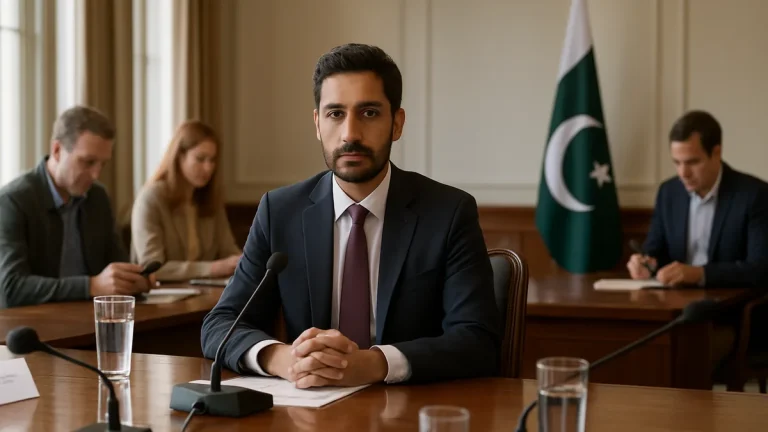
In a significant move to address escalating tensions in the Middle East, Pakistan’s Deputy Prime Minister and Foreign Minister Ishaq Dar emphasized the country’s vigorous diplomatic initiatives aimed at calming the volatile situation following a sudden US-Israel strike on Iran. Speaking before the Senate on Tuesday, Dar outlined Islamabad’s dual approach of public statements and discreet diplomatic engagement to promote dialogue and restraint among the involved parties.
Dar recounted how Pakistan swiftly responded to the crisis earlier this year, issuing its first official public statement on February 28. The government also expressed condolences after the death of Iran’s Supreme Leader, Ayatollah Ali Khamenei, who was reportedly killed in the Israeli attacks. Prime Minister Shehbaz Sharif personally issued a statement mourning the loss, underscoring Pakistan’s commitment to stabilizing the region through active diplomacy and continuous engagement with all stakeholders.
Highlighting the multifaceted nature of Pakistan’s efforts, Dar explained that Islamabad has been utilizing both formal diplomatic channels and backdoor negotiations to urge all parties to exercise restraint and avoid further escalation. This comes in the wake of retaliatory missile and drone strikes launched by Tehran targeting US interests and military bases across the Gulf. Over the past several days, Pakistan has maintained contact with multiple countries, encouraging renewed dialogue as the only sustainable path to de-escalate the conflict.
“Iran is not only a neighboring country but also a brotherly nation,” Dar remarked, emphasizing Pakistan’s proactive stance both publicly and behind the scenes. He noted that the Iranian leadership is fully aware of and appreciative of Pakistan’s mediation efforts. In a notable revelation, Dar disclosed that Tehran has committed to refraining from pursuing nuclear weapons, a message he personally conveyed to US Secretary of State Marco Rubio during recent discussions aimed at facilitating dialogue between Washington and Tehran.
Dar reiterated Pakistan’s support for Iran’s right to develop a peaceful nuclear program in accordance with international law. Furthermore, he expressed Islamabad’s readiness to serve as a neutral venue for mediation between the United States and Iran, should both sides agree to such talks. This announcement coincides with ongoing international diplomatic endeavors, including indirect negotiations mediated by Oman in Geneva, which have made meaningful progress but have yet to culminate in a formal agreement. These talks are scheduled to resume in Vienna next week.
The broader context of this diplomatic push is the heightened instability in an already fragile region. Global powers and international organizations have repeatedly warned that any further escalation could trigger widespread consequences beyond the immediate conflict zone. Russia’s foreign minister recently challenged Washington’s claims regarding Iran’s nuclear ambitions, stating Moscow has found no evidence of Iran developing nuclear weapons. He called for an immediate halt to hostilities to prevent additional civilian casualties and further deterioration of regional security.
Pakistan’s active engagement in promoting peaceful dialogue reflects a wider international effort to prevent the Middle East crisis from spiraling into a full-scale war. It also aims to revive stalled nuclear negotiations with Tehran, which are critical for regional and global stability. As tensions remain high, Islamabad’s diplomatic initiatives underscore its strategic role in fostering communication and reducing conflict in one of the world’s most sensitive geopolitical hotspots.