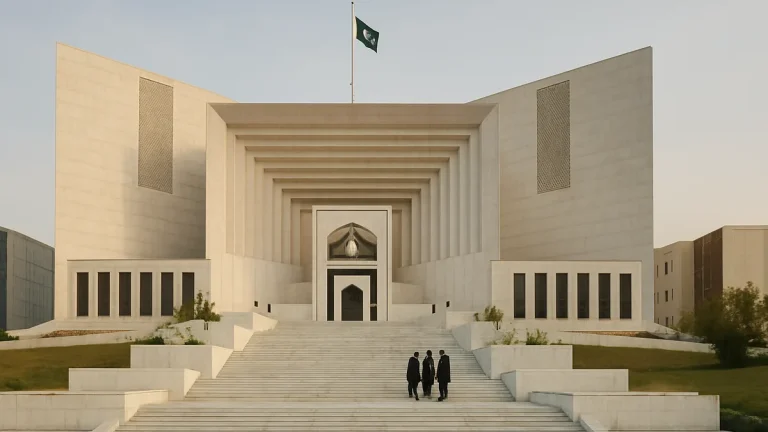
The Federal Constitutional Court (FCC) has recently overturned a decision made by the Lahore High Court regarding the contentious issue of converting residential plots into commercial properties. This significant ruling came from a two-member bench led by Justice Hassan Azhar Rizvi, who instructed the Lahore High Court to revisit the case and deliver a fresh verdict within a strict 90-day deadline. This move underscores the judiciary’s growing attention to urban planning challenges and the long-term consequences of altering land use in residential neighborhoods.
During the hearing, Justice Rizvi delivered pointed remarks about the broader implications of allowing residential areas to be transformed into commercial zones. He highlighted that such conversions contribute directly to the deterioration of city environments. Emphasizing the contrast with older, well-established cities, the judge noted that these urban centers generally maintain clear distinctions between residential and commercial spaces, which helps preserve the quality of life for residents. In his view, the unchecked shift from residential to commercial use disrupts this balance and leads to a host of civic problems.
Justice Rizvi elaborated on the practical consequences of this trend, explaining that a typical residential plot houses around five to six individuals, providing a relatively low-density living environment. However, when the same plot is converted for commercial purposes, it effectively becomes a marketplace or business hub, attracting large crowds, increasing vehicular traffic, and escalating pollution levels. These changes place immense strain on local infrastructure and contribute to congestion and environmental degradation. The judge cited Karachi as a prime example, where decades of such conversions have resulted in persistent urban challenges that continue to affect the city’s residents.
Aside from the substantive issues discussed, the court also addressed matters of courtroom protocol during the proceedings. Justice Rizvi expressed clear dissatisfaction when a lawyer’s clerk attempted to address the bench directly, bypassing the counsel of record. Questioning the clerk’s authority to speak, the judge insisted on maintaining strict decorum in the courtroom. The clerk acknowledged his role as an assistant rather than a legal advocate, prompting the court to remind all parties of the importance of proper conduct during hearings. Subsequently, the counsel apologized for the clerk’s breach of protocol, and the court ordered that this apology be formally recorded.
In its ruling, the FCC emphasized that any case involving the alteration of land use from residential to commercial must take into account several critical factors. These include the public interest, potential environmental impacts, and adherence to the city’s master plan, which serves as a blueprint for sustainable urban development. By sending the case back to the Lahore High Court for reconsideration, the FCC has reinforced the need for a comprehensive and balanced approach that protects residential communities while addressing commercial growth.
This decision reflects a broader concern within Pakistan’s judiciary and urban planners about the rapid and often unregulated transformation of residential areas. It highlights the necessity for stricter oversight and thoughtful urban policies to prevent further degradation of city environments. The Lahore High Court’s upcoming review will be closely watched, as it will set important precedents for managing urban land use and safeguarding the interests of residents across major cities in the country.