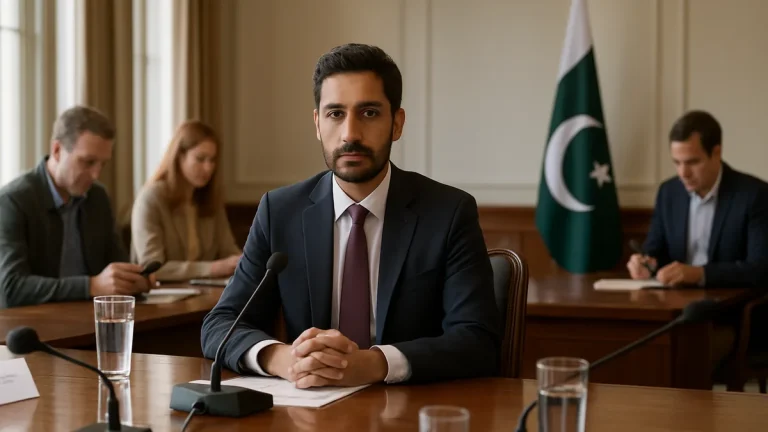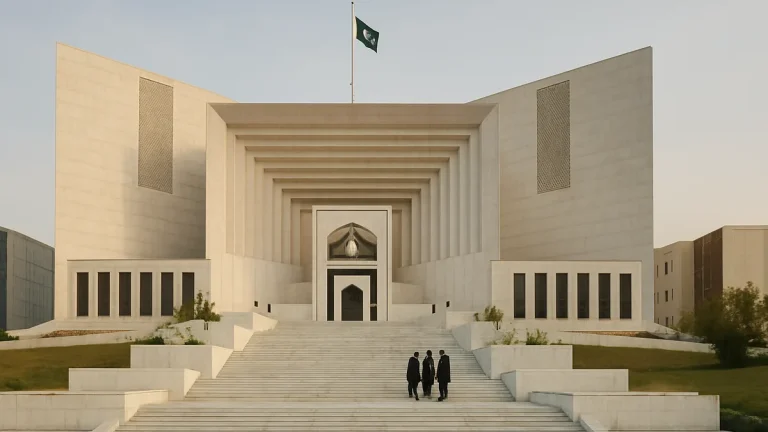
An Islamabad court has extended bail to former Prime Minister and Pakistan Tehreek-e-Insaf (PTI) chairman Imran Khan along with his wife, Bushra Bibi, in the Toshakhana fake receipt case. This decision marks a significant development in the ongoing legal battles faced by the PTI leader, who has been detained since August 2023. The court’s ruling came after a detailed review of the prosecution’s evidence, which the judge found insufficient to justify continued detention.
In addition to the Toshakhana case, Imran Khan was also granted bail in five other pending cases. These include serious allegations such as attempted murder and defamation of the Pakistan Army. The court’s verdict highlights the challenges faced by the prosecution in substantiating the charges against the former premier, particularly in cases that have attracted widespread public and political attention.
The Toshakhana case revolves around accusations that Imran Khan and Bushra Bibi submitted a forged receipt, falsely indicating the sale of valuable gifts like watches and cufflinks. These items were allegedly obtained from the government’s Toshakhana department, which manages gifts received by state officials. The prosecution claimed the signatures on the receipt were fabricated, suggesting fraudulent activity. However, Additional District and Sessions Judge Muhammad Afzal Majuka pointed out that the evidence presented was inadequate to prove the allegations against the couple.
Consequently, the court approved their bail applications, setting surety bonds of Rs 50,000 each. Judge Majuka reiterated this bail amount while granting relief to Imran Khan in the other five cases as well. In the defamation case concerning the army, the court noted that no concrete material was produced to demonstrate that Imran Khan had committed the alleged offence. This case stemmed from a First Information Report (FIR) filed after Imran made statements on a private news channel, accusing army officers of conspiring against him with the intent to see him defeated and even killed.
The FIR, lodged by Manzoor Ahmad, a magistrate, accused Imran Khan of using derogatory and inflammatory language against senior army officials, which allegedly stirred unrest in society. The complainant claimed that Imran’s remarks were not only defamatory but also contained offensive language directed at the top military leadership. Despite these serious allegations, the court found no substantial evidence to uphold the charges.
Regarding the attempted murder case linked to protests, the court observed that the prosecution failed to establish Imran Khan’s direct involvement or presence at the scenes where violent incidents occurred. The demonstrations, which were part of broader political unrest, were not proven to have been orchestrated under Imran’s guidance, further weakening the prosecution’s case.
Imran Khan’s legal troubles have intensified since his removal from office through a no-confidence vote in April 2022. Since then, he has faced numerous cases ranging from corruption to terrorism-related charges. His detention since August 2023 has been a focal point of political debate and public discourse, with supporters and critics closely monitoring each development. The recent bail grants provide temporary relief but do not mark the end of the legal proceedings against him.
As the political landscape in Pakistan continues to evolve, the judiciary’s role in these high-profile cases remains under scrutiny. The decisions made by courts in cases involving prominent political figures like Imran Khan have significant implications for the country’s democratic process and rule of law. Observers will be watching closely to see how these cases progress in the coming months.