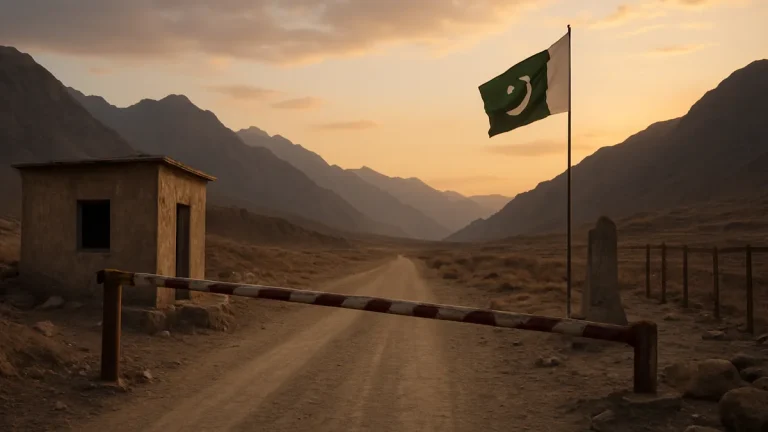
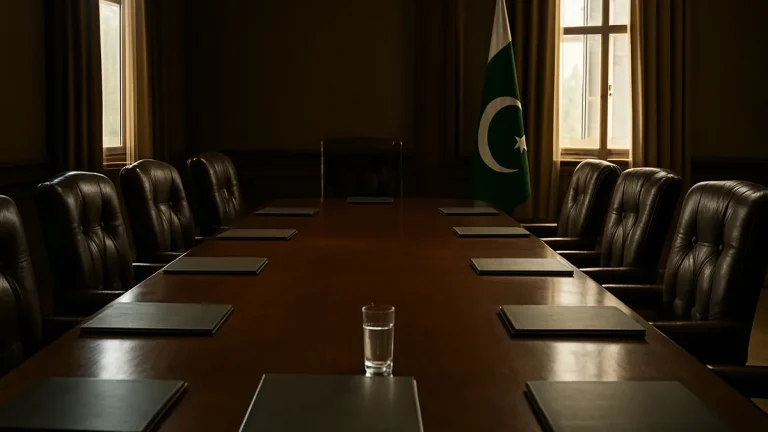
The assassination of Iran’s Supreme Leader Ayatollah Ali Khamenei has thrust the Islamic Republic into its most severe crisis since the 1979 revolution, shaking the foundations of the country’s political and security structures. This unprecedented event has left Iran confronting multiple challenges simultaneously: an ongoing war on its own soil, an unresolved question of leadership succession, and escalating internal tensions that threaten to destabilize the regime from within.
Despite the shockwaves sent through Tehran and the wider region, several regional experts and officials caution against assuming that the regime will collapse swiftly. They emphasize that Iran’s political system was intentionally designed to avoid dependence on a single individual. Instead, power is distributed across a network of clerical bodies, security institutions, and influential power brokers. This diffusion of authority is meant to ensure the regime’s survival even in the event of losing its top leader.
Analysts highlight that the Iranian system is built to endure the death or removal of any one figure, including Khamenei. Danny Citrinowicz from the Atlantic Council noted that rather than weakening the regime, the removal of Khamenei could potentially strengthen it by prompting the consolidation of hardline elements. Similarly, Ali Hashem, a research affiliate at Royal Holloway, University of London, pointed out that the real danger lies not in a leadership vacuum but in whether the combined pressures of war and internal dissent push the regime beyond its capacity to remain resilient.
At the heart of this resilience is the Islamic Revolutionary Guards Corps (IRGC), widely regarded as the true power center within Iran. The IRGC’s role extends beyond military might; it is the backbone of the regime’s political and security apparatus. The current balance of power depends heavily on whether the IRGC emerges from recent battlefield setbacks and internal divisions weakened or more unified and hardened. Alex Vatanka, a senior fellow at the Middle East Institute, emphasized that the critical question is whether Khamenei’s death will sap the IRGC’s strength or cause it to rally around a more security-focused and uncompromising leadership approach.
Regional observers suggest that while the IRGC’s ideological commitment to protecting the revolution remains steadfast, the organization is capable of tactical adjustments if necessary. Some mid-level commanders within the Guards reportedly favor a pragmatic approach, including the possibility of reducing tensions with the United States to ensure the regime’s survival. This nuanced stance positions the IRGC not only as the regime’s primary defender but also as a key indicator of its future trajectory.
On the international front, the assassination has intensified efforts by the United States and Israel to undermine Iran’s military capabilities and destabilize its leadership. Jonathan Panikoff, a former U.S. deputy national intelligence officer for the Near East, described a strategy aimed at degrading Iran’s military response while simultaneously testing the loyalty of its security forces amid potential public unrest. The success of this approach hinges on whether Iran’s security apparatus remains cohesive or fractures under pressure.
In the immediate aftermath of Khamenei’s death, Tehran’s primary focus has been to project an image of continuity and control. Despite the heavy blows sustained by missile units, air defenses, and senior commanders, Iran’s command structure continues to function, albeit under significant strain. Officials identify three critical challenges facing the regime: maintaining the integrity of its security forces under attack, reaching consensus on a successor or alternative leadership arrangement, and managing the risk of escalating public dissent that could deepen the political crisis.
Veteran Iranian politician Ali Larijani, who serves as secretary of the Supreme National Security Council, announced the formation of a temporary leadership council to oversee the transitional period following Khamenei’s assassination. Figures like Larijani and Mohammad Baqer Qalibaf, the speaker of parliament, are viewed as potential interim leaders who could navigate the regime through this turbulent phase. Their profiles suggest a blend of security-minded pragmatism aimed at balancing competing factions within the establishment.
Iran now faces a succession challenge it has encountered only once before, and that under far more stable conditions. The constitution designates the Assembly of Experts, an 88-member clerical body, as responsible for selecting the new Supreme Leader. However, the extraordinary wartime context and internal pressures may force a more improvised approach, possibly resulting in a swift appointment or a collective leadership dominated by security elites. It is notable that before his death, Khamenei took steps to influence this process by nominating preferred successors and securing key military commands with trusted deputies. Among those favored were judiciary chief Gholam-Hossein Mohseni-Eje’i and Hassan Khomeini, a moderate cleric and grandson of the Islamic Republic’s founder.
Despite these preparations, there are concerns within the clerical establishment about rushing the selection of a new leader, partly due to fears that a successor could also become a target. This hesitation adds another layer of uncertainty to an already volatile situation.
Externally, Israel has signaled its intent to continue its campaign against Iran’s political and military infrastructure. Israeli officials have indicated plans to target institutions linked to the ruling elite, as well as ballistic missile systems, aiming to weaken Iran’s strategic capabilities and foster conditions conducive to regime change. Israeli Foreign Ministry spokesperson Oren Marmorstein underscored that the overarching goal remains the elimination of what Israel perceives as an existential threat posed by the Iranian regime.
A senior official involved in joint Israeli-U.S. military planning acknowledged that it is too early to predict the political outcome within Iran. The campaign is still unfolding, and its ultimate impact will depend on developments on the ground. Maintaining the momentum and intensity of strikes is viewed as essential to exploiting divisions within Iran and the IRGC following the loss of senior leaders. However, the official refrained from speculating on how a breakdown in command might manifest.
The ongoing conflict has also introduced new risks, particularly as foreign military operations over Iranian airspace increase and the regime’s coercive capabilities are stretched thin. Analysts warn that if large-scale anti-government protests re-emerge, the situation could escalate rapidly, potentially triggering defections within security forces and elevating civilian voices demanding political change. This volatile mix of external pressure and internal dissent places Iran at a critical crossroads, with the future of the Islamic Republic hanging in the balance.