

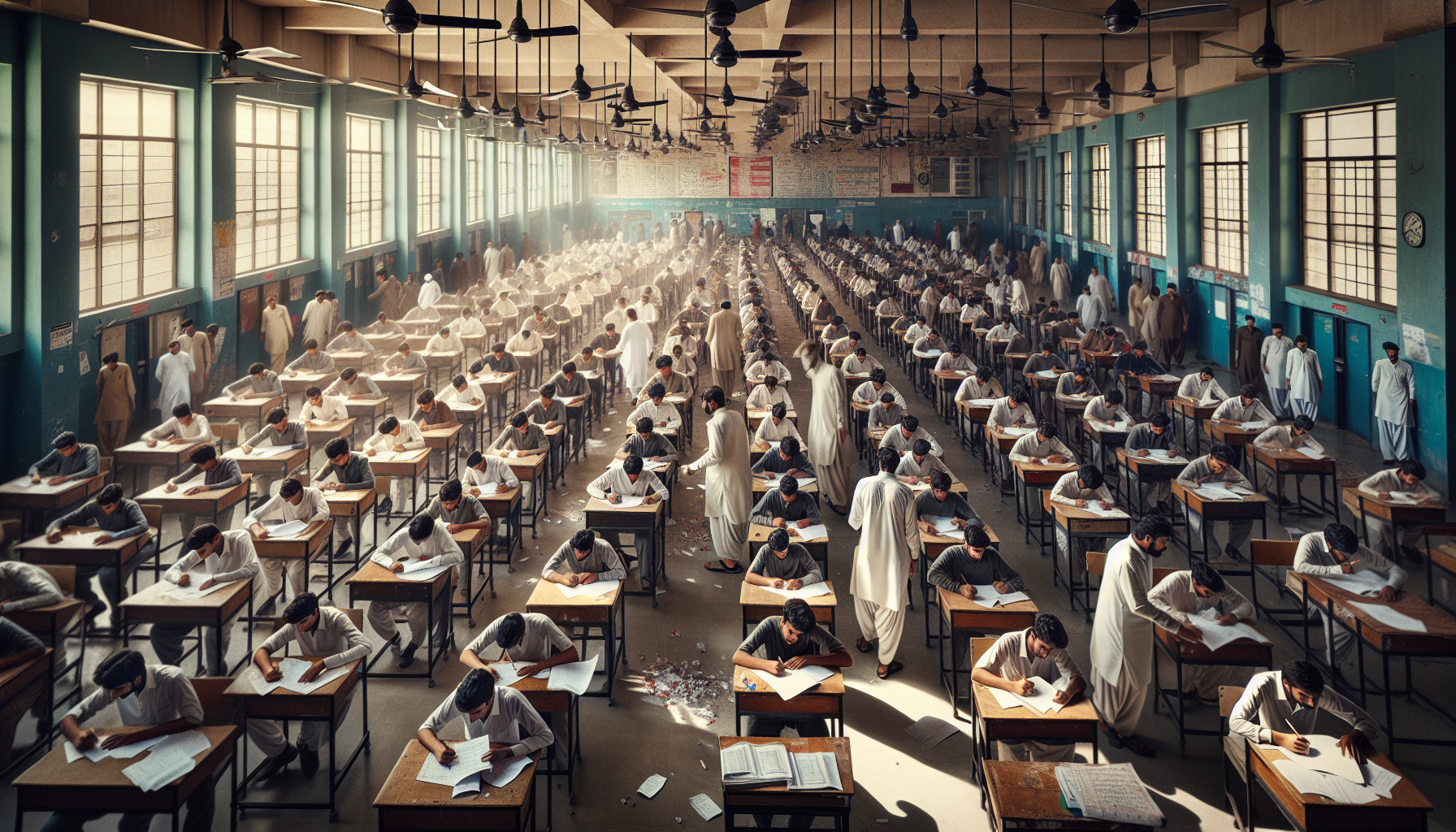
The matriculation examinations currently underway in Karachi have been overshadowed by serious allegations involving paper leaks, bribery, and administrative chaos, severely affecting students’ ability to take exams under fair conditions. A detailed report highlighted that examination centres were being changed even after exams had started, causing confusion and distress among students.
Students who had already appeared for two or three papers at one location were abruptly informed through official notices that their exam centres had been relocated to different venues. In a particularly alarming incident, a Computer Science exam paper, along with its answers, was reportedly shared on social media at least 20 minutes before the exam commenced, raising concerns about the extent and timing of the leak.
Evidence of organized cheating has also emerged, including a Rs5,000 slip allegedly issued by a school principal, instructing a student to sit in a designated room to cheat. Those paying such bribes reportedly enjoy unrestricted use of mobile phones and the ability to copy answers freely, indicating a total failure of invigilation protocols.
Security issues have compounded the problems, with at least two cases of students bringing daggers into exam centres reported. Despite bans on mobile phones and other prohibited items, enforcement appears to be largely ineffective, with checks described as virtually nonexistent.
Beyond cheating and security concerns, the physical conditions at many exam centres are dire. Students are forced to endure extreme heat due to broken fans, inadequate seating, and frequent power outages. Some centres are situated hours away from students’ schools, imposing additional burdens on families, while in other instances, “home centres” have been established within the same schools, violating established examination rules.
These recurring issues have been a persistent problem, with critics noting that despite annual discussions and promises of reform, little progress has been made. The ongoing challenges place hardworking students at a significant disadvantage, competing in an environment riddled with unfair practices and logistical failures.
In a significant development, Sindh’s Minister for Universities and Boards, Ismail Rahu, has ordered an inquiry into the matter. Authorities have been directed to submit a report within 15 days, with assurances that those responsible will face consequences. Nevertheless, skepticism remains regarding whether this inquiry will lead to genuine accountability or if the cycle of mismanagement will persist.
