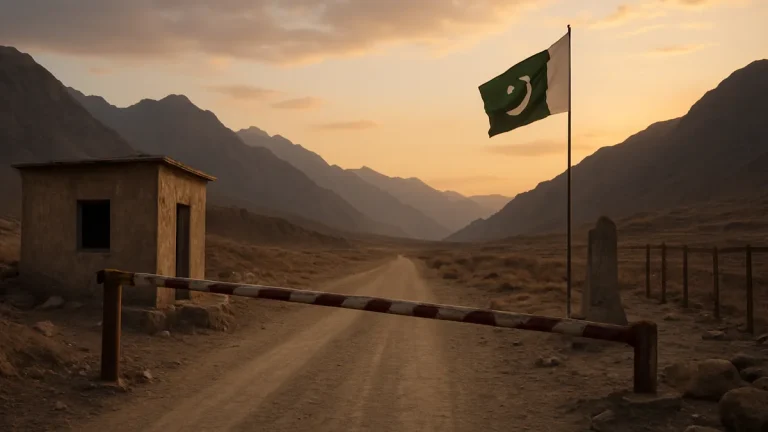
The Human Rights Commission of Pakistan (HRCP) released its annual report titled State of Human Rights in 2025, outlining significant challenges to civil liberties and the rule of law throughout the year. The report warned of a sharp decline in civic space, judicial independence, and overall security across the country during 2025.
It expressed grave concern over the severe restrictions placed on freedom of expression, especially the right to question authorities and demand accountability. These constraints have undermined fundamental freedoms and weakened the rule of law. The HRCP noted that worries about judicial independence intensified following the 27th Constitutional Amendment enacted in 2025, which also coincided with increased executive interference in the judiciary.
In a notable development, amendments to the Anti-Terrorism Act (ATA) 2025 expanded law enforcement powers, allowing authorities to detain individuals for up to three months, raising serious questions about due process and civil liberties. Pakistan was ranked 130th out of 143 countries in the enforcement of fundamental rights the report.
On the judicial front, the HRCP observed a rise in death sentences, with lower courts issuing 174 death sentences in 2024, which increased to 225 in 2025. The report also documented 1,272 terrorist attacks and counter-terrorism operations during the year, resulting in 3,417 deaths and 2,134 injuries nationwide.
Crime statistics from Karachi revealed 64,000 criminal incidents reported in 2025, leading to over 70 fatalities. Police encounters across Pakistan resulted in 1,696 suspected individuals killed during 1,155 incidents, with Punjab’s Crime Control Department responsible for the majority—977 deaths in 1,128 encounters.
Prison overcrowding remains a critical issue, with provincial jails designed for 64,550 inmates currently housing 110,402 prisoners, pushing the occupancy rate to 171%. The report also highlighted ongoing detention of women linked to Pakistan Tehreek-e-Insaf (PTI) in relation to the May 9 cases, raising concerns about the deteriorating health of Dr. Yasmin Rashid during custody.
Additionally, the report detailed that 738 Pakistani citizens, including fishermen, are held in Indian prisons, while Pakistan incarcerates 257 Indian prisoners, comprising 58 civilians and 199 fishermen. Enforced disappearances increased with 273 new cases reported in 2025, primarily in Khyber Pakhtunkhwa, though actual numbers are believed to be much higher.
Institutional changes following the 27th Constitutional Amendment included the creation of a Federal Constitutional Court (FCC) and greater executive control over judicial appointments. The Supreme Court also reinstated military trials for civilians. Petitions concerning reserved seats for the former ruling party, PTI, were rejected during the year.
Gender-based violence worsened in 2025, with Pakistan ranking 145th out of 148 countries on the Global Gender Gap Index. Cases increased by 25%, with 6,543 incidents reported over 11 months; Punjab accounted for 78% of these. The report recorded 470 women killed in honour-related violence, 1,332 domestic violence-related murders, and 2,912 other violence cases. It also documented 3,815 rape cases, 983 gang-rape incidents, and 2,586 cases of cyber harassment targeting women.
Violence against children remained alarmingly high, with over 3,600 cases reported, including 2,003 sexual abuse incidents. There were 1,107 kidnappings, 365 missing children cases, and 53 child marriages recorded. The report also noted 52 cases of child abuse linked to pornography-related material.
The HRCP reported that 19 transgender individuals were killed in 2025, with two subjected to acid attacks. Ten killings occurred in Khyber Pakhtunkhwa, where 13 transgender persons also faced sexual violence.
Labour issues were also emphasized, with 97 workers killed or injured in workplace accidents, including 52 miners and 13 sanitation workers. The HRCP concluded with a warning that millions remain at or below the poverty line, highlighting ongoing socio-economic challenges affecting human rights in Pakistan.