



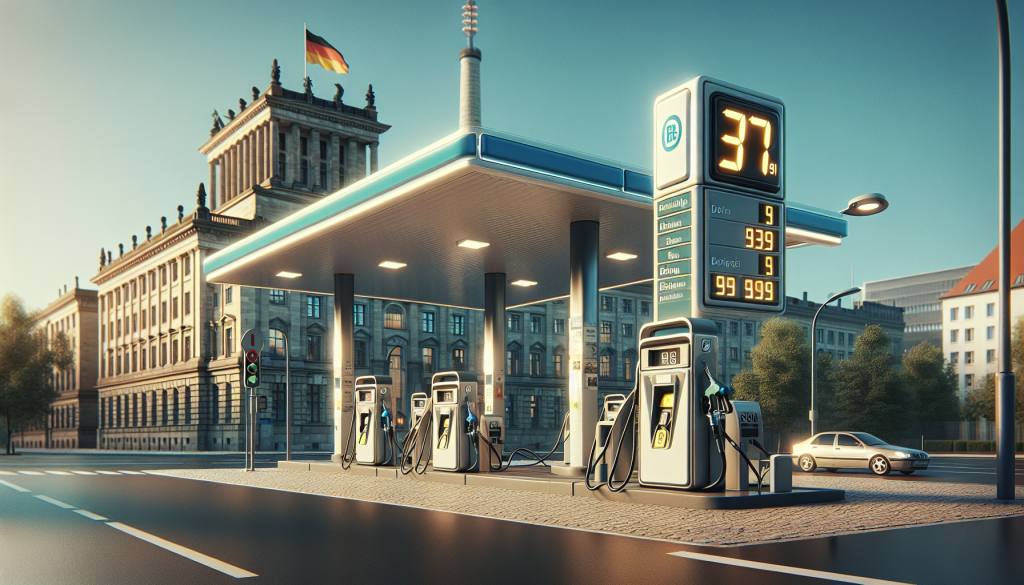
Chancellor Friedrich Merz announced on Monday that Germany will reduce fuel taxes as households face rising energy costs triggered by the ongoing Middle East conflict. He cautioned that the war’s economic repercussions will be felt for an extended period. This decision follows a surge in oil prices after the breakdown of US-Iran peace negotiations and the US blockade of the Strait of Hormuz.
Merz identified the war as the fundamental cause of Germany’s current difficulties and emphasized Berlin’s commitment to seeking a resolution to the conflict. After consultations between the CDU party and coalition partners, the government resolved to lower the tax on petrol and diesel by approximately 17 euro cents ($0.19) for a two-month period.
“This measure will promptly ease the burden on drivers and businesses, especially those who spend significant time on the road for professional reasons,” Merz stated during a press briefing in Berlin. Fuel prices in Germany, as in many other countries, have risen sharply since the US-Israeli conflict with Iran began in late February.
Additionally, employers will be permitted to grant tax-free bonuses of up to 1,000 euros ($1,170) to employees to help counteract inflationary pressures, which have already started to increase in Germany. However, Merz also highlighted the limits of government intervention, noting that not all market outcomes can be compensated with public funds. “The state cannot absorb every uncertainty, risk, or disruption caused by global political developments,” he remarked.
To finance the fuel tax reduction, Finance Minister Lars Klingbeil announced plans to accelerate an increase in tobacco taxes. Germany, Europe’s largest economy, has been severely impacted by rising energy expenses at a time when its energy-intensive industries are also contending with challenges from US tariffs and competition from China.
Merz warned that the economic strain from the conflict is expected to persist. “The German economy will bear a substantial burden over a prolonged timeframe,” he said. Reflecting this outlook, leading economic institutes recently downgraded Germany’s growth forecast for 2026 to 0.6 percent, nearly half of the pre-war estimate of 1.3 percent.

Leave an opinion