



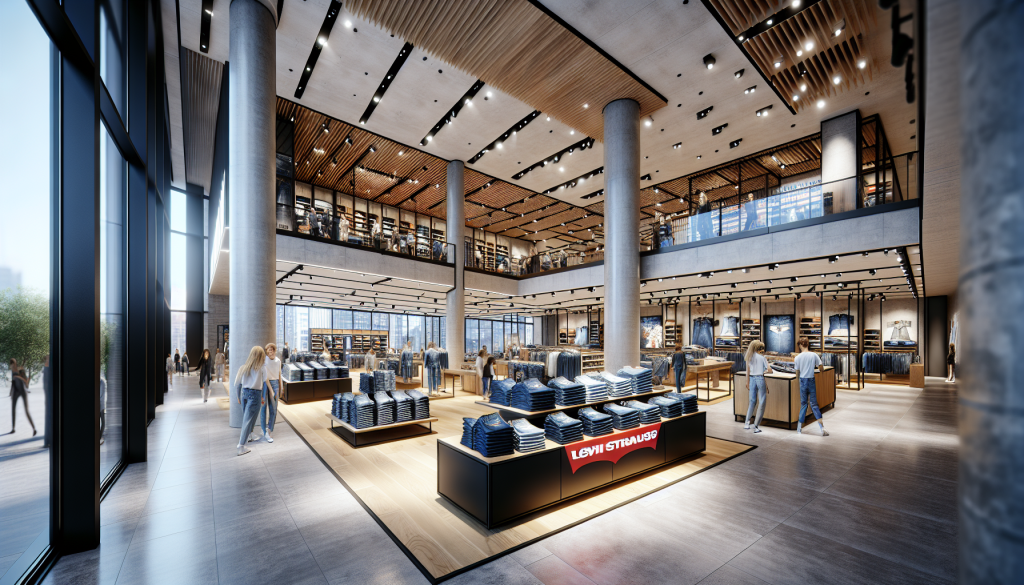
Shares of Levi Strauss climbed approximately 10% on Wednesday as investors responded positively to the company’s strongest quarterly revenue growth in nearly four years. Confidence is rising in the denim maker’s ability to offset the impact of tariffs through increased full-price sales.
The surge in demand for Levi’s baggy jeans collection, combined with higher sales among younger consumers via digital platforms, has allowed the company to raise prices and reduce discounting. This comes despite the roughly 10% tariff imposed on imports into the U.S. starting in 2025.
Rick Patel, an analyst at Raymond James, noted that demand has remained resilient despite higher prices, with benefits expected to become more apparent beginning in the second fiscal quarter.
In a significant development, Levi Strauss announced it is searching for a successor to finance chief Harmit Singh, who plans to retire after nearly 13 years in the role. Analysts highlighted that Singh will stay on during the transition to maintain stability, which should reassure investors.
Levi’s stock has appreciated steadily over the past three years. Its forward price-to-earnings ratio for the next 12 months stands at 12.91, compared to 19.23 for Ralph Lauren and 9.68 for American Eagle, indicating a competitive valuation.
Meanwhile, broader market sentiment improved as U.S. and Iran agreed to a two-week ceasefire, raising hopes for resumed energy flows through the Strait of Hormuz. Shares of other apparel and footwear companies, including Abercrombie & Fitch, Nike, and Ralph Lauren, also gained between 2% and 6%.
Despite the upbeat results, analysts pointed out that Levi’s raised guidance, particularly for U.S. growth, remains cautious. This suggests potential softening demand in the region, even though the Middle East conflict and rising fuel prices have yet to impact Levi’s sales significantly.
Over the past year, affluent Gen Z and Millennial consumers in the U.S. have continued to spend on desirable items such as apparel, accessories, skincare, and fragrances. This trend reflects a K-shaped or barbell economy, where higher-income groups maintain spending while lower-income households reduce expenditures due to rising living costs.
Oliver Chen, an analyst at TD Cowen, praised Levi’s leadership in premium denim market share, disciplined working capital management, unified product lines, and ongoing innovation in products and lifestyle offerings.

Leave an opinion