



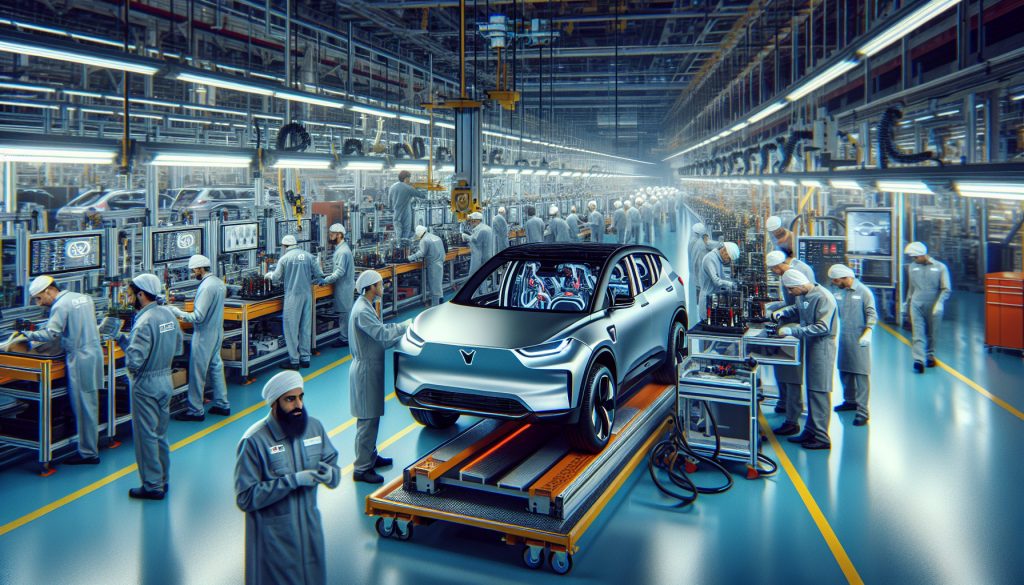
Stellantis is progressing in negotiations with Chinese automaker Leapmotor to jointly develop an Opel-branded electric SUV. The vehicle would incorporate Leapmotor’s technology and be manufactured at Stellantis’ Zaragoza plant in Spain, three sources familiar with the discussions. This collaboration aims to reduce both the cost and development time for Stellantis’ new electric vehicle (EV) model as the company pivots towards petrol-electric hybrids.
Earlier this year, Stellantis announced a $25 billion writedown linked to scaling back its EV ambitions. The partnership with Leapmotor also seeks to counter growing competition from Chinese brands like BYD in the European market while enhancing production efficiency at Stellantis’ European facilities.
In a significant development, Stellantis CEO Antonio Filosa, who assumed leadership in June last year, is scheduled to unveil a new long-term business strategy on May 21. The alliance with Leapmotor follows Stellantis’ acquisition of roughly 20% of the Chinese company in 2023. Together, they operate a joint venture called Leapmotor International, responsible for sales and production of Leapmotor vehicles outside China.
The upcoming Opel model will share its fundamental architecture with Leapmotor’s B10 compact SUV, which is also slated for assembly at the Zaragoza plant later this year for the European market. Production of the Opel EV is expected to commence in 2028, targeting an annual output of 50,000 units. Under the proposed agreement, Leapmotor would supply critical technologies and components, including electronic and electrical systems, while Opel would handle the exterior design. A substantial portion of the vehicle’s development is anticipated to occur in China.
Negotiations for the Opel project, internally codenamed O3U, began in late 2025, with a deal potentially finalized as soon as this month. These advanced talks have not been publicly disclosed before. Stellantis has acknowledged ongoing discussions with Leapmotor about expanding collaboration but declined to provide further details. Leapmotor confirmed it is in talks with various partners, including Stellantis, focusing solely on supplying self-developed components without plans for platform-level cooperation. The Chinese firm did not comment on specifics regarding the Opel EV’s production timeline or output targets.
Last month, Leapmotor announced expectations to start mass production of its vehicles in Spain from October, noting that some projects with Stellantis are in “advanced negotiation stages.”
Meanwhile, Stellantis is exploring the use of Leapmotor’s EV technology for the next-generation Opel Mokka B SUV, which is expected to shift production from France to Spain. Opel accounted for approximately 21% of Stellantis’ 2025 European sales, with Germany as its largest market.
Additionally, preliminary discussions are underway between Stellantis and Leapmotor about developing an Alfa Romeo model on the same platform at Zaragoza, aiming to optimize plant capacity. Despite significant setbacks in its EV plans, Stellantis continues to prioritize electric vehicles, especially in Europe.
The Opel EV project represents the most advanced of several ongoing talks between the two automakers. They have also considered developing smaller A-segment cars based on Leapmotor’s architecture, which would require a separate production line from Zaragoza’s current setup.
(Currency conversion: $1 = 0.8685 euros)

Leave an opinion