


ISLAMABAD: On Monday, PML-N leaders accused Pakistan Tehreek-e-Insaf (PTI) of deliberately undermining dialogue with the government by exploiting the “Pashtun card,” criticizing PTI’s 13-year governance in Khyber Pakhtunkhwa (KP) as a period marked by terrorism, smuggling, and unfulfilled promises.
Ikhtiar Wali Khan, the Prime Minister’s coordinator for Information and KP Affairs, along with MNA Barrister Daniyal Chaudhry, highlighted the ongoing terrorism challenges in KP, emphasizing that the state would not tolerate being held hostage. They noted that thousands of terrorist incidents had occurred over the past two years, resulting in the martyrdom of 1,200 security personnel. Wali Khan also pointed out the provincial counter-terrorism department’s lack of modern weaponry.
Questioning PTI’s performance, Wali Khan asked what the party had achieved in KP during its 13 years in power, accusing its members of corruption and suggesting that PTI’s policies were influenced by Afghanistan, which he claimed was following an Indian agenda. He further criticized the party for offering empty promises such as creating 10 million jobs and building five million homes.
Chaudhry stated that the government remained committed to reconciliation but accused PTI of intentionally sabotaging the negotiations. He questioned PTI’s contribution to KP, alleging rampant smuggling in the province and claiming that PTI members themselves used vehicles that had not paid customs duties.
Meanwhile, PTI Secretary General Salman Akram Raja presented a contrasting narrative, attributing the collapse of talks to disagreements over access to imprisoned party founder Imran Khan and the approach to counterterrorism in KP. He affirmed that PTI remained willing to resume negotiations if these issues were resolved.
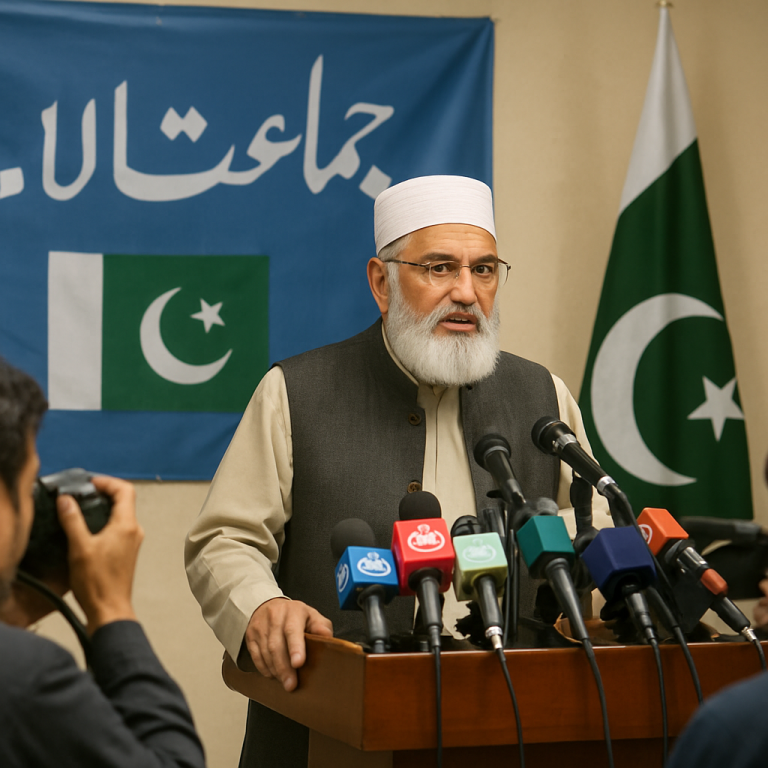
Speaking at a press conference in Islamabad alongside PTI leader Babar Awan, Raja emphasized that no decisions could be finalized without consulting Imran Khan. He noted that Imran and his wife, Bushra Bibi, faced over 300 legal cases, and their lawyers required meetings to receive instructions. Raja stressed that family members and senior party colleagues, some with 30 years of association, should be allowed to visit Imran as the leader of Pakistan’s largest political party.
Additionally, PTI requested access for Imran’s personal doctors, framing it as a medical necessity rather than a political issue. Raja stated that without such access, negotiations were futile. The party sought to include these provisions in a draft agreement, but the government refused to accept them as demanded.
Regarding counterterrorism, Raja argued that any future strategy must be developed collaboratively by federal and provincial governments, with input from provincial assembly parties and tribal elders. He cited a peace jirga at the KP Assembly, attended by PML-N, PPP, and ANP, as a model for consensus-based policymaking. Raja clarified that PTI’s objection was to the unilateral manner of implementing counterterrorism measures, not to combating terrorism itself. The party’s delegation decided to end discussions around 2:40 a.m., deeming further talks unproductive.
Interior Minister Mohsin Naqvi blamed the KP government, particularly Chief Minister Sohail Afridi, for retreating from counterterrorism commitments.
Raja reflected on the negotiation process, stating that the parties had been close to resolving differences before the government committee rejected access to personal doctors and refused to adopt a consensus-driven strategy, leaving PTI with no alternative but to halt talks.
He vowed that PTI would continue its struggle peacefully, advocating for love, respect, law, the Constitution, and peace. Raja recalled telling his daughters that they would carry flowers, not weapons, during protests.
Responding to Naqvi’s criticism of Afridi as “non-serious” and “amateur,” Raja remarked that young leaders like Afridi would eventually take charge of the country.
Babar Awan condemned the denial of Imran’s meetings with family and lawyers, calling it a violation of prison regulations and Article 10 of the Constitution. He also criticized Imran’s transfer to PIMS hospital instead of Shifa International Hospital, contrary to a Supreme Court ruling.
Addressing claims that Imran’s sisters were arrested for posing a threat, Awan pointed out that one sister is a doctor and sarcastically suggested that if she were a threat, he would be an even bigger one.
He concluded by highlighting that even during wartime, negotiations continue, citing the maintained hotline between Pakistan and India as an example.




Leave an opinion