

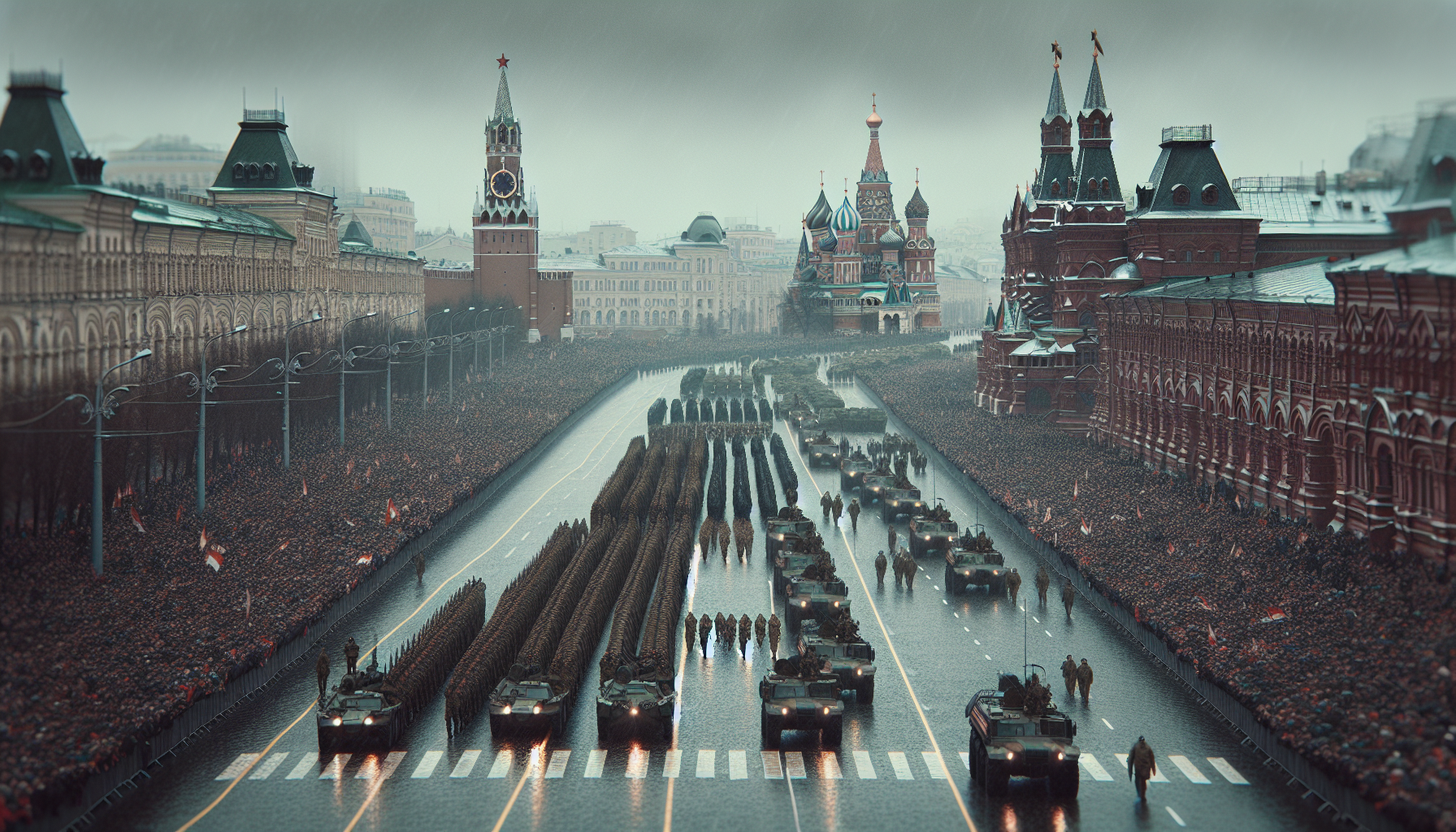
Moscow held its traditional Victory Day parade in Red Square, commemorating the Soviet Union’s victory in World War II, but the event was noticeably more restrained than in previous years. This annual display, typically marked by grand military demonstrations and large public gatherings, appeared quieter, with fewer participants and reduced fanfare. The parade is a significant occasion in Russia, symbolizing national pride and military strength, and is usually attended by top government officials and thousands of spectators.
In a significant development, the scaled-back nature of this year’s event may reflect broader geopolitical challenges facing Russia, including ongoing international sanctions and strained diplomatic relations. The reduced scale could also indicate a shift in domestic priorities, focusing resources elsewhere amid economic pressures. Victory Day parades have historically served as a platform for Russia to showcase its military capabilities and reinforce patriotic sentiment among its population.
Meanwhile, the subdued atmosphere in Red Square contrasts with the usual vibrant celebrations, signaling a period of caution and reflection within the country. The event’s tone may influence public perception and international views of Russia’s current status. Notably, the quieter parade underscores the complex interplay between national commemoration and contemporary political realities, highlighting how historical events continue to resonate amid present-day challenges.
