

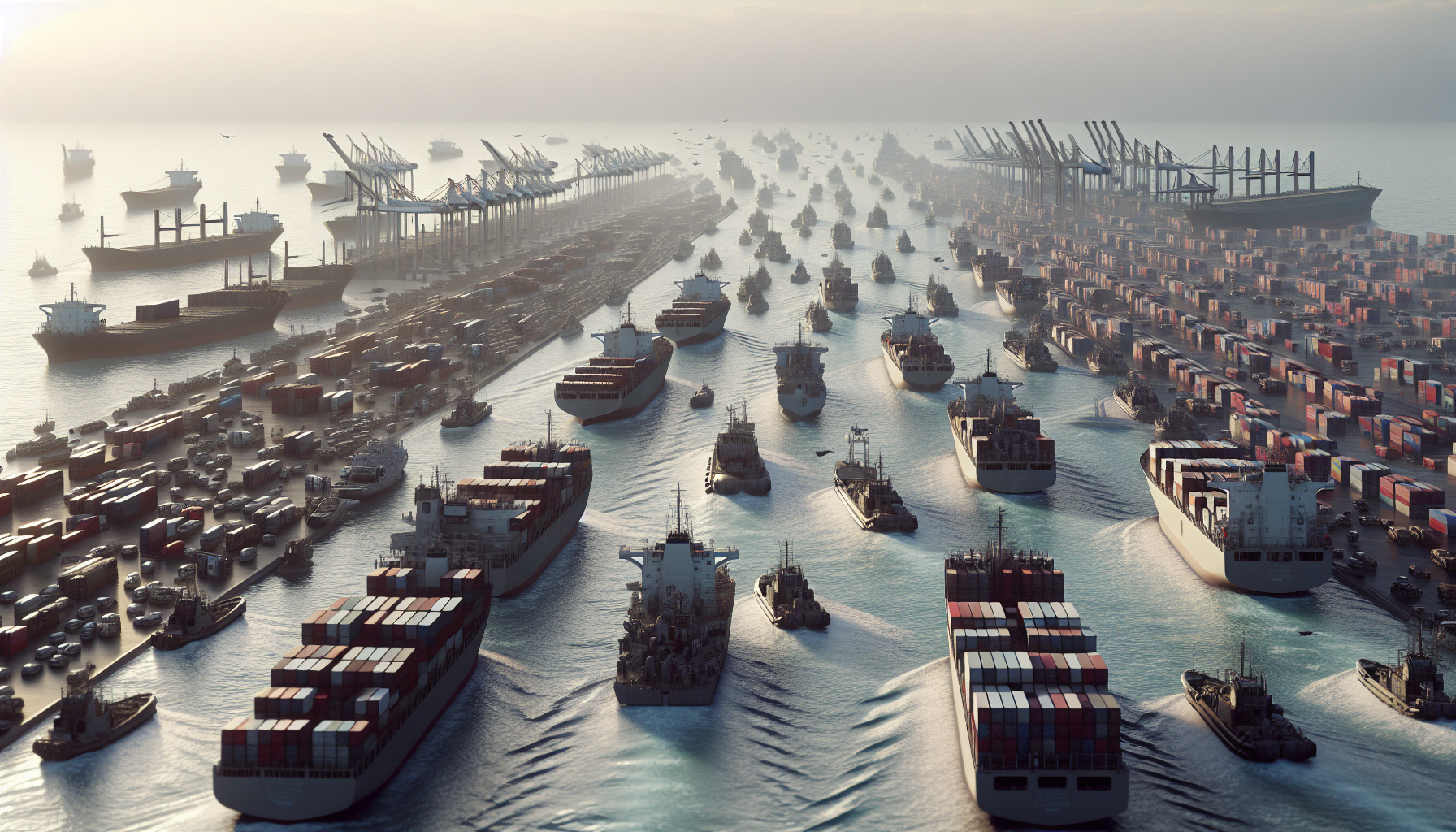
The United States is considering establishing a multinational maritime alliance to safeguard commercial shipping through the strategically critical Strait of Hormuz, as tensions with Iran continue to disrupt this vital global trade route. The initiative, referred to as the “Maritime Freedom Construct” (MFC), aims to ensure the safe passage of vessels in the Gulf region by enhancing intelligence-sharing, diplomatic collaboration, and stricter enforcement of sanctions.
A US State Department directive sent to embassies outlined the plan and urged diplomats to encourage partner nations to join the coalition. Oversight of the alliance would be shared between the US Department of State and US Central Command (CENTCOM), with the State Department handling diplomatic engagement and CENTCOM providing real-time maritime intelligence and coordinating operational data among allied forces.
In a significant development, a senior US official described the proposal as one of several options available to President Donald Trump to manage the situation in the Strait of Hormuz in cooperation with regional allies. Additionally, CENTCOM has prepared plans for a potential new wave of strikes targeting Iranian infrastructure, intended either to break the current negotiation deadlock or deliver a decisive blow before any full cessation of hostilities.
Among the options under consideration is the possibility of gaining control over sections of the strait to keep shipping lanes open. US military officials were scheduled to brief President Trump on these plans later on Friday.
Meanwhile, President Trump sparked controversy by posting a map on his social media platform, Truth Social, labeling the waterway as the “Trump Strait.” This move drew sharp criticism from Tehran. Iranian Foreign Minister Abbas Araqchi condemned the renaming, calling on Washington to respect historically recognized geographical names. On the social media platform X, Araqchi shared a video clip in which Trump mistakenly referred to the Strait of Hormuz by this name before correcting himself.
Separately, the Trump administration has indicated that hostilities with Iran have effectively ceased following a ceasefire agreement in early April. US Defence Secretary Pete Hegseth informed lawmakers that the truce had halted fighting, while a senior administration official confirmed no exchanges of fire have occurred since the ceasefire began on April 7.
The disruption of shipping through the Strait of Hormuz—a crucial artery for global oil and goods—has already prompted significant changes in trade routes. Companies are increasingly shifting to overland transport, moving goods by truck from ports like Jeddah to Gulf destinations such as the UAE, Bahrain, and Kuwait. The Saudi port city is emerging as a regional logistics hub, though analysts note it is struggling to manage the surge in demand, resulting in congestion and delays.
Alternative ports outside the strait, including Sohar in Oman and Khor Fakkan and Fujairah in the United Arab Emirates, have also experienced increased traffic. Jordan’s Aqaba port has become an important transit point for cargo destined for Iraq.
In a related development, United Nations Secretary-General António Guterres warned that instability in the Strait of Hormuz is placing severe strain on the global economy. He stated that disruptions in the waterway are impacting energy, transport, food, and industrial markets worldwide and urged all parties to engage in dialogue to avoid further escalation. “The current crisis risks pushing the region—and the global economy—toward deeper instability,” he said.
