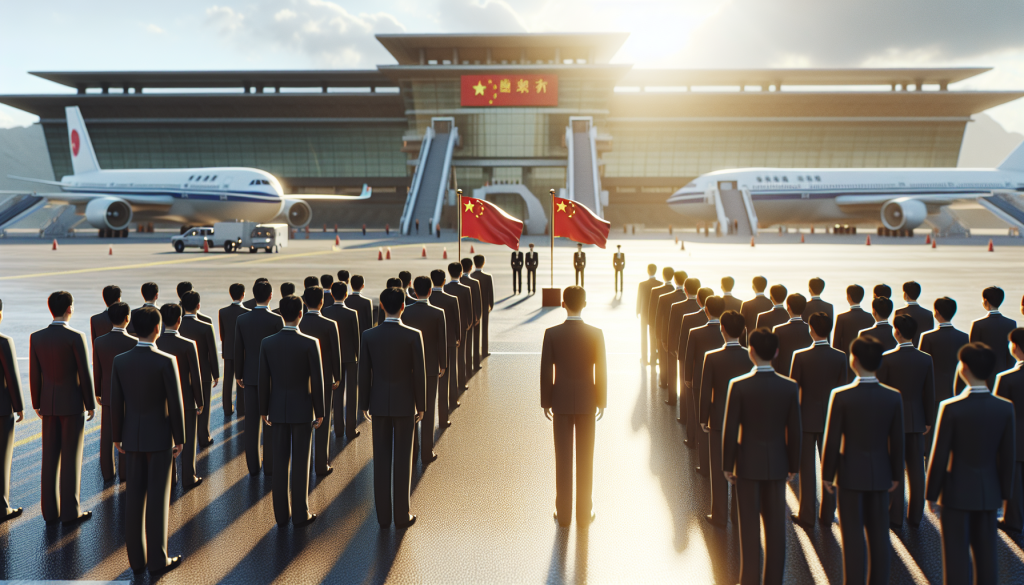
President Asif Ali Zardari has returned to Pakistan after completing a five-day official trip to China, concluding his visit in the southern city of Sanya. At Sanya Airport, he was seen off by Wang Qiang, a senior leader of the Communist Party of China’s Hainan chapter. The farewell event was also attended by Pakistan’s ambassador to China Khalil Hashmi, Chinese ambassador to Pakistan Jiang Zaidong, and senior officials from China’s Ministry of Foreign Affairs.
During the visit, both nations engaged in comprehensive discussions aimed at expanding cooperation in vital sectors such as industry, agriculture, and the maritime economy, with particular attention to the provinces of Hunan and Hainan. A major highlight of the trip was the advancement of the second phase of the China-Pakistan Economic Corridor (CPEC), focusing on boosting domestic industrial growth and developing the blue economy.
In Changsha, Pakistan and China signed three memorandums of understanding to enhance collaboration in desalination technology, agricultural innovation, and the tea industry. Meanwhile, in Sanya, additional agreements were finalized to strengthen cooperation in machinery, animal vaccine production, and medical technology. A separate joint investment agreement was also concluded during the president’s presence.
President Zardari held high-level meetings with provincial leadership of the Communist Party of China in both Changsha and Sanya, where they discussed bilateral cooperation and future development strategies. Notably, he visited Shaoshan, the birthplace of former Chinese leader Mao Zedong, to pay tribute.
In a significant development during his stay in Sanya, the president attended the commissioning ceremony of Pakistan Navy’s first Hangor-class submarine as the chief guest, marking an important milestone in defense collaboration between the two countries.
The visit took place against the backdrop of the 75th anniversary of diplomatic relations between Pakistan and China. Both sides reaffirmed their commitment to broadening cooperation across various sectors including trade, investment, technology, and maritime development, reinforcing their strategic partnership for the long term.