

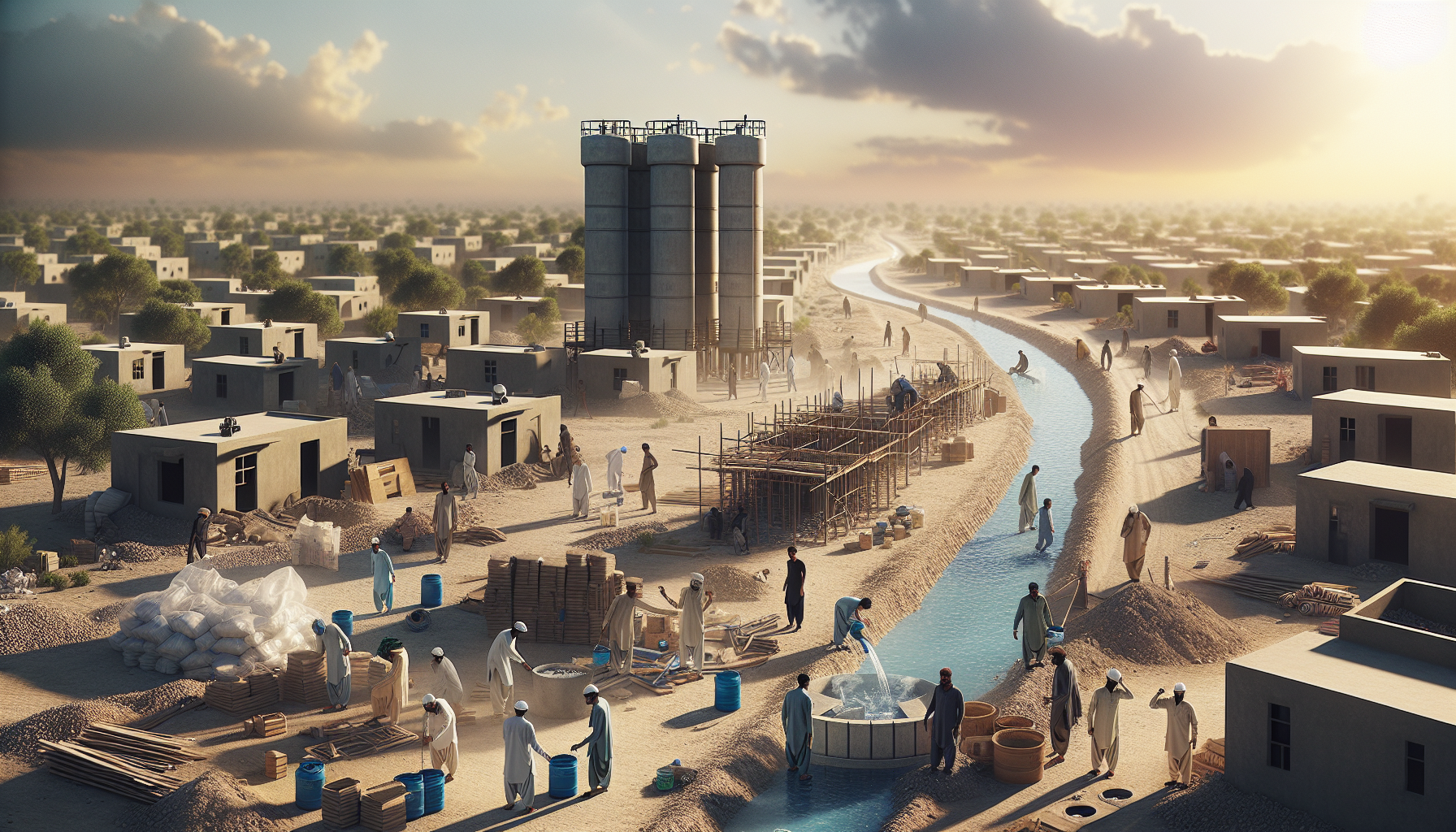
The European Investment Bank (EIB) is set to inject €160 million (approximately $171 million) into Pakistan, marking its return to the country after a ten-year hiatus. This financing will support housing reconstruction and water sector projects, focusing on climate resilience and improved water access.
Of the total funding, €100 million is allocated for rebuilding around 2.1 million homes in Sindh that were damaged during the catastrophic floods of 2022. This initiative is part of one of the largest post-disaster reconstruction efforts globally, targeting rural communities severely affected by the floods. The programme, with an estimated cost nearing $2 billion, aims to assist roughly 40 percent of rural households in Sindh. It is being implemented in collaboration with the Government of Sindh and international financial institutions such as the World Bank, Asian Development Bank, and Islamic Development Bank.
Meanwhile, €60 million will be dedicated to enhancing water quality in Karachi through the construction of two water filtration plants in Gharo and Pipri. These facilities, developed in partnership with the Karachi Water and Sewerage Corporation, are expected to provide approximately one billion litres of safe drinking water daily, significantly improving access for residents of Pakistan’s largest city.
These projects align with the European Union’s Global Gateway strategy, which aims to mobilize up to €400 billion in investments worldwide between 2021 and 2027 to promote sustainable infrastructure, economic growth, and job creation. In a significant development, EIB Vice-President Nicola Beer emphasized that rebuilding homes and strengthening essential services like water supply are crucial for fostering resilient communities. She highlighted that these efforts would enhance climate resilience and ensure access to safe drinking water, especially for vulnerable populations.
The announcement was made during an event held alongside the High-Level EU-Pakistan Business Forum, with a formal signing ceremony anticipated in the near future.
