

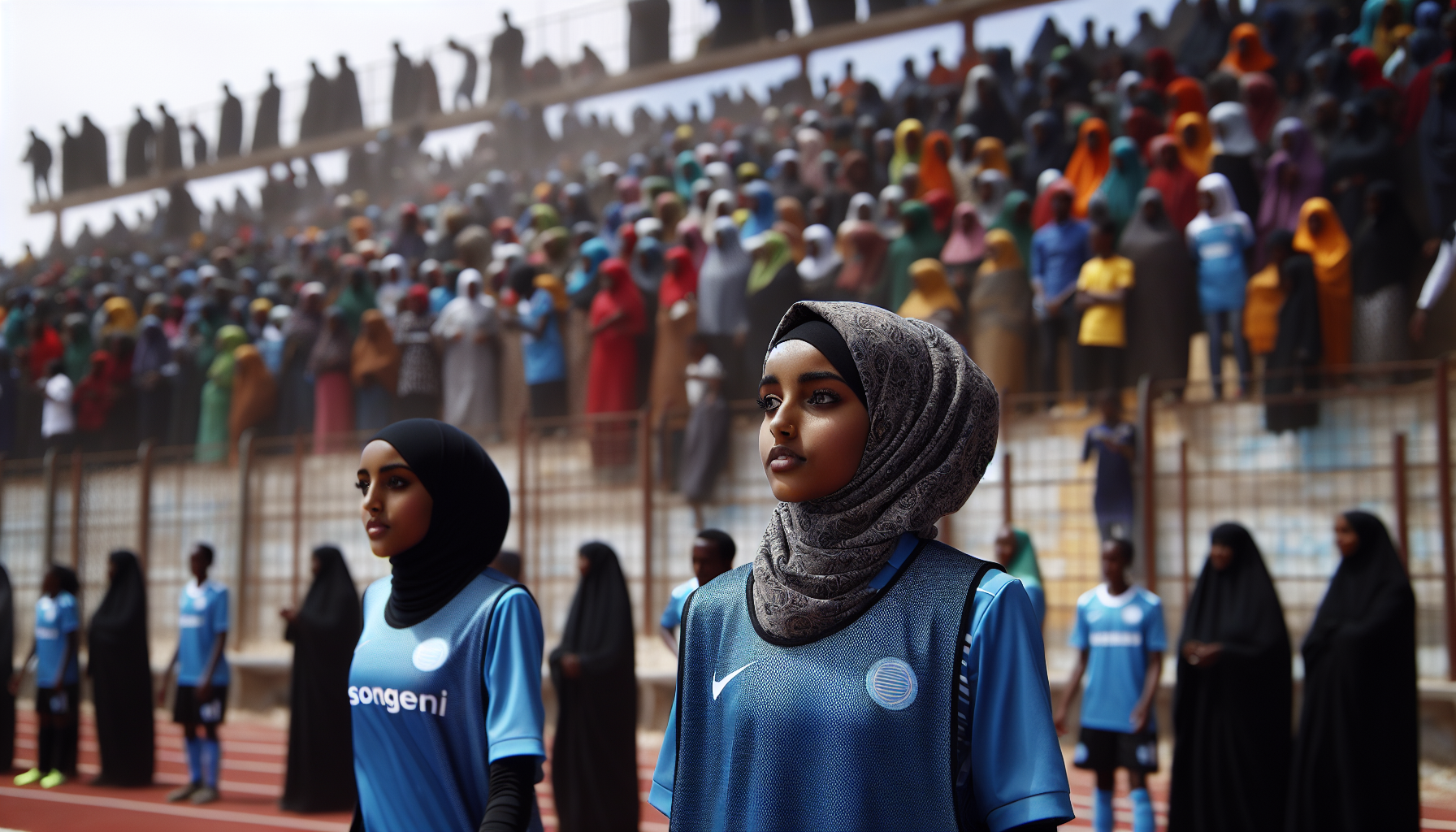
In a remarkable shift for Somalia, hundreds of spectators gathered in a Mogadishu stadium to watch two women’s football teams compete—a scene that would have been unimaginable just a few years ago in this conservative and conflict-affected nation. Previously, such events faced severe threats from the Al-Qaeda-linked militant group Al-Shabaab, which opposes entertainment activities like football, especially when played by women.
Despite Al-Shabaab’s continued influence behind the scenes in Mogadishu, the security environment has significantly improved, allowing these matches to take place. At the recent game, the main stand was largely segregated by gender, yet some men and women sat together, reflecting gradual social change. The Ilays women’s team dominated their opponents Nasiib with a 5-0 victory, but the result did not dampen the enthusiastic atmosphere.
“A few years ago, an event like this with two girls’ football clubs playing would have been impossible in Mogadishu, but things are slowly getting better,” said Ali Muhidin, a spectator at the match. The women’s football championship was established in 2024 with just 80 players. Now, barely two years later, participation has surged to 600 players across 10 teams, mainly from Mogadishu but also from other regions of Somalia.
Ali Abdi Mohamed, president of the Somali Football Federation, highlighted the significance of this progress. “No one could have imagined Somali women playing football in a country where even men were once banned by militants who declared football ‘un-Islamic.’ What was once a distant dream has now become a reality.” He acknowledged that not all families in the predominantly conservative Muslim society permit their daughters to play, but so far, there have been no major objections.
Somalis have long been passionate followers of European football, yet local teams have historically been overlooked. Somalia ranks 200th in the FIFA men’s rankings, ahead of only a few small states. The women’s national team, which played its first friendly match in October in Djibouti, is not yet listed by FIFA. However, this is expected to change soon as the “Ocean Queens” prepare for their inaugural international tournament—an under-17 competition scheduled for May in Tanzania.
“Playing football is neither shameful nor taboo for women,” said Ramas Abdi Salah, a midfielder for the Ocean Queens. She and her teammates wear thick tights, long-sleeved shirts, and black headscarves to cover their hair, respecting cultural norms. “As you can see, I’m fully covered except for my face and hands. I haven’t faced any negative remarks,” added the 17-year-old, who has her family’s support.
Goalkeeper Najma Ali Ahmed endured a tough match recently, conceding five goals, but her passion for the sport remains strong. “I want to encourage female footballers to pursue their dream of joining the national team,” she said, underscoring the growing enthusiasm for women’s football in Somalia despite ongoing challenges.
