

Tankers navigating the Strait of Hormuz face heightened risks of attacks and intimidation following Iran’s recent warnings to block any oil export routes not authorized by Tehran. Last week recorded the highest number of tanker attacks in the strategic waterway since the onset of the Iran conflict, resulting in the lowest vessel traffic through the strait in over two months.
A senior regional official close to Tehran revealed that Iran has cautioned neighboring countries that attempts to open new oil export routes would be deemed hostile. This stance is part of a coordinated plan involving both Iran’s political leadership and the Revolutionary Guards.
a senior diplomat briefed by Tehran, Iran is determined to maintain control over the Strait of Hormuz and is prepared to block alternative export channels used by some regional states. This could involve missile and drone strikes on vessels or deploying boats to intimidate ships, continuing a policy rooted in fear and threats.
In recent months, Gulf oil producers have increasingly routed shipments along paths near the Omani side of the strait, transferring oil in the Gulf of Oman with aerial support from the United States. However, tensions remain high.
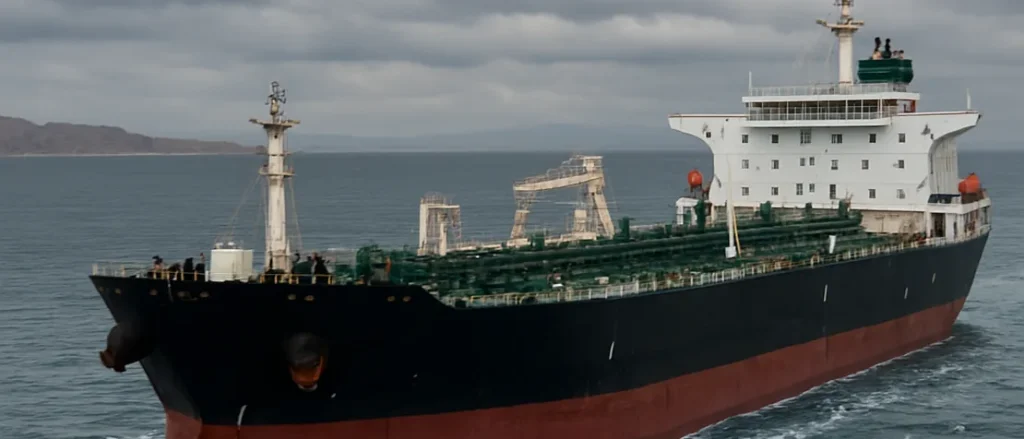
In the latest incident, projectiles struck the Antigua and Barbuda-flagged chemical tanker Acers approximately 51 nautical miles off Qatar’s coast within the Gulf. The British naval agency UKMTO reported the attack, noting minor injuries among the crew. The vessel was hit north of Qatar’s Madinat ash Shamal.
Maritime security analysts from Clearwater Dynamics, a subsidiary of Pole Star Global, warned that this attack could signal an expansion of conflict zones affecting maritime approaches to Qatar, Bahrain, Saudi Arabia, Kuwait, and Iraq. The operator of the Acers, Valvoria Shipping, could not be reached for comment.
Jakob Larsen, chief safety and security officer at the shipping association BIMCO, noted that the recent surge in Iranian attacks has discouraged shipowners from transiting the Strait of Hormuz, indicating a perceived increase in threats.
Meanwhile, US President Donald Trump is considering further actions against Iran, including potential escalations before or after the November midterm elections, which will determine congressional control. The US aims to maintain a naval blockade to exert economic pressure on Tehran to negotiate an end to the conflict.
The ongoing war, with a monthly cost estimated at $3 billion, has become a significant issue in the US political landscape. Governments and energy firms have tapped into oil reserves to ease supply disruptions caused by the conflict and other global factors such as the war in Ukraine.
Industry leaders at a recent London forum highlighted that accessible global oil stockpiles are depleting, increasing market fragility and driving prices upward. The conflict’s ripple effects are impacting the global economy, with Danish shipping company Maersk announcing an increase in emergency fuel surcharges for inland transport in the UK and Ireland due to Middle East tensions.
Major General Paul Maynard, Assistant Chief of the Naval Staff for Britain’s Royal Navy, emphasized at a UK Chamber of Shipping conference that the maritime conflict has far-reaching consequences beyond the sea, stating, “A war at sea does not remain at sea,” and warning that the world cannot return to the previous era of stability and prosperity.