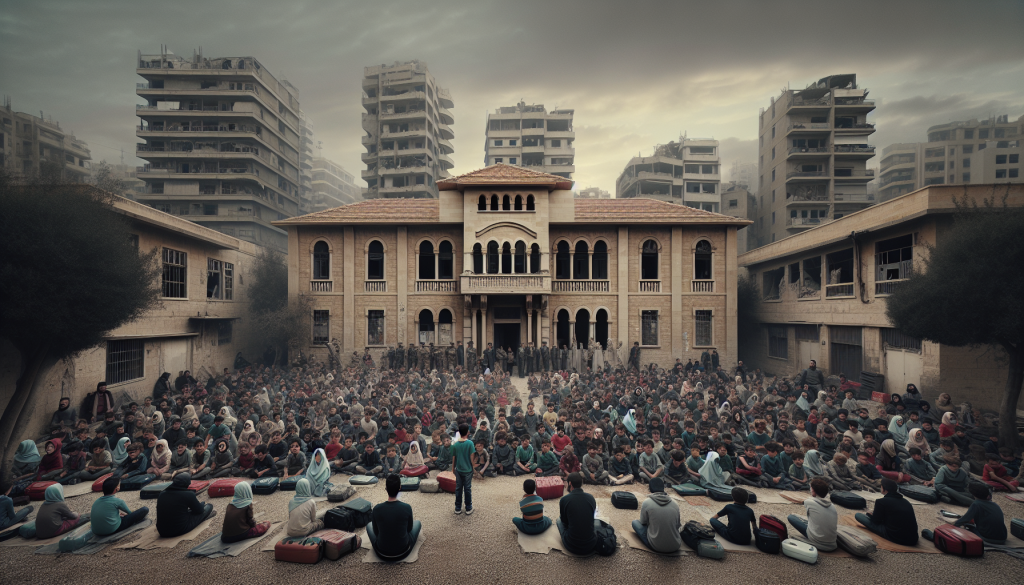
The recent conflict between Israel and Lebanon has led to the displacement of hundreds of thousands of Lebanese citizens, creating a humanitarian crisis with far-reaching consequences. Among the most affected are students whose education has been interrupted by the violence and instability. Schools have been damaged or closed, and many families have been forced to flee their homes, making consistent schooling nearly impossible for a large segment of the youth population.
Lebanon’s education system, already strained by economic challenges and political instability, now faces an unprecedented test as it tries to accommodate displaced students and rebuild damaged infrastructure. The disruption threatens to create a “lost generation”—young people deprived of critical learning opportunities during formative years. This situation could have long-term implications for Lebanon’s social and economic development, as education is a key driver of future stability and growth.
In a significant development, international organizations and local authorities are working to provide emergency educational support and psychosocial assistance to affected children. However, the scale of displacement and ongoing conflict complicate these efforts. Meanwhile, the broader regional tensions underscore the urgent need for a sustainable resolution to prevent further deterioration of Lebanon’s educational landscape and safeguard the future of its youth.