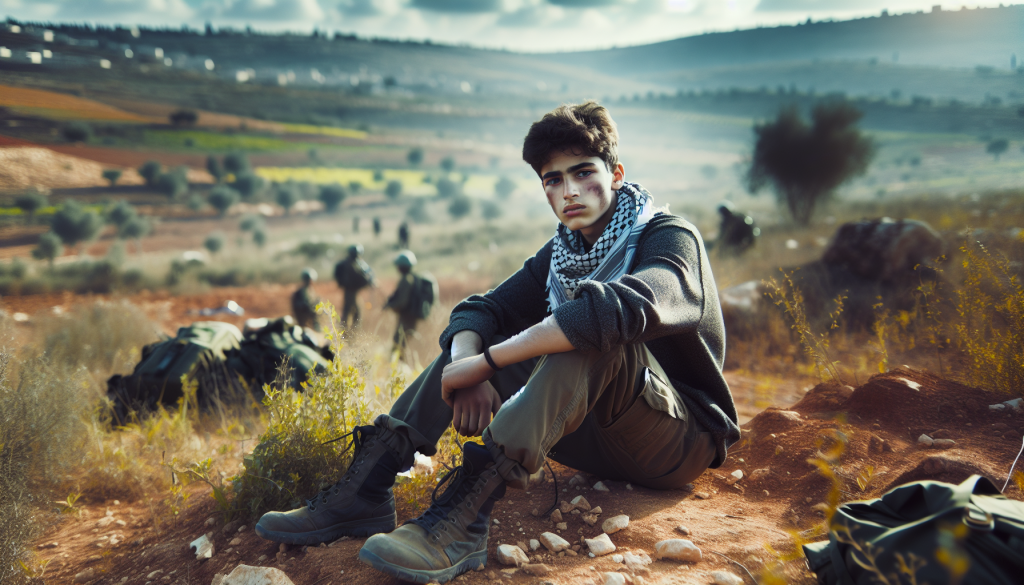
Amir Othman, a Palestinian teenager, was just 16 years old when he was shot by Israeli soldiers on a hill near Nablus, located in the occupied West Bank. This incident occurred amid ongoing tensions and frequent clashes in the region, where youth often find themselves caught in the crossfire of the Israeli-Palestinian conflict. The shooting has had a profound impact on Amir’s life, marking a turning point that underscores the human cost of the conflict. Such events highlight the vulnerability of young Palestinians living under occupation and the risks they face daily.
In a significant development, incidents like Amir’s shooting draw international attention to the broader issues of military presence and civilian safety in the West Bank. The occupied territories have long been a flashpoint for violence, with frequent confrontations between Israeli forces and Palestinian residents. The use of live ammunition against minors raises serious concerns about the protection of children’s rights in conflict zones. Meanwhile, the community around Nablus continues to grapple with the psychological and physical aftermath of such violent encounters.
Notably, Amir’s case exemplifies the ongoing struggle faced by Palestinian youth, who often bear the brunt of political and military strife. The incident contributes to the discourse on human rights and the urgent need for peaceful resolutions to the Israeli-Palestinian conflict. It also serves as a stark reminder of the broader humanitarian implications that extend beyond individual stories, affecting families and communities across the occupied West Bank. The international community remains watchful as these tensions persist, hoping for a future where such tragedies become less frequent.