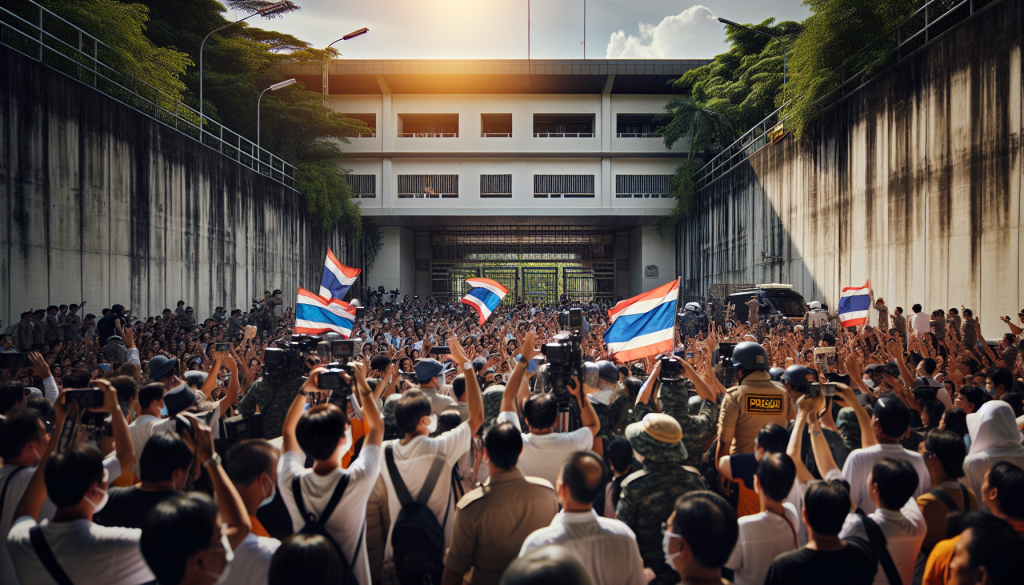
Thailand’s former prime minister Thaksin Shinawatra was released early from prison, drawing a large crowd of supporters who welcomed him enthusiastically. Thaksin, a polarizing figure in Thai politics, had been serving a sentence related to corruption charges. His release marks a notable development in the country’s ongoing political saga, which has seen deep divisions between his supporters and opponents for years.
Thaksin’s political career has been marked by both widespread popularity and controversy. He served as prime minister from 2001 until 2006, when he was ousted in a military coup. Since then, his influence has persisted through his political allies, despite legal battles and exile. His early release could impact the political landscape, potentially energizing his base and altering dynamics ahead of future elections.
Meanwhile, the reaction to Thaksin’s release highlights the continuing polarization within Thailand. Supporters view him as a champion of rural and working-class interests, while critics accuse him of undermining democratic institutions. This event underscores the fragile balance in Thai politics and raises questions about the country’s path toward political stability and reconciliation.