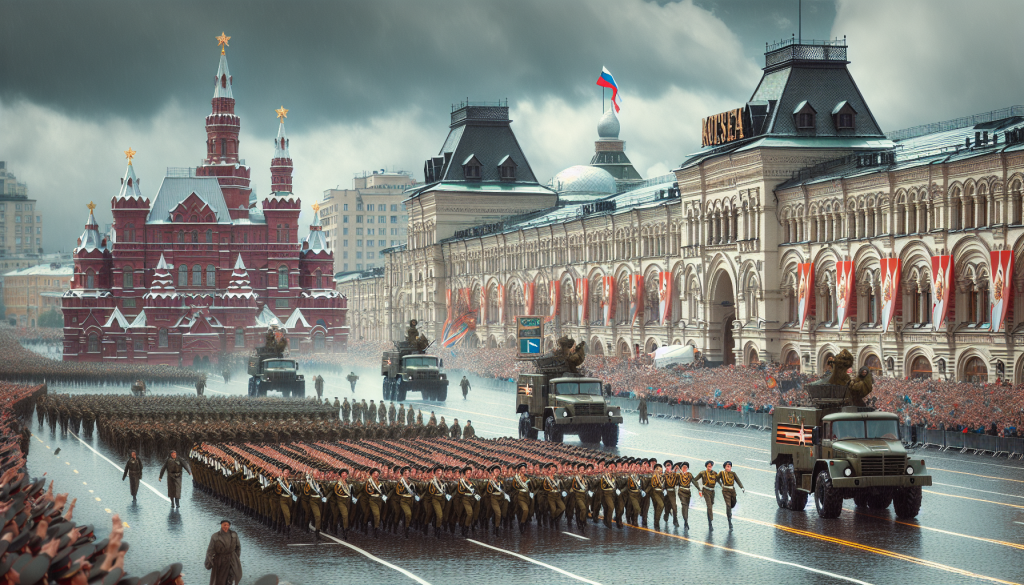
This year’s Victory Day parade in Moscow presented a striking departure from tradition, as the usual display of military hardware was absent from Red Square. The event, typically a grand showcase of Russia’s military strength, was noticeably subdued, reflecting a shift in the Kremlin’s approach to projecting power on the international stage. The absence of tanks, missiles, and other weaponry marked a significant change in the parade’s tone and symbolism.
Victory Day, celebrated annually on May 9, commemorates the Soviet Union’s victory over Nazi Germany in World War II and has long been used by Russian leadership to demonstrate military might. The parade usually features a vast array of troops and cutting-edge military equipment, serving both as a patriotic celebration and a message to global audiences about Russia’s defense capabilities. This year’s minimalist approach may indicate strategic recalibration amid ongoing geopolitical tensions.
Notably, the parade’s altered format could impact both domestic morale and international perceptions of Russia’s military posture. While the Kremlin continues to emphasize national pride and historical memory, the lack of visible hardware may suggest caution or resource constraints. Analysts will be closely watching how this change influences Russia’s future military displays and diplomatic signaling.