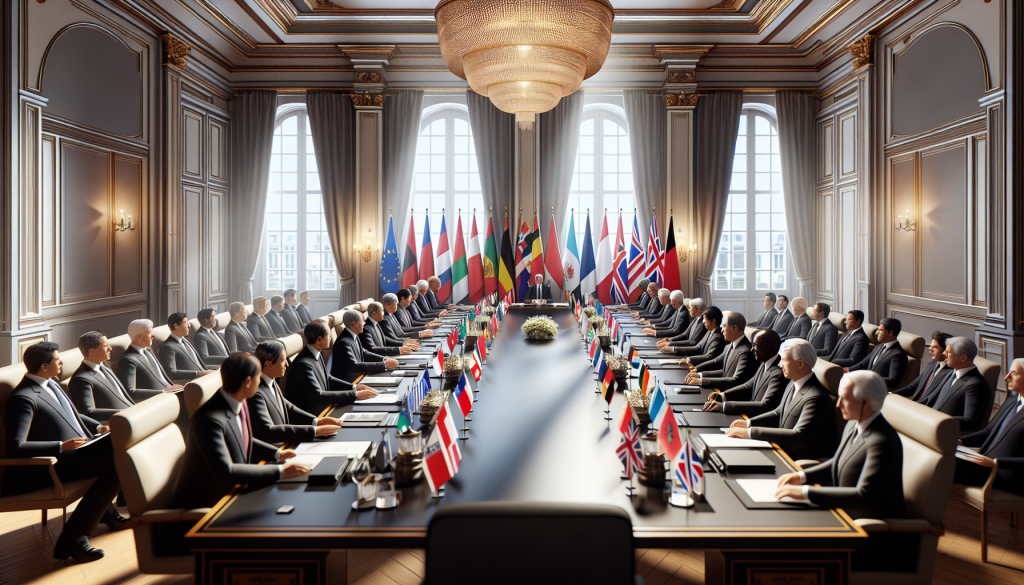
Trade ministers from the Group of Seven convened in Paris on Wednesday to bolster collaboration on securing critical mineral supplies, a key issue as Western nations aim to lessen their reliance on China’s dominant position in global supply chains. This meeting occurred amid escalating tensions triggered by new US tariff threats targeting European Union-made automobiles.
France, currently holding the G7 presidency, emphasized the need for tangible advancements on critical minerals and rare earth elements before the leaders’ summit scheduled for June. French Foreign Trade Minister Nicolas Forissier expressed confidence that significant progress would be made in securing supply chains and preventing dependency on specific countries.
G7 members have voiced concerns over China’s control of essential minerals used in electric vehicles, renewable energy technologies, electronics, and defense systems. They argue this dominance allows China to manipulate global markets and undermine competitors. In a joint statement, the ministers pledged to counter any attempts to weaponize economic dependencies, highlighting their shared commitment to supply chain security.
While there was general consensus on the need to reduce dependence on China, divergent views emerged regarding the strategies to achieve this goal, with the United States and European Union proposing different approaches.
Meanwhile, unity within the G7 was challenged by US President Donald Trump’s announcement of plans to increase tariffs on EU-manufactured cars from 15 percent to 25 percent. Trump cited Brussels’ alleged failure to comply with a trade agreement reached last year in Scotland as justification for the move.
Forissier interpreted Trump’s statement as an effort to expedite the implementation of the Turnberry agreement, expressing optimism that it could be finalized by summer. EU officials and legislators are currently working to complete related legislation, although internal disagreements over protective measures have delayed progress.
German Economy Minister Katherina Reiche reported ongoing intensive discussions with US counterparts concerning the tariffs, noting the strain on Germany’s export-reliant automotive industry due to weakening demand in China and rising production costs.
EU Trade Commissioner Maros Sefcovic confirmed that talks with US Trade Representative Jamieson Greer reaffirmed the importance of honoring the commitments outlined in the Turnberry agreement, with negotiations set to continue.
In addition to these issues, the ministers addressed global industrial overcapacity, particularly that associated with China, and discussed potential reforms to the World Trade Organization, French officials.