Iran’s parliament speaker, Mohammad Bagher Ghalibaf, stated that increasing moves by the United States and its allies in the Strait of Hormuz are altering the regional balance of power, signaling the emergence of a “new equation” with potential worldwide repercussions.
Ghalibaf accused Washington and its partners of breaching a ceasefire agreement and jeopardizing maritime navigation and energy shipments through this strategic passage, which handles a substantial portion of global oil exports. He emphasized that Iran is fully aware of the evolving situation and indicated that the current circumstances will not be acceptable to the United States. He also noted that Tehran has yet to implement its full strategic response.
This declaration arises amid intensified tensions in the Gulf region, where Iranian officials claim the United States has enforced a naval blockade on Iranian ports and shipping since April 13, further heightening the standoff.
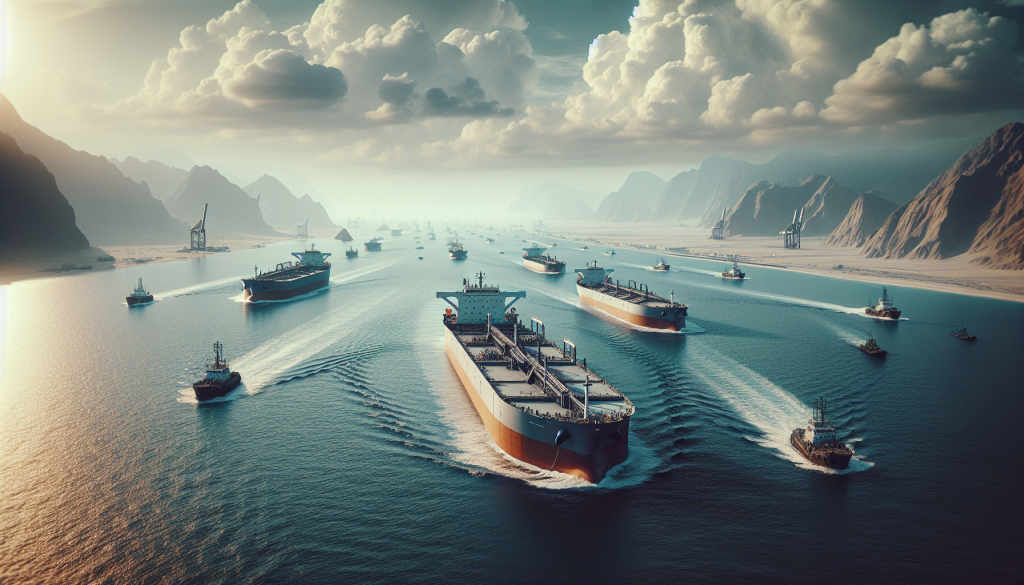
In a significant development, US President Donald Trump unveiled a naval initiative called “Project Freedom,” designed to guarantee secure transit for commercial vessels and reopen shipping lanes in the Strait of Hormuz. The plan involves the US Navy escorting merchant ships through this critical corridor.
Iran has strongly condemned this initiative, viewing it as a provocation and a direct challenge to its regional influence.
Experts warn that escalating tensions in the Strait of Hormuz—a crucial channel for global oil supplies—pose serious threats to the global economy and energy markets, as any disruption could cause sharp fluctuations in oil prices and disturb international trade flows.
No immediate comment was available from US officials in response to Ghalibaf’s latest statements.
Meanwhile, Iran’s Foreign Minister Abbas Araghchi highlighted that recent events in the Strait of Hormuz underscore the futility of military solutions to the ongoing political crisis. He cautioned against further escalation despite ongoing diplomatic efforts, noting Pakistan’s role as a mediator in talks aimed at de-escalation.
Araghchi emphasized that the developments in this vital global oil transit route demonstrate that force cannot resolve deep-rooted political conflicts.
Earlier reports from Iran allege that US naval forces attacked civilian vessels in the Gulf, resulting in five fatalities, and warned Washington against further incursions into the Strait of Hormuz. Iranian officials denied US claims that the targeted boats were linked to the Islamic Revolutionary Guard Corps (IRGC), insisting they were civilian vessels.
They also reported that US destroyers attempted to enter the Strait with their radar systems initially turned off, but were detected once the systems were activated. Iranian naval forces engaged the US ships, firing warning shots and employing drones, missiles, and rockets, which compelled the destroyers to retreat.
Iran declared that any further attempts by US naval forces to enter the waterway would be viewed as a violation of the existing ceasefire. The US military has not issued a response to these allegations.
The Strait of Hormuz, a narrow maritime passage between Iran and Oman, remains a critical artery for global oil transportation. Rising tensions in this area continue to raise concerns about energy security and regional stability.