South Korea’s presidential office is currently evaluating the possibility of participating in President Donald Trump’s recently announced “Project Freedom,” a maritime security initiative designed to ensure safe navigation through the strategically critical and volatile Strait of Hormuz.
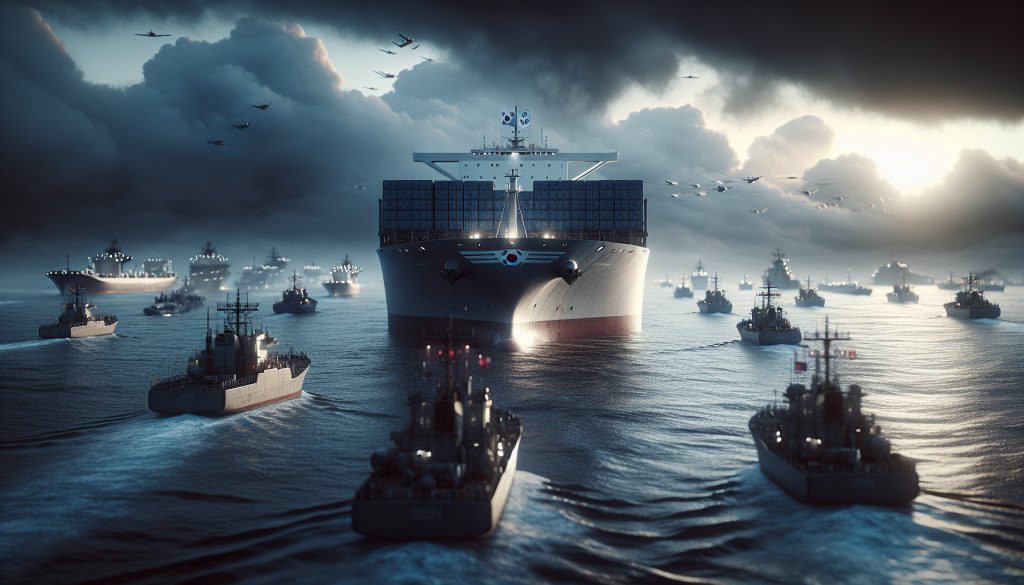
This internal assessment comes after President Trump directly urged Seoul to become part of the mission, following a suspicious explosion on Monday that damaged a South Korean-operated vessel in the area. The incident involved the HMM Namu, a 35,000-ton cargo ship, which reignited tensions in the region. While the ship’s operator confirmed that all 24 crew members are safe and the fire has been extinguished, President Trump quickly blamed Iran for the attack, using the event to call for increased naval cooperation among allies.
Within South Korea’s Blue House, officials are conducting a cautious review of the situation, carefully considering the risks associated with a formal military commitment. Although there is pressure to protect South Korea’s commercial interests—especially with at least 26 South Korean-flagged vessels currently stranded in the region—there is also concern about becoming entangled in a direct confrontation.
A spokesperson from the Foreign Ministry emphasized a measured approach, stating that the precise cause of the explosion will only be confirmed after the vessel is towed and damage fully assessed. Meanwhile, the Ministry of Oceans and Fisheries has already instructed all South Korean ships in the area to move to safer waters as the initial phase of “Project Freedom” begins, which involves guiding neutral vessels out of the conflict zone.
President Trump has described “Project Freedom” on social media as a “humanitarian gesture” aimed at providing US-led naval escort for ships trapped amid the ongoing Middle Eastern conflict. However, the initiative has faced immediate condemnation from Tehran, with Iranian officials dismissing it as “Project Deadlock.”
For South Korea, the decision to join the coalition presents a complex diplomatic challenge. The country depends heavily on the Strait of Hormuz for its energy imports, yet formal participation could strain its delicate diplomatic relations with Iran. Reports indicate that South Korean officials may seek a United Nations mandate or a broader international coalition before committing naval forces, aiming to frame any involvement as a peacekeeping effort rather than a provocative military action.